 lop News
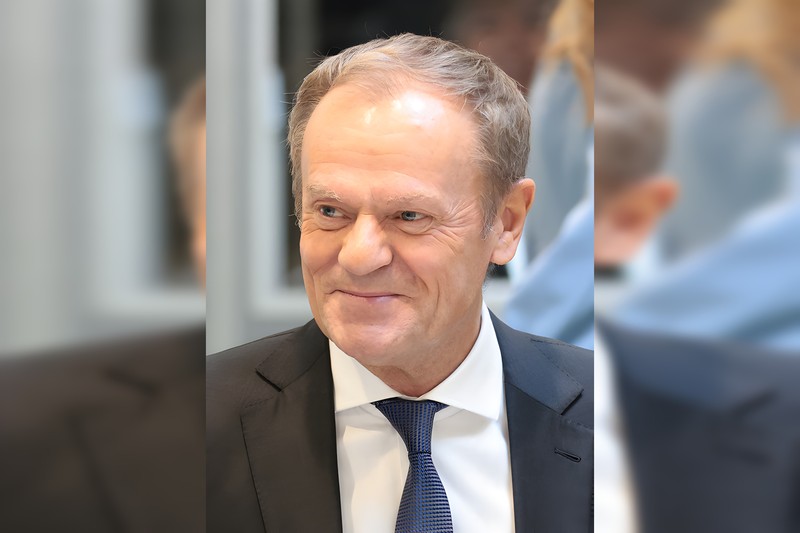
Poland’s prime minister has asked the question that Europe’s leaders have been whispering for months. He did it on the record, in print, with a word that diplomats don’t use lightly.
“Europe’s biggest, most important question is if the United States is ready to be as loyal as it is described in our [NATO] treaties,” Donald Tusk told the Financial Times in an interview published Friday.
That word — “loyal” — is doing significant work. NATO allies talk about capability, commitment, burden-sharing. They do not typically question whether the United States, the alliance’s anchor since 1949, will honor its fundamental obligation. A Polish prime minister just did.
Tusk was not speaking hypothetically. He warned that a potential Russian attack on NATO’s eastern flank was a matter of “rather months than years” — something “really serious.” He recalled a September incident in which roughly 20 Russian drones violated Polish airspace and NATO’s response was, in his telling, disappointingly muted.
“It wasn’t easy for me to convince our partners in NATO that it wasn’t a random incident, it was a well-planned and prepared provocation against Poland,” he said. “For some of our colleagues, it was much easier to pretend that nothing happened.”
The comments land amid a cascade of signals that the American security guarantee Europe has relied on for three-quarters of a century is eroding — not through a formal policy shift, but through the accumulated weight of presidential rhetoric, Pentagon deliberations, and a war in the Middle East that has divided the alliance.
Punishing allies, not protecting them
A Pentagon email reported by Reuters this week outlined options for the United States to “punish” NATO allies it believes have not supported the American-led war against Iran. The options include suspending Spain from the alliance and reassessing US diplomatic support for Britain’s claim to the Falkland Islands.
The email expressed frustration with allies who have refused access, basing, and overflight rights for the Iran campaign, according to a US official who spoke on condition of anonymity. The goal, the official said, was to reduce “the sense of entitlement on the part of the Europeans.”
President Donald Trump has publicly called NATO allies “cowards” and the alliance itself a “paper tiger.” He told Reuters earlier this month that he was considering withdrawing from NATO entirely. “Wouldn’t you if you were me?” he said. Defense Secretary Pete Hegseth reinforced the message: “You don’t have much of an alliance if you have countries that are not willing to stand with you when you need them.”
The Iran war did not create this fracture. It exposed one that had been widening since Trump’s first term and accelerated after Russia’s invasion of Ukraine forced European capitals to reckon with the possibility that the American umbrella might not always be open.
France steps into the gap
Four days before Tusk’s Financial Times interview, he stood alongside French President Emmanuel Macron in Gdansk to announce a deepening of Franco-Polish defense ties that would have been remarkable in a different era.
The scope is striking: nuclear deterrence, military satellites, joint exercises, shared intelligence. Macron said there could be deployments of French warplanes carrying nuclear warheads to Poland — though France would retain full control over their use.
“Our cooperation, whether in the nuclear domain or in joint exercises, is a cooperation that knows no bounds,” Tusk said.
The meeting produced concrete agreements. Airbus, France’s Thales, and Poland’s Radmor group announced a deal to develop military communications satellites, signed in the presence of both countries’ defense ministers.
Tusk acknowledged that “Washington’s strategy has indeed changed” toward Europeans, while insisting that Polish-American relations remain “very important.” The gap between those two statements contains much of Europe’s current strategic dilemma.
A continent rearming without its guarantor
Poland is spending heavily on its own defense — military expenditure is expected to exceed 4.8% of GDP in 2026, among the highest in NATO. Tusk is pushing for the EU to become a “real alliance,” invoking Article 42.7, the bloc’s mutual defense clause, as a framework for collective security that does not depend on Washington.
He suggested the departure of Hungarian Prime Minister Viktor Orban — a Russian ally who has obstructed EU defense unity — could make this more feasible. “What you need if you want to have, not only on paper, a real alliance, is true tools and real power,” Tusk said.
He framed the challenge in deliberately practical terms: military mobility across borders, shared border protection, common defense infrastructure. The language of treaties and solidarity is being replaced by the language of logistics and capability.
Poland’s question is no longer whether the United States will defend Europe. It is whether the structures Europe is now building — French nuclear sharing, EU defense loans, bilateral satellite agreements — can replace what is being lost fast enough to matter. Tusk called this his “obsession” and his “mission.” He chose those words carefully too.
Discussion (10)