 lop News
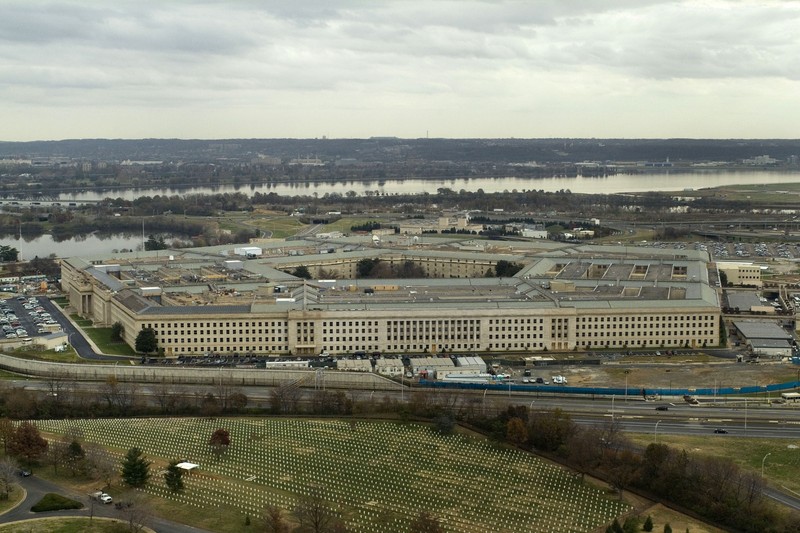
For seventy-seven years, Article 5 of the North Atlantic Treaty has been the load-bearing wall of European security. One sentence — an armed attack against one member is an attack against all — underwrote every defense plan, every weapons program, every sleep pattern in every foreign ministry from Tallinn to Lisbon. On Tuesday, the United States Pentagon declined to confirm it still believes in that sentence.
Defense Secretary Pete Hegseth, asked directly by Reuters whether the US remains committed to NATO’s collective defense clause, replied: “As far as NATO is concerned, that’s a decision that will be left to the president. But I’ll just say a lot has been laid bare.”
The conjunction of those two statements — outsourcing Article 5 to presidential discretion, followed by a grievance — is the diplomatic equivalent of finding the skeleton key to the Atlantic alliance and leaving it on a park bench. Hegseth was not caught off guard. He was at a podium, at a scheduled briefing, delivering a considered position.
What triggered the rupture
The immediate cause is the US-Israeli war against Iran, now in its second week. Several key European allies have refused to participate in or facilitate the campaign. Spain’s Defense Minister Margarita Robles announced Monday that Spanish airspace is closed to US aircraft involved in operations against Iran. France has refused overflight rights for resupply flights carrying American weapons to Israel. Italy denied a US military aircraft permission to land at Sigonella air base in Sicily — though Defense Minister Guido Crosetto later characterized this as a bureaucratic delay rather than a policy decision, according to reports.
Britain, traditionally Washington’s most reliable military partner, has authorized the US to use its bases for strikes on Iran but has stopped short of joining the war. Prime Minister Keir Starmer has approved only defensive operations.
Hegseth was blunt about the frustration. “When we undertake an effort of this scope on behalf of the free world, these are missiles that don’t even range the United States of America, they range allies and others and yet, when we ask for additional assistance or simple access, basing and overflight, we get questions or roadblocks or hesitations,” he told reporters.
“You don’t have much of an alliance if you have countries that are not willing to stand with you when you need them,” Hegseth added.
A pattern, not a moment
Hegseth’s remarks did not emerge from a vacuum. Secretary of State Marco Rubio, in an interview with Al Jazeera on Monday later shared by the State Department with an “alert” emoji on social media, made the transactional logic explicit.
“If NATO is just about us defending Europe if they’re attacked, but then denying us basing rights when we need them, that’s not a very good arrangement. That’s a hard one to stay engaged in and say this is good for the United States,” Rubio said. “So all that’s going to have to be reexamined. All of it’s going to have to be reexamined.”
President Trump himself turned to Truth Social on Tuesday morning with a characteristically blunt admonishment of European partners struggling with fuel shortages caused by Iran’s blockade of the Strait of Hormuz.
“You’ll have to start learning how to fight for yourself, the U.S.A. won’t be there to help you anymore, just like you weren’t there for us,” Trump wrote. “Iran has been, essentially, decimated. The hard part is done. Go get your own oil!”
He singled out Britain — “which refused to get involved in the decapitation of Iran” — and called France “VERY UNHELPFUL” for denying overflight to military supply flights.
This is not new rhetoric from Trump. Questioning Article 5 dates to his first term, and he has raised it repeatedly, including during his push to acquire Greenland. But the Iran war has turned a rhetorical habit into policy-level signaling from multiple senior officials in the same week.
What breaks when the guarantee wobbles
Article 5 has been invoked exactly once — by European allies coming to America’s defense after September 11, 2001. The reciprocal nature of that commitment is not decorative. It is the foundation on which NATO members have based force structures, intelligence sharing, and nuclear deterrence postures.
Experts have long warned that any signal the US might not honor its NATO commitments could encourage Russia to test the alliance’s eastern flank. The warning is no longer hypothetical. It is now the stated position of the US Defense Secretary that the commitment is subject to the president’s judgment about whether allies have been sufficiently cooperative.
For European governments, the calculation shifts from abstract concern to concrete planning. If Article 5 depends on the incumbent president’s satisfaction with allied behavior in an unrelated conflict, it is not a guarantee. It is a performance review — and one conducted in public.
Meanwhile, the war that triggered this crisis continues to escalate. Chairman of the Joint Chiefs of Staff Gen. Dan Caine said Tuesday that US operations continue to “degrade and destroy” Iran’s ability to project power. Iran attacked a Kuwaiti oil tanker off Dubai overnight. Thousands of troops from the 82nd Airborne Division and roughly 2,500 Marines are building up in the region. Reports have emerged of an Iranian strike on a US E-3 Sentry AWACS aircraft at Prince Sultan Air Base in Saudi Arabia.
The Pentagon is busy fighting a war. It has also, apparently, found the time to dismantle the security architecture that has defined the Western alliance since 1949. Whether that proves to be leverage or self-sabotage will depend entirely on how the allies on the receiving end of this message choose to recalibrate — and on whether Moscow is taking notes.
Discussion (10)