 lop News
Two months after US-Israeli strikes ignited a war with Iran, the parties are negotiating a peace deal that resolves almost nothing and excludes one of the belligerents entirely.
A one-page memorandum, reportedly close to agreement, would formally end the conflict, address the Strait of Hormuz crisis, and trigger a 30-day window for broader negotiations. What it would not do is settle the fate of Iran’s nuclear programme, restrict its ballistic missiles, curtail its proxy militias, or determine the future of Israel’s parallel war against Hezbollah in Lebanon.
The scope tells the story of both sides’ constraints. Washington needs oil flowing through Hormuz. Tehran needs relief from a tightening blockade. Neither has the leverage — or the appetite — to resolve the structural disputes that made the war inevitable.
A memorandum, not a settlement
The framework, described by sources briefed on Pakistani-mediated talks, unfolds in three stages: a formal end to hostilities, a resolution of the Hormuz crisis, and a 30-day negotiation window. The US delegation is led by Trump’s envoy Steve Witkoff and his son-in-law Jared Kushner, according to a source briefed on the mediation.
The omissions are as significant as the contents. The memorandum makes no mention of Iran’s stockpile of more than 400kg of near-weapons-grade uranium, nor of restrictions on its missile programme or support for proxy militias. A source told CNN the proposal includes discussion of an enrichment moratorium exceeding ten years — down from a previous US demand of 20 — with highly enriched material to be shipped out. These terms remain contested.
Iranian officials are sceptical. Foreign ministry spokesperson Esmail Baghaei said the American proposal was still being reviewed by Tehran. Parliamentarian Ebrahim Rezaei dismissed it as “more of an American wish-list than a reality.” Parliament speaker Mohammad Baqer Qalibaf mocked the proceedings on social media, writing that “Operation Trust Me Bro failed.”
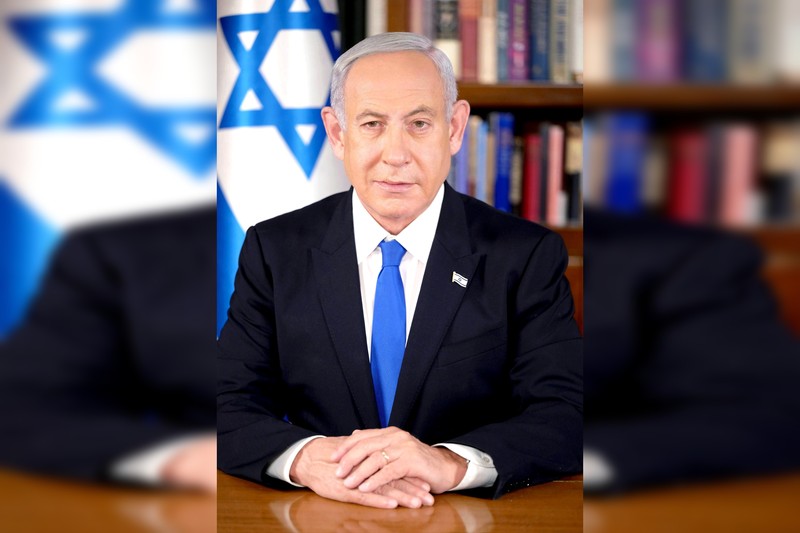
Israel, sidelined
Netanyahu has insisted there is “full coordination” between himself and Trump, and that they share “common objectives” — principally “the removal of the enriched material from Iran, all the enriched material, and the dismantling of Iran’s enrichment capabilities,” as he told a security cabinet meeting on Wednesday.
The memorandum does not guarantee either outcome. Israeli analysts have outlined far more expansive demands: dismantling enrichment infrastructure entirely, permanent missile restrictions, and a severing of ties with Hezbollah and Hamas. Former National Security Advisor Yaakov Amidror was unequivocal: “The Iranians must not be allowed to enrich uranium.”
The gap between Jerusalem’s demands and Washington’s posture is wide and growing. Israel struck a senior Hezbollah commander in Beirut on Wednesday — the first attack on the Lebanese capital since last month’s ceasefire. Iran has made a halt to Israeli strikes in Lebanon a key demand in its talks with Washington.
An Israeli source told CNN that Jerusalem is particularly worried about the potential lifting of economic sanctions on Iran — provisions that could give Tehran resources to rebuild the proxy networks Israel is fighting to destroy.
Markets move, alliances fray
The economic pressure driving Washington toward a limited deal is not subtle. Reports of a possible agreement sent oil prices down roughly 11 per cent on Wednesday, with Brent crude near $98 a barrel on Thursday. Shell reported a $1.3 billion jump in first-quarter profits, driven by oil price volatility and higher fuel costs during the conflict. The Strait of Hormuz, carrying roughly 20 per cent of the world’s oil and LNG, has been effectively blockaded since the war began in late February.
Trump paused “Project Freedom,” a naval mission to escort stranded ships through the strait, just two days after launching it. He cited diplomatic progress. NBC News reported that Saudi Arabia had suspended US access to its bases and airspace for the operation — evidence that Washington’s regional alliances are fracturing under the strain of a war that has upended energy markets and redrawn commercial shipping routes across the Gulf.
Iran, meanwhile, has moved to formalise its grip on the waterway. A document seen by CNN shows Tehran now requires transiting vessels to complete a more-than-40-question “Vessel Information Declaration,” effectively institutionalising a toll system that the proposed memorandum would supposedly dismantle.
The familiar trajectory
The shift from a comprehensive framework to a one-page memorandum is an admission that neither side can achieve its war aims at an acceptable cost. Washington set out to eliminate Iran’s nuclear capability and dismantle its regional influence. It is now deferring those questions indefinitely. Tehran sought to break the sanctions regime and assert sovereignty over Hormuz. It is now weighing a proposal that leaves its nuclear stockpile’s fate unresolved and its control over the strait contingent on further talks.
This is the familiar trajectory of American Middle East interventions: ambitious objectives, escalating costs, and a negotiated exit that freezes the conflict rather than resolving it. The war that began with Operation Epic Fury on February 28 may end with a document both sides can describe as victory and neither can enforce. The strait stays partially closed, Israel keeps bombing Beirut, and the global economy absorbs the damage.
Sources
- US and Iran inch towards short-term deal to end fighting — Channel News Asia
- Iran considering US proposal as Trump says war will be ‘over quickly’ — BBC News
- US awaits Iran’s response to latest proposal to end war — CNN
- Israeli analysts say Iran deal must end enrichment and cut proxies — Fox News
- Trump says deal with Iran is ‘very possible’ while Iran downplays reports of peace talks — The Guardian
Discussion (9)