 lop News
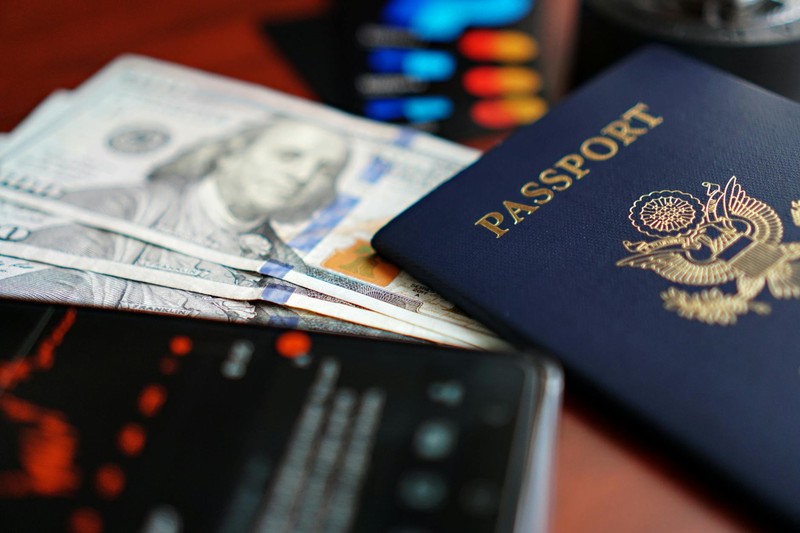
2,700 US passport holders owe more than $100,000 each in unpaid child support. As of Friday, the State Department began revoking their travel documents — and that may be just the beginning.
The revocation program, first reported by the Associated Press in February, is being rolled out in tiers. The initial tranche targets parents with six-figure arrears. But the department says it will soon expand enforcement to anyone owing more than $2,500 — a threshold set by a little-enforced 1996 law. How many people that second tier will capture remains unclear; the Department of Health and Human Services is still collecting data from state agencies. Officials acknowledged the number will be “many more thousands.”
Until now, passport denial for unpaid child support only kicked in when a parent applied for a new or renewed passport. The updated policy is proactive: HHS will share data on all delinquent accounts with the State Department, which will then revoke existing passports without waiting for the holder to come forward.
A “Powerful Tool” With a Track Record
The enforcement mechanism dates to the Personal Responsibility and Work Opportunity Reconciliation Act of 1996, but states have rarely wielded it. Connie Chesnik, president of the Virginia-based National Child Support Engagement Association, told Newsweek the revocation process was “cumbersome and not utilized by many states,” with authorities preferring to deny new applications rather than revoke existing passports.
Even so, the program has accumulated a substantial record. Since enforcement began in earnest in 1998, states have collected roughly $657 million in past-due child support through passport-related actions, including more than $156 million in over 24,000 lump-sum payments in the past five years, according to the State Department.
The department said that after the AP reported the expansion in February, “hundreds of parents took action and resolved their arrears with state authorities since news broke.” Officials said they could not confirm causation in every case, but the department characterized the timing as validation of its approach.
“We are expanding a commonsense practice that has been proven effective at getting those who owe child support to pay their debt,” Assistant Secretary of State for Consular Affairs Mora Namdar said.
Enforcement vs. Earning Power
The policy rests on a straightforward premise: parents who will not support their children lose the privilege of international travel. Those whose passports are revoked will be notified that they cannot use their documents and must apply for a new one once arrears are confirmed as paid. Anyone abroad at the time of revocation will be directed to a US embassy or consulate for a limited-validity document — good only for direct return to the United States.
But the enforcement logic cuts both ways. Confining someone to the country does not necessarily make it easier for them to earn the money they owe. For parents whose income depends on cross-border work, revoking a passport could reduce their ability to pay rather than increase it.
The State Department has not clarified whether any exemptions will be granted based on individual circumstances, such as inability to pay due to unemployment or disability.
The scale of the underlying problem is vast. According to US Census data, about 4.7 million custodial parents had legal or informal child support agreements in 2022. They were collectively owed approximately $29.9 billion but received only $19.2 billion — a shortfall exceeding $10 billion.
Mobility as Leverage
The United States has a well-established practice of linking passport access to financial compliance. The IRS can revoke or deny passports for seriously delinquent tax debt under a 2015 law. Federal student loan defaults have also triggered passport restrictions in certain circumstances.
The practice of conditioning freedom of movement on debt repayment is not unique to Washington. Gulf states restrict mobility for those with outstanding financial obligations. China maintains its own systems of exit controls tied to debt and legal disputes. What distinguishes the American approach is its legal framing: the policy is cast as family welfare enforcement rather than creditor protection, operating through a statutory framework passed by Congress rather than executive discretion alone.
For international observers, the expansion highlights a familiar tension. Democratic governments routinely condition privileges on financial compliance. The question is where international mobility falls on the spectrum between privilege and right — particularly given that freedom of movement is enshrined in the Universal Declaration of Human Rights.
“Deadbeat parents need to pay their child support arrears,” the State Department said.
For roughly 2,700 Americans, that imperative just became a concrete travel restriction. For potentially many thousands more, it soon will be.
Discussion (9)