 lop News
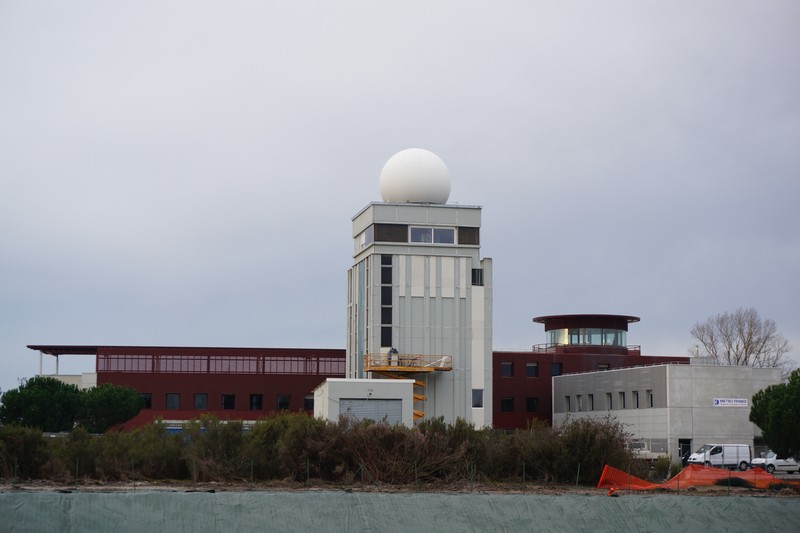
Someone allegedly tampered with a national weather service’s data systems to cash out on a prediction market bet. That is the accusation now under investigation by French police after Météo-France, the country’s meteorology agency, filed a formal complaint over suspected manipulation of its temperature readings.
On April 6, two Polymarket users collected significant payouts after correctly wagering that Paris would reach a high of 21 degrees Celsius — roughly 70 degrees Fahrenheit. French media reported that the win occurred under what were described as unusual circumstances, though the specific nature of those circumstances has not been detailed publicly.
The meteorology agency suspects its data-processing system was compromised to produce or influence the temperature figure that Polymarket used to settle the wager. The agency has not publicly described the method of the alleged tampering. French police are investigating.
The oracle problem, made physical
Prediction markets do not possess intrinsic knowledge of the world. They rely on data sources — called oracles in industry jargon — that feed real-world outcomes into the settlement system. In this case, the oracle appears to have been Météo-France’s own temperature readings. If those readings were altered before reaching the market, the mechanism for determining who profited and who lost would have been compromised at the root.
Oracle manipulation is a known vulnerability in decentralized finance. It has cost crypto protocols hundreds of millions in losses over the past several years. But the French case represents a different order of ambition: allegedly compromising a sovereign government’s official meteorological infrastructure, rather than exploiting a software bug or a liquidity pool.
Polymarket has not publicly commented on the incident or described what safeguards — if any — it uses to cross-check oracle data before settling bets. The platform’s terms of service outline dispute resolution procedures, but the scenario in which the underlying data source itself has been corrupted appears largely untested.
A stress test for prediction markets
The incident lands at an awkward moment for the prediction market industry, which has been aggressively pitching itself to regulators and investors as a more efficient alternative to traditional forecasting. Polymarket in particular has attracted substantial venture capital and media attention, positioning its platform as a tool for aggregating crowd wisdom into actionable probability estimates on everything from elections to central bank decisions.
That proposition depends on a assumption: that the events being wagered on are measured honestly. When the data source is a single government weather station, a corporate earnings filing, or a vote count, a sufficiently motivated actor with the right access can corrupt the input — and with it, the output.
Prediction market advocates have long argued that financial incentives naturally produce accurate forecasts. The French case does not necessarily refute that. It simply shifts the question. The market worked. Someone had better information — because, allegedly, they manufactured it.
What comes next
French authorities will determine whether a crime was committed and, if so, by whom. Polymarket faces a different reckoning: whether its platform can maintain credibility if the data it relies on can be gamed by actors willing to tamper with real-world infrastructure.
For an industry that aspires to become the world’s forecasting layer, the Météo-France complaint is a pointed demonstration that the weakest link in any prediction market may not be the software. It may be the thermometer.
Discussion (9)