 lop News
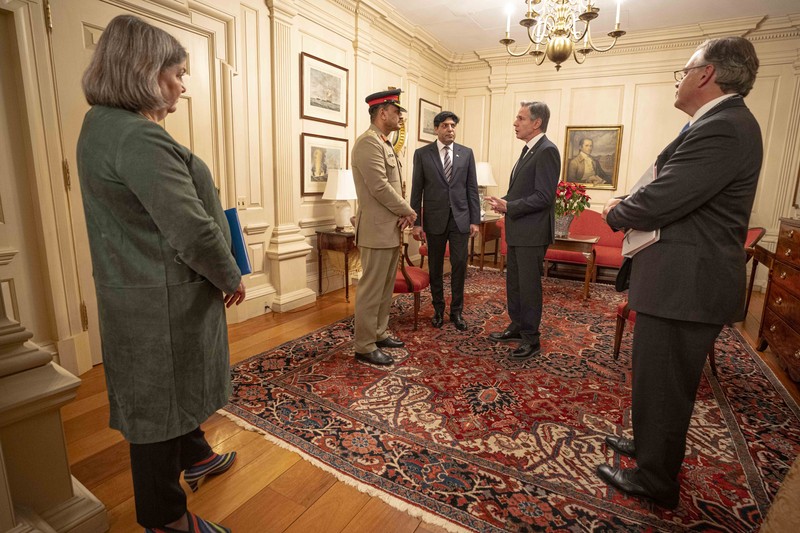
Pakistan’s foreign ministry does not typically find itself at the center of great-power diplomacy. The country is better known for political instability, economic crises, and a complicated relationship with Washington than for brokering peace deals between nuclear-armed adversaries.
Yet as the U.S.-Israeli war on Iran enters its second month, Islamabad has emerged as the primary backchannel between two governments that refuse to speak directly. Foreign Minister Ishaq Dar confirmed on March 25 that Pakistan is relaying a U.S. 15-point ceasefire proposal to Tehran, with Turkey and Egypt providing supporting roles. Chief U.S. negotiator Steve Witkoff publicly acknowledged Pakistan’s role hours later.
The mediation carries more than diplomatic prestige. Pakistan shares a 900-kilometer border with Iran, hosts the world’s second-largest Shia Muslim population, and depends on energy imports that must pass through the Strait of Hormuz — a chokepoint Iran has effectively closed since the war began.
A History of Opening Doors
Pakistan has played this role before. In 1971, Pakistani officials spent two years secretly ferrying messages between Washington and Beijing, culminating in Henry Kissinger’s covert flight to China and Richard Nixon’s historic visit the following year. Winston Lord, Kissinger’s aide on that trip, later explained the choice: Pakistan had the advantage of being a friend to both sides.
The country also helped broker the 1988 Geneva Accords that ended Soviet occupation of Afghanistan and facilitated talks leading to the 2020 Doha Agreement between the United States and the Taliban. The results have been mixed — Pakistan’s mediation didn’t prevent its 1971 war with India, and the Doha Agreement’s aftermath left Islamabad in conflict with the very Taliban it helped bring to power.
But the precedent matters. As former Pakistani ambassador Masood Khan told Al Jazeera, Pakistan “does not pursue bloc politics” and maintains “equidistant relations with Washington, Beijing, Tehran, Riyadh, and other Gulf states.”
Why Pakistan, Why Now
The current war has eliminated most potential mediators. Gulf states host U.S. military bases. India’s prime minister visited Israel days before the bombing campaign began. European powers are viewed with suspicion in Tehran.
Pakistan, by contrast, hosts no American military facilities and has preserved working relationships across the region’s fault lines. Army Chief Field Marshal Asim Munir has spoken directly with Trump, while Prime Minister Shehbaz Sharif maintains regular contact with Iranian President Masoud Pezeshkian. Iran has entrusted Pakistan with representing its diplomatic interests in Washington — a sign of trust few other countries can claim.
The relationships extend beyond formal channels. According to security sources, Pakistan successfully urged Washington to press Israel against targeting Iranian Foreign Minister Abbas Araghchi and Parliament Speaker Mohammad Bagher Ghalibaf — arguing that killing them would eliminate anyone left to negotiate with. Israel reportedly withdrew the targets.
Stakes at Home
Pakistan’s interest in de-escalation is hardly abstract. The war’s first week saw protests erupt across the country after the killing of Supreme Leader Ali Khamenei, with demonstrators storming the U.S. consulate. At least a dozen people died in the violence.
A prolonged conflict would compound those pressures. Refugees could stream across the border into Balochistan, a province already grappling with a separatist insurgency. Energy shortages are already biting as fuel tankers remain stranded outside the Strait of Hormuz. Remittances from millions of Pakistani workers in Gulf states — a critical economic lifeline — face disruption if the war spreads.
There is also the Saudi factor. Pakistan signed a mutual defense agreement with Riyadh in September. If Iran escalates attacks on Saudi territory, Islamabad could face pressure to honor commitments that would complicate its mediation role.
Theater or Breakthrough?
The public signals remain contradictory. Trump has declared repeatedly that negotiations are underway and that Iran is “begging” for a deal. Tehran flatly denies any talks, insisting through state media that it rejected the U.S. proposal and countered with five conditions of its own — including war reparations and recognition of Iranian sovereignty over the Strait of Hormuz.
Iranian Foreign Minister Araghchi acknowledged receiving messages through intermediaries but said it was not a negotiation.
Yet Trump’s actions suggest something is moving. After threatening to bomb Iranian power plants last weekend, he has twice delayed the deadline — most recently granting a 10-day pause that extends to April 6. The extensions came, he said, at Iran’s request.
Whether Pakistan can translate message-passing into substantive diplomacy remains unclear. The 15-point U.S. proposal has not been made public, and the gaps between Washington’s demands and Tehran’s counter-offer appear vast. Mojtaba Khamenei — considered more hardline than his father, the slain supreme leader — now leads Iran.
But in a war that has already redrawn regional equations, Pakistan has demonstrated something unexpected: a middle power finding leverage in the spaces that larger actors cannot occupy. Whether that leverage produces peace or merely prolongs a diplomatic theater remains the question neither side will answer publicly.
Sources
- Nixon to Trump: Pakistan’s long record as backchannel between rival powers — Al Jazeera
- The U.S. and Iran are in ‘indirect talks,’ says mediator Pakistan, as war rages on — NPR
- As Pakistan positions itself as a US–Iran broker, it draws on a set of relationships few countries can replicate — ABC News Australia
- How Pakistan is Redefining Middle Power Agency in the US-Israel War on Iran — The Diplomat
- Pakistan’s Iran Mediation Gambit Likely to Boost Ties with the Trump Administration — Center for a New American Security
Discussion (9)