 lop News
Nearly 113,000 dead. Then roughly 71,500. That is the arithmetic of the fastest sustained decline in US drug overdose deaths in more than four decades — and nobody is sure how long it will last.
The numbers, drawn from provisional CDC data spanning August 2023 through October 2025, represent an unprecedented reversal in an epidemic that has killed more than a million Americans since 1999. Opioid deaths fell so sharply that, for the first time in decades, stimulants like cocaine and methamphetamine now kill more people than opioids, according to Lori Ann Post, a researcher at Northwestern University whose work tracking the trend was published in the American Journal of Public Health.
“This is unprecedented and historic, for the longest consecutive months of decline,” Post said. “That is awesome.”
In Maine, no one under 25 has died of a drug overdose in nearly a year. Zero.
What’s actually driving the decline
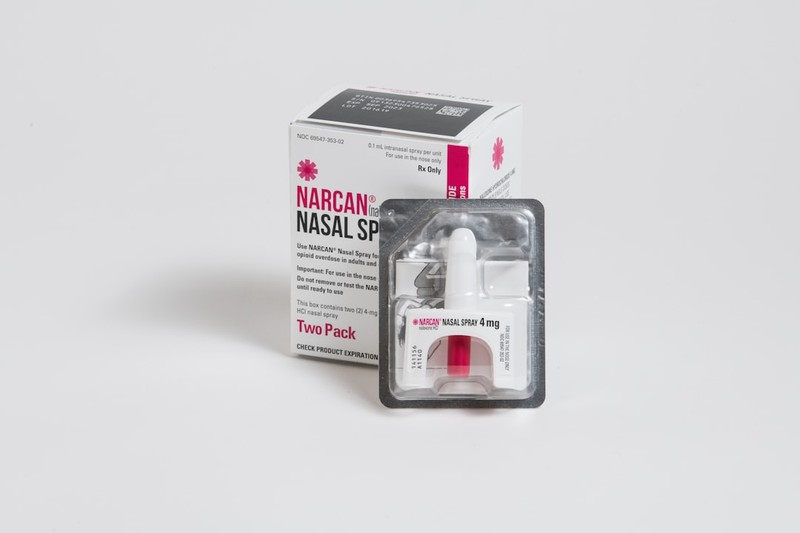
The question of why deaths are falling is less straightforward than it first appeared. Early explanations credited wider naloxone (Narcan) distribution and expanded addiction treatment. But a $344 million NIH-funded study of community interventions in hard-hit areas found no measurable mortality benefit from those programs.
Instead, a January 2026 study published in Science — authored by researchers at the University of Maryland, the University of Chicago, and Stanford — pointed to a different cause: a disruption in the global supply of illicit fentanyl itself.
The researchers drew on mortality surveillance, forensic drug testing, chemical precursor monitoring, and social media signals to conclude that the fentanyl market experienced a genuine supply shock starting in mid-2023. DEA data showed the purity of fentanyl pills declining from the first quarter of 2024. Similar declines appeared in Canada, a country with different health systems and drug policies but the same international supply chain.
The likely catalyst: China. Beginning in late 2023, following renewed US–China counternarcotics cooperation, the US sanctioned dozens of Chinese chemical firms and indicted several companies and executives. China responded with stronger licensing requirements, inspections, and transport screening for precursor chemicals. Authorities shut down online precursor marketplaces.
The findings offer the strongest evidence yet that synthetic drug epidemics are supply-chain sensitive — disrupt the chemistry, and you save lives.
The “synthetic soup” arriving next
This is where the story turns. While the fentanyl supply has been disrupted, illicit chemists have not been idle. Researchers now describe the US street drug supply as a “synthetic soup” — a fast-changing cocktail of industrial chemicals that users cannot predict, test for, or protect themselves from.
Earlier this year in Richland County, South Carolina, coroner Naida Rutherford investigated an overdose that looked like a textbook fentanyl death — foam from the mouth and nose, the works. Her team’s drug screen came back negative. Only when she expanded testing did they find cychlorphine, a potent synthetic opioid that standard panels don’t detect.
“This is the first time we’ve seen it in South Carolina, which is very scary because none of us knew to test for it,” Rutherford told NPR.
“Once a month or every other month, we’re encountering something that we’ve never seen before, and we don’t have indications of it being seen in the United States before,” said Ed Sisco, a research chemist at the National Institute of Standards and Technology, which tracks street drugs.
The new arrivals include cychlorphine and nitazenes — synthetic opioids often more potent than fentanyl — and a dangerous sedative called medetomidine, a veterinary tranquilizer approved for dogs but not humans. The CDC issued a health alert on April 2 warning that medetomidine detections in law enforcement seizures surged 950% from 2023 to 2024, then rose another 215% in 2025. At sentinel testing sites, medetomidine appeared in roughly 35% of opioid-positive samples between July and December 2025.
Medetomidine causes heart rates as low as 32 beats per minute and prolonged sedation. Withdrawal can be life-threatening — marked by severe hypertension, tachycardia, tremors, and chest pain — often requiring intensive care. Unlike standard opioid overdoses, naloxone does not reverse its effects. In a May 2024 cluster in Chicago, 12 confirmed medetomidine-involved overdoses, 26 probable cases, and 140 suspected ones overwhelmed emergency services. One person died.
The paradox of a worse drug supply
There is a strange wrinkle. Nabarun Dasgupta, a street drug researcher at the University of North Carolina, believes the adulteration crisis may paradoxically be helping drive deaths down. Users encountering the new, more toxic mixtures are simply stopping.
“People who have been using for a long time are saying, that’s enough, that’s not what I signed up for,” Dasgupta said.
Whether that deterrence effect outweighs the growing toxicity is an open question — one that will determine whether the current decline holds or reverses. The fentanyl supply shock saved tens of thousands of lives. The chemists already have replacements in the pipeline.
Sources
- Historic decline in U.S. overdose deaths threatened by changing street drug supply — NPR
- Medetomidine in the U.S. Illegal Fentanyl Supply Increasing Risk for Severe Withdrawal Syndrome — CDC Health Alert Network
- Reported 2025 drug overdose ‘spike’ was an illusion, new study finds — Northwestern University
- “Shock” in Fentanyl Supply Leads to Dramatic Drop in Deaths — Psychology Today