 lop News
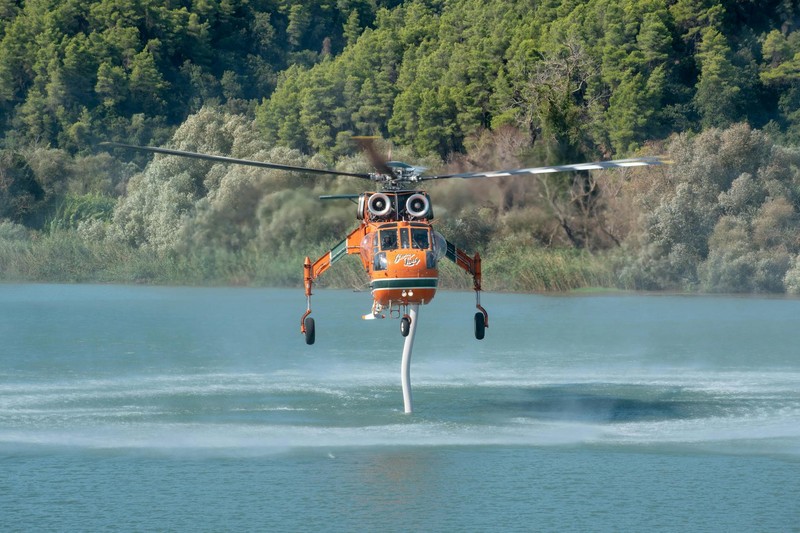
For Yoshinori Komatsu, the difference between a tsunami and a wildfire comes down to what remains. “A fire burns everything down,” the 74-year-old Otsuchi resident told reporters, watching Self-Defense Force helicopters dump water on distant hillsides. “With a tsunami, you might have something left after the destruction.”
Otsuchi knows both disasters now. The small Pacific coast town in Iwate Prefecture sits in a narrow strip of land between steep, forested mountains and the sea — a geography that makes it vulnerable to catastrophes from both directions. In March 2011, the town lost nearly a tenth of its population when the earthquake and tsunami struck, one of the hardest-hit communities in a disaster that killed roughly 18,000 people across the Tohoku region.
Fifteen years later, the threat comes from the mountains. Two wildfires burning since Wednesday are advancing toward the homes that survived the wave, and by Sunday — day five — the situation was still deteriorating. Columns of smoke visible for miles have become the defining image of a town under siege once again.
The Scale of the Burn
The fires broke out Wednesday afternoon in two separate locations roughly 10 kilometers apart — one in the mountains above Otsuchi, the other to the southeast — according to NHK World. By early Sunday, the combined area consumed had reached 1,373 hectares, Iwate Prefecture officials said — a 7 percent increase from Saturday and nearly double the 730 hectares aerially confirmed as of Friday.
The speed of the spread has alarmed officials. Evacuation orders now cover roughly a third of Otsuchi’s population: 3,233 people from 1,541 households. At least eight buildings, including homes, have burned. Local authorities said all residents had evacuated before the flames reached those structures. The only reported injury so far was a fall at an evacuation center, according to Japan’s Fire and Disaster Management Agency.
Japan has mobilized 1,400 firefighters from multiple prefectures alongside 100 Self-Defense Force personnel — an unusually large deployment for a country that does not typically face wildfire on this scale. Roughly a dozen helicopters are conducting water drops during daylight hours, and firefighters are working around the clock. Five shelters are operating in Otsuchi, with a sixth in neighboring Kamaishi.
A Pattern Emerges
This is the second major wildfire to strike Iwate Prefecture in just over a year — and the parallels are difficult to ignore. In 2025, a blaze in the city of Ofunato, also in Iwate Prefecture, consumed 3,370 hectares from late February until early April, making it Japan’s worst wildfire in more than half a century, according to DW. Media reports now rank the Otsuchi fires as the third-largest by area in the country’s recorded history.
Two of Japan’s three largest wildfires have occurred within a thirteen-month span, in the same rural prefecture on the northeast coast.
DW reports that scientists have linked Japan’s increasingly dry winters to climate change, noting that longer and more intense drought periods are creating conditions favorable to larger and more persistent wildfires. The pattern mirrors shifts seen from southern Europe to western Canada, but it marks a significant change for a country whose disaster infrastructure has historically centered on earthquakes, tsunamis, and typhoons. Wildfire season in Japan was once brief and manageable. The past two years suggest that may no longer be the case.
No Rain in Sight
“Although the Self-Defence Forces are fighting the fires from the sky (with helicopters), the dry weather and winds are helping the fires expand,” Otsuchi Mayor Kozo Hirano told a press conference. The Japan Meteorological Agency forecasts no rain through Monday, with only a brief shower expected Tuesday. The cause of the fires remains under investigation.
For a town of roughly 10,000 that has spent fifteen years rebuilding from one catastrophe, the timing is particularly cruel. Otsuchi’s population had been declining for years before 2011; the tsunami accelerated that exodus. Those who stayed did so despite every reason to leave. The current evacuation order covers nearly a third of them.
Komatsu’s comparison lingers. A tsunami surges and recedes. Whatever it spares, you keep. A wildfire doesn’t recede. It burns until nothing is left to consume, or until rain and human effort force it to stop. Across 1,373 hectares of blackened hillside above Otsuchi, neither was winning on Sunday.
Sources
- Japan deploys 1,400 firefighters to battle raging wildfires in the north — Channel News Asia
- Battle against wildfires intensifies in Iwate Prefecture — NHK World
- Wildfire in northeast Japan burns 1,300 hectares, firefighting continues — Mainichi / Kyodo
- Japan: Raging wildfires cause mass evacuations — DW News
Discussion (9)