 lop News
The Oreshnik missile was always meant to be a message. Now it has been delivered — again.
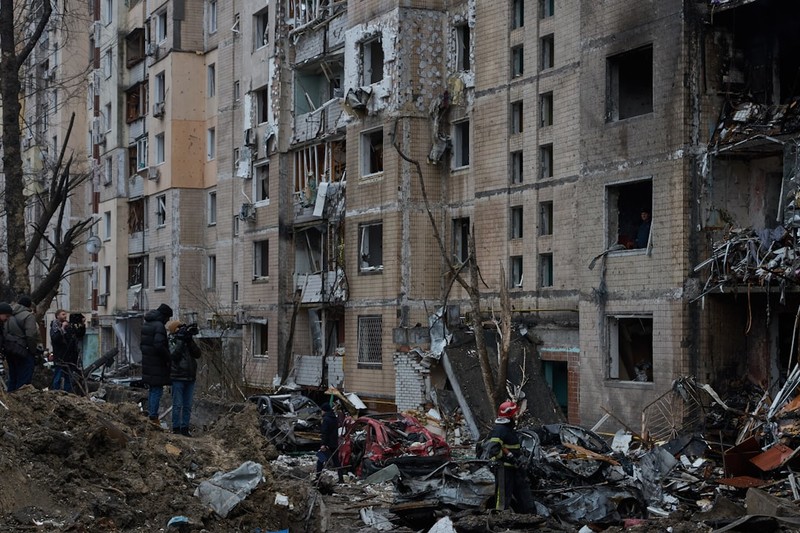
Russia launched its intermediate-range Oreshnik ballistic missile at Kyiv Oblast overnight on May 24, the third known use of the weapon in this war and the first aimed at the Kyiv region. The launch came as part of one of the largest Russian bombardments in over a year: 90 missiles and 600 drones fired across several hours, killing four people and wounding roughly 100 more.
For a weapon Vladimir Putin has described as “state-of-the-art” — nuclear-capable, travelling at 10 times the speed of sound — the casualties were comparatively contained. The Oreshnik struck Bila Tserkva, a city roughly 80 kilometres south of the capital. Its previous uses, against Dnipro in November 2024 and Lviv Oblast in January, similarly produced limited damage relative to the weapon’s theoretical destructive capacity.
Four dead, from nearly 700 munitions including a missile designed to reach anywhere in Europe. If the goal was mass casualties, the barrage was wildly inefficient. If the goal was to remind Kyiv’s Western backers what Russia can escalate to — a nuclear-capable intermediate-range missile launched at a European capital’s outskirts — then every warhead served its purpose.
Every District Hit
The wider assault was anything but symbolic. Kyiv Mayor Vitali Klitschko reported damage “in every district of the city.” The National Art Museum, the Kyiv Opera Theater, the Chornobyl Museum, and the Ukrainian House were all damaged. The Foreign Ministry building was struck for the first time since the Second World War, according to Foreign Minister Andrii Sybiha. The Cabinet of Ministers building had its windows blown out by a blast wave.
About 30 residential buildings were damaged or destroyed in Kyiv alone. A water supply facility, a market, schools, a shopping centre, and a supermarket were hit. The residence of the Albanian ambassador was damaged; offices housing German broadcasters ARD and DW were struck, though both were empty at the time.
Ukraine’s air force said it intercepted 549 of the 600 drones and 55 of the 90 missiles — a rate Kyiv will cite as evidence that air defence support remains critical. Ukraine has been grappling with an acute missile deficit, worsened by US demand for Patriot interceptors driven by the Middle East conflict.
A Cycle of Retaliation
The assault followed Putin’s threat to retaliate for a Ukrainian drone strike on Starobilsk, in Russian-occupied Luhansk, that killed at least 21 people at a college dormitory. Most of the dead were young women born between 2003 and 2008, according to the Moscow-backed governor of occupied Luhansk. Ukraine denied targeting civilians, saying it had struck a Russian drone unit in the area.
Russia’s military said the Oreshnik launch was “in response to Ukraine’s terrorist attacks on civilian infrastructure on Russian territory.” Moscow denied targeting civilians in its own barrage.
The cycle is familiar: a strike, a retaliatory escalation, condemnations, and then another strike. What changed overnight is the calibre of weapon folded into that cycle.
Diplomatic Maneuvers
Sybiha called for emergency meetings of the United Nations Security Council and the Organization for Security and Co-operation in Europe. “Putin is trying to intimidate Ukraine by attacking civilians and destroying residential buildings, museums, schools, and critical infrastructure,” he wrote on X. “He is also trying to intimidate the world by launching IRBMs against peaceful cities.”
EU foreign policy chief Kaja Kallas called the Oreshnik launch “a political scare-tactic and reckless nuclear brinkmanship,” adding that EU foreign ministers would discuss increasing pressure on Russia next week. The EU is preparing a fresh sanctions package targeting entities involved in missile production and sanctions evasion, according to a document seen by the Kyiv Independent.
French President Emmanuel Macron said the strikes signalled “the dead end of Russia’s war of aggression.” German Chancellor Friedrich Merz called the Oreshnik use “a reckless escalation.”
From Threat to Recurring Option
When Putin first unveiled the Oreshnik, it was a warning held in reserve — a demonstration of capability meant to loom over negotiations and red lines. Its third deployment, aimed at Kyiv’s doorstep, turns a one-off signal into a recurring escalatory tool. Russia has shown it will launch intermediate-range ballistic missiles designed for nuclear delivery at European targets as part of the normal rhythm of this war.
US-led efforts to negotiate an end to the fighting have slowed in recent months, with Washington’s attention drawn toward the Middle East. The diplomatic track is not dead, but it is not moving either.
Ukraine, meanwhile, struck back in the same hours. Its Security Service reported a successful drone attack on the Vtorovo oil pumping station in Russia’s Vladimir Oblast — a strategic hub supplying fuel to Moscow’s major airports. Attack and counter-attack in parallel, as though neither side saw a reason to pause.
Sources
- Ukraine war latest: Russia terrorizes Kyiv with massive ballistic missile, drone attack — Kyiv Independent
- What is Russia’s Oreshnik missile? — Euronews
- Russia kills 4 in massive Ukraine attack using nuclear-capable missile — Channel News Asia
- Macron, EU’s Kallas condemn Russian attack on Ukraine with Oreshnik ballistic missile — France24
Discussion (10)