 lop News
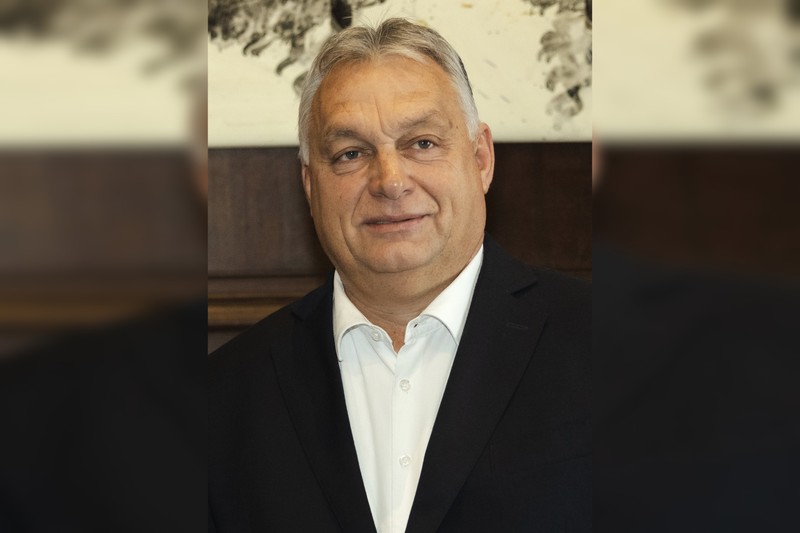
Viktor Orbán has led what he calls Hungary’s “national side” for nearly four decades. On Saturday, he announced he would not take his seat in parliament, choosing instead to “reorganize” a political movement that just lost by nearly a million votes.
Hungary’s April 12 election ended Orbán’s 16-year grip on power in what analysts described as the most consequential vote in the European Union this year. Péter Magyar’s center-right Tisza Party won 141 of the National Assembly’s 199 seats, according to the Associated Press — the largest majority in Hungary’s post-communist history. Orbán’s Fidesz collapsed from 135 seats to roughly 52. Turnout hit 78.9 percent, the highest since Hungary’s democratic transition in 1990.
“Never before in the history of democratic Hungary have so many people voted — and no single party has ever received such a strong mandate,” Magyar told supporters gathered beside the Danube on election night.
What Cracked the Machine
Fidesz had won four consecutive elections by stacking the institutional deck: gerrymandered districts, a captured media landscape, and a patronage system known as NER that funneled state resources to loyalists. By most measures, the playing field remained tilted in Fidesz’s favor. It simply wasn’t tilted enough.
The Heinrich Böll Foundation, a German political think tank, argued that Hungarian voters were not casting ballots for “democracy as an abstract ideal” but for a state that delivers functional healthcare, infrastructure, and accountability. In an interview with the Patrióta YouTube channel after the defeat, Orbán acknowledged that “luxury lifestyles” and corruption allegations may have played a role.
“I have never tolerated any form of corruption,” Orbán insisted — a claim that sits uneasily alongside years of investigative reporting, frozen EU funds, and the patronage networks Magyar has vowed to dismantle.
The catalyst was a scandal in February 2024, when President Katalin Novák resigned after granting a pardon in a pedophilia case. Magyar — then a Fidesz insider and ex-husband of former justice minister Judit Varga — publicly broke with the regime, calling its nationalist messaging a “political product” designed to obscure systemic corruption. Within two years, he had built Tisza from nothing into a governing supermajority.
Ripple Effects Beyond Budapest
Orbán was Vladimir Putin’s closest EU ally, a reliable veto wielder who blocked aid to Ukraine and, according to investigative reports cited by the Heinrich Böll Foundation, leaked classified EU negotiation details to Moscow. He was also a close partner of US President Donald Trump, earning a last-minute campaign appearance from Vice President JD Vance.
Magyar has pledged to distance Hungary from Russia and repair relations with the EU. He has signalled that Hungary might support the release of the EU’s €90 billion loan to Ukraine — though he opposes contributing to it directly or fast-tracking Ukraine’s EU accession. His first trip abroad will be to Warsaw.
The EU has approximately €17 billion in frozen funds waiting, contingent on rule-of-law reforms. Magyar’s government intends to collect them.
Polish Prime Minister Donald Tusk was among the first European leaders to celebrate, welcoming Magyar’s “glorious victory” and adding, in Hungarian, “Ruszkik Haza” — Russians go home.
A Comeback — or an Obituary?
Orbán, 62, has signaled he will remain Fidesz president after a party congress convenes in June. He framed his project as defeated but not dead, urging his 2.3 million remaining supporters to stay united.
“The future belongs to patriots,” he insisted.
But the arithmetic is unforgiving. Fidesz holds roughly a quarter of the new parliament. The institutions Orbán spent 16 years reshaping now belong to a man who knows exactly how they work — because he helped build them. Magyar’s two-thirds majority can amend the constitution, dismantle the patronage networks, and restore judicial independence.
When the new parliament convenes on May 9, it will be the first time since 1990 that Orbán does not hold a seat among lawmakers. For a leader who built his brand on winning, his promise to “rebuild” sounds less like a rallying cry than the opening line of a very long concession speech. He has time. Whether he still has a coalition is another matter.
Sources
- Orbán steps back after a landslide loss, vowing to rebuild Hungary’s ‘national side’ — AP News
- Orbán era swept away by Péter Magyar’s Hungary election landslide — BBC News
- “I thought we would win” – Orbán rejects corruption claims and signals the rebuild of Fidesz party after defeat — Daily News Hungary
- 2026 Hungarian parliamentary election — Wikipedia
- 3 Questions on Péter Magyar’s landslide victory in Hungary — Heinrich Böll Foundation
Discussion (9)