 lop News
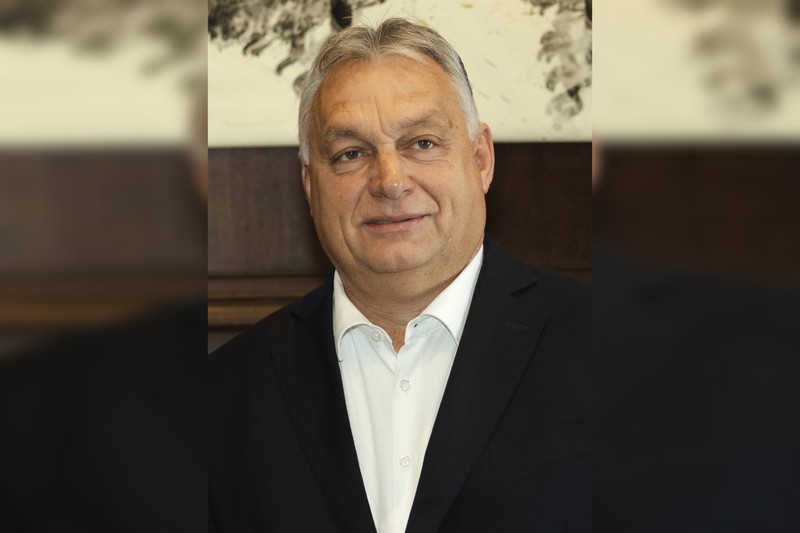
Viktor Orbán spent years perfecting the art of holding the European Union hostage. On Thursday, the EU got its hostage back.
Brussels approved a €90 billion ($106 billion) loan package for Ukraine — the largest single financial commitment to Kyiv since Russia’s full-scale invasion — after Hungary finally lifted its veto. The breakthrough had less to do with diplomatic persuasion than with two brute facts: Russian oil started flowing again through a pipeline that crosses Ukrainian territory, and Orbán lost an election.
The package, covering 2026 and 2027, was supposed to be agreed in December. Orbán even signed off then, securing an opt-out so Hungary wouldn’t have to contribute. He reneged in February, citing the disruption of oil flows through the Druzhba pipeline, which carries Russian crude to Hungary and Slovakia. Ukraine blamed the damage on Russian drone attacks. Orbán accused Kyiv of deliberately delaying repairs. The money — and a new round of sanctions against Moscow — stayed frozen.
The pipeline that broke the bloc
The Druzhba pipeline became a fault line running through EU politics. Hungary and Slovakia, unlike the rest of the bloc, still depend on Russian oil for their energy needs. When flows stopped in January, the economic pressure was immediate — and so was the political opportunism. Orbán made the pipeline dispute a centerpiece of his re-election campaign, casting Ukraine as an unreliable partner undeserving of European largesse.
On April 12, Hungarian voters delivered their verdict. Orbán lost in a landslide to opposition leader Péter Magyar, who campaigned on restoring the rule of law and repairing relations with Brussels. The transition — Hungary’s first change of power in 16 years — reshuffled the political calculus overnight.
Cyprus, which holds the EU Council’s rotating presidency, moved to add the loan package to an ambassadors’ meeting even before Ukrainian President Volodymyr Zelenskyy announced the pipeline had been repaired, according to Euronews. When no objections were raised on Thursday, the deal was done.
“Promised, delivered, implemented,” European Council President António Costa posted on social media.
What €90 billion buys
The package splits evenly across two years. For 2026, €45 billion will flow to Ukraine: €16.7 billion in direct financial support and €28.3 billion for military assistance, according to the European Commission. The remaining €45 billion is earmarked for 2027, covering roughly two-thirds of Ukraine’s projected funding needs, with Western allies expected to cover the rest.
Notably, the military component includes “Made in Europe” provisions designed to channel spending toward EU defense manufacturers rather than US firms. It is the clearest signal yet that Brussels views the war not just as a security crisis but as a catalyst for building an independent European defense industrial base — a project that has gathered urgency as confidence in American security guarantees erodes.
The 24 participating member states will absorb roughly €3 billion in annual interest costs. Hungary, Slovakia, and the Czech Republic opted out of the joint borrowing. Ukraine will only be required to repay the loans if Russia agrees to war reparations — something Moscow has categorically refused. The Commission retains the right to tap the €210 billion in immobilised Russian Central Bank assets to compensate, Euronews reported.
Alongside the loan, the EU approved its 20th sanctions package, targeting more than 40 vessels in Russia’s shadow oil fleet, several banks, a ban on Europeans using Russian cryptocurrency, and around 60 additional entities. Over 2,600 Russian officials and organizations are now under sanctions.
The veto problem
For Kaja Kallas, the EU’s high representative for foreign policy, the ordeal reinforced an uncomfortable structural truth. The bloc’s requirement for unanimity means a single leader can paralyze the other 26.
“We have seen recently that when 26 countries want something, and one does not, then we end up doing what that one country wants, not what the 26 want,” Kallas told Euronews in an interview at the Cyprus summit. “So it is not really democracy.”
A senior diplomat described Orbán’s veto as a “turning point” in relations between Brussels and Budapest. Kallas, reflecting on Orbán’s pattern of overlapping vetoes, said she was “very hopeful” about working with Magyar’s incoming government, expected to take office in mid-May. But the structural problem persists: EU treaties allow a shift to qualified majority voting, but making that change itself requires unanimous consent — a Catch-22 that leaves the bloc vulnerable to the next leader willing to exploit it.
Membership and leverage
Zelenskyy, attending the Cyprus summit, pushed for accelerated EU membership, rejecting what he called “symbolic membership.”
“Ukraine does not need symbolic membership in the EU,” he said. “Ukraine is defending itself — and it is also defending Europe. And it is not doing so symbolically — people are really dying.”
Kallas framed enlargement as a strategic calculation, noting that Ukraine fields by far the largest army in Europe. “Europe would be stronger if Ukraine were with us,” she said.
The accession process, however, remains stalled. Orbán’s veto on opening negotiation clusters with Kyiv is still in place, and Magyar has expressed reservations about fast-tracking talks — a view shared by other member states who worry that shortcuts would undermine the credibility of the enlargement process.
For now, the money moves. Zelenskyy said he was working to ensure the first tranche becomes available as early as May or June. For Ukraine, entering its fifth year of full-scale war with global attention drifting toward the Middle East, the timing matters more than the optics.
Discussion (10)