 lop News
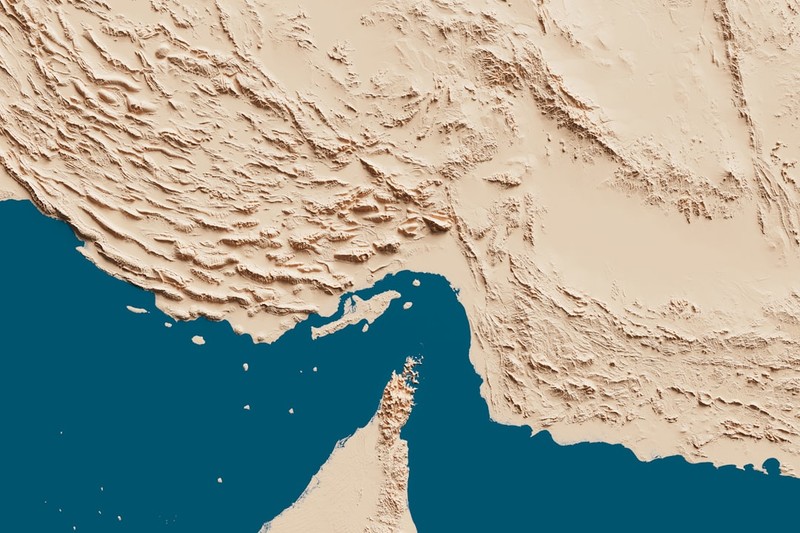
OPEC+ will meet on Sunday to raise oil production quotas for the third consecutive month — a gesture roughly equivalent to ordering more delivery trucks for a warehouse whose loading dock is on fire.
Seven member nations have agreed in principle to boost output targets by approximately 188,000 barrels per day in June, according to two sources familiar with the group’s thinking who spoke on condition of anonymity. The increase comes despite the Strait of Hormuz remaining effectively closed to commercial shipping for more than two months, rendering the quota hike what Gulf oil executives and global traders describe as “largely symbolic.”
Paper Barrels vs. Real Barrels
The disconnect between OPEC+’s quota announcements and actual supply has rarely been this stark. Total crude output from all OPEC+ members averaged 35.06 million barrels per day in March — down 7.7 million bpd from February, according to an OPEC report published last month. Iraq and Saudi Arabia accounted for the biggest cuts, not by choice but because they cannot export through a waterway that Iran has mined, blockaded, and subjected to missile and drone attacks since late February.
Russia, also among the seven nations meeting Sunday, has its own supply problems. Ukrainian drone attacks have damaged Russian energy infrastructure, forcing output cuts unrelated to the Gulf crisis.
The result: the world’s largest oil producers are collectively announcing supply increases they cannot physically deliver. Sunday’s increase mirrors last month’s hike of 206,000 bpd, minus the UAE’s share — which vanished from the calculation entirely when Abu Dhabi walked out of OPEC on May 1 after years of friction with Saudi Arabia over production limits.
The Signal and the Strait
So what is OPEC+ actually doing? The cartel is speaking to futures markets, not to tankers.
Sources described the decision as a “business-as-usual approach” signaling willingness to raise supply once the war ends. In commodity trading, expectations matter almost as much as physical barrels. By maintaining a rhythm of monthly quota increases, OPEC+ tells the market that supply will return and that the group stands ready to open the taps when shipping lanes clear.
Whether anyone is convinced is another question. Oil prices hit a four-year high above $125 per barrel earlier this week before retreating Friday on news that Iran had sent an updated peace proposal to mediators in Pakistan. US crude fell 3% to close at $101.94; the international benchmark Brent dropped nearly 2% to settle at $108.17.
The swing captures the current market: physical supply is deeply constrained, with roughly 20% of global seaborne oil trade cut off and tanker traffic through Hormuz reduced to near zero. Yet a single diplomatic rumor can move prices by several percentage points in a session, because traders are pricing not just today’s reality but the probability of a near-term deal.
Saudi Arabia’s Calculus
Saudi Arabia, the dominant voice at Sunday’s meeting, faces competing pressures. Riyadh’s budget depends heavily on oil revenue to fund massive infrastructure projects under its Vision 2030 program — high prices are very much in its interest under normal circumstances. But the Hormuz closure has crippled Saudi exports, meaning the kingdom earns elevated prices on volumes that have shrunk dramatically.
By backing quota increases, Riyadh signals it can and will replace disrupted supply once the strait reopens — a message aimed at both futures markets and at OPEC+ itself. The UAE’s departure deprived the cartel of its third-largest producer and one of the few genuine swing suppliers. Abu Dhabi had invested heavily to expand capacity to 5 million bpd by 2027 and had chafed under Saudi-backed quota restrictions for years, according to analysts at The Conversation. Riyadh’s implicit argument: Saudi Arabia alone can fill the swing-producer role Abu Dhabi abandoned.
The Waiting Game
Even if diplomacy breaks through — and IG market analyst Tony Sycamore has described prospects for a near-term resolution as “dim” — the logistics will drag. Wood Mackenzie analysts estimate that Gulf countries will need months to return to pre-war production volumes once Hormuz reopens.
Iran’s latest proposal would open the strait and end the US blockade in exchange for guarantees against further attacks, leaving nuclear negotiations for later. A senior Iranian official told reporters the framework would move “negotiations over the more complicated nuclear issue” to a final stage. The White House has shown little interest so far. Trump told reporters Friday he preferred a non-military path “on a human basis” but said the United States would not end the confrontation early, “and then have the problem arise in three more years.”
Until something gives, OPEC+ will keep announcing quota increases that exist only on paper, prices will swing on diplomatic rumors, and thousands of mariners will sit stranded in the Persian Gulf waiting for someone to clear the mines.
The market can price in a ceasefire. It cannot sail through one.
Sources
- OPEC+ set for another oil output quota hike despite Hormuz closure — CNBC
- Oil prices soar on fears of long supply disruption, US siege of Iran ports — Al Jazeera
- Iran offers Strait of Hormuz deal; Trump prefers non-military path — CNBC
- 2026 Strait of Hormuz crisis — Wikipedia
- UAE’s OPEC exit has been long in the works – and may mark the beginning of a Gulf realignment — The Conversation
Discussion (8)