 lop News
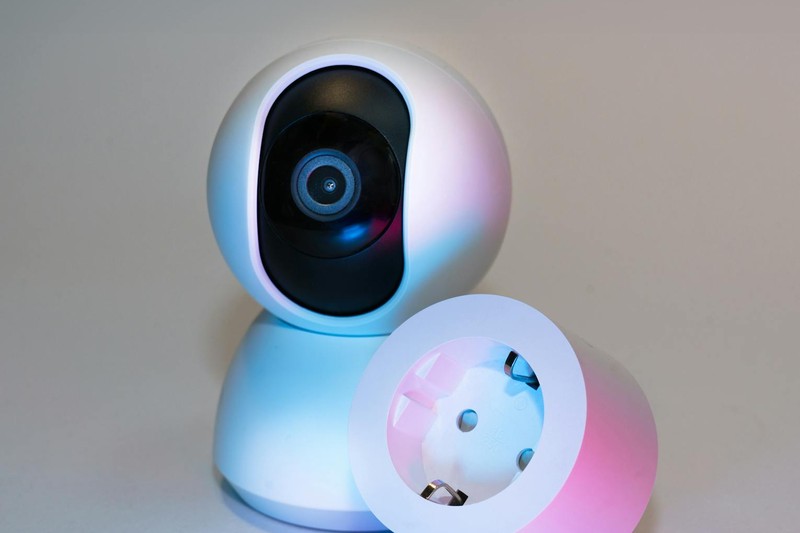
A baby stares into the camera lens. A boy in a policeman’s costume looks up, a gold star pinned to his chest. An unmade bunk bed, a girl’s headband, Hello Kitty on the wall.
These are children in their own bedrooms, filmed by cameras their parents bought to keep them safe. For over a thousand days, anyone with a web browser could have been watching.
French security researcher Sammy Azdoufal discovered that 1.1 million Wi-Fi baby monitors and security cameras across 118 countries were accessible to strangers. Not through sophisticated exploitation. Through a single cryptographic key hardcoded into every Android app the manufacturer shipped, and message brokers that required no authentication to subscribe to.
“I can retrieve the picture without any passwords, no cracking, no hacking,” Azdoufal told The Verge. “I just click on the URL and this image is showing.”
The Invisible Giant
Meari Technology is a Hangzhou-based original design manufacturer. It builds cameras, firmware, cloud infrastructure, and mobile apps, then sells the entire stack to partners who put their own logos on the box. The company listed on Shenzhen’s ChiNext board in March 2025. Its share price doubled in two trading sessions.
Consumers rarely encounter the name. They see Arenti, Anran, Boifun, ieGeek. According to The Verge, financial records list Wyze among Meari’s largest customers. In France, affected products moved through Fnac, Cdiscount, and Amazon under brands including Beaba and Protectline. At least one Petcube camera appears to be a Meari product. The common thread is the CloudEdge app — Meari’s consumer platform and the gateway to every affected device.
Five Vulnerabilities, One Design Philosophy
Azdoufal, coordinating with Tod Beardsley of runZero, filed five CVEs on May 11. The most severe — CVE-2026-33362, rated 8.6 on the CVSS scale — reveals that every Meari-based app ships identical hardcoded cryptographic keys: an HMAC secret, a DES key for password transport, an OpenAPI key, and a P2P password. None can be rotated without re-flashing every device in the field.
The MQTT broker streaming motion alerts enforced no per-device access controls (CVE-2026-33356). Any free CloudEdge account could subscribe to the platform-wide message feed and watch every device in real time. Azdoufal measured 14,204 messages from 2,117 distinct devices in five minutes on a single regional broker.
Alert images were uploaded to public Alibaba Cloud Storage with no authentication, no signed URLs, and no expiry (CVE-2026-33359). A 72-second capture yielded 51 accessible image URLs from 29 cameras. Baby-monitor images used trivially reversible XOR obfuscation — the decryption key was the device serial number, which arrived in the same message as the image URL.
Azdoufal also found an unauthenticated Apollo Configuration Server exposing 614 production keys, database credentials, an RSA private key, and Facebook OAuth secrets. EMQX management dashboards were running default logins: the word “admin,” paired with “public.”
Built to Harvest
In his technical writeup, Azdoufal concluded that the architecture does not look like a platform that took a wrong turn. “It looks like a platform built to harvest customer data at scale, secured by defaults that nobody on the inside ever planned to rotate.”
A Meari patent filing describes a machine-learning model for detecting and translating infant crying that fuses millimetre-wave radar with audio from children’s bedrooms. Training such a model requires data traces from hundreds of thousands of deployed cameras. A 2024 Zhejiang regulatory notice had already found the company “continues to collect user data beyond necessary scope.”
Threats, Not Apologies
When Azdoufal first contacted Meari in March, the company ignored him for two weeks — its vulnerability reporting page was offline. After he demonstrated access to internal systems, including the personal contact details of 678 employees, the company responded with what Azdoufal describes as a veiled threat. Meari told him it was “fully capable of protecting our interests” and that it knew where he lived, according to The Verge. The company also attempted to backdate its security bulletins to precede Azdoufal’s initial disclosure.
An unnamed Meari spokesperson admitted that “under specific technical conditions, attackers may intercept all messages transmitted via the EMQX IoT platform without user authorization.” The company says it shut down the platform and asked customers to update firmware to version 3.0.0 or later. It would not say how many devices were affected, whether partners warned their customers, whether the flaws had already been exploited, or what prevents employees from accessing any camera on the network.
The Accountability Gap
Congressman Ro Khanna (D-CA), ranking member of the House Select Committee on China, pledged to investigate. French authorities including ANSSI and DGCCRF were notified. CISA opened tracking case VU#579666 on April 3.
But the episode exposes a structural void. White-label IoT manufacturers operate in a regulatory blind spot: the company that builds the insecure product is not the company whose name appears on the box, and neither is accountable to the consumer. When The Verge contacted Wyze, Petcube, and EMQX, none responded. Intelbras claimed fewer than 50 units were affected — contradicted by Azdoufal’s data, which showed the brand among the most popular in his dataset.
European devices were exposed for 1,041 days. Nearly three years during which a child’s bedroom was one URL from public access.
Azdoufal received a €24,000 bug bounty on May 7. Meari has still not said how many of its million devices can actually receive a firmware update — or whether the brands selling them ever told customers there was a problem.
Sources
- A million baby monitors and security cameras were easily viewable by hackers — The Verge
- Nobody Puts Baby In A Corner: Five CVEs against Meari Technology — GitHub (Sammy Azdoufal)
- Babyphones vidéo : plus d’un million de caméras exposées, vos enfants filmés à leur insu ? — Les Numériques
- Meari SDK hardcoded cryptographic keys — CVE-2026-33362 — runZero
Discussion (9)