 lop News
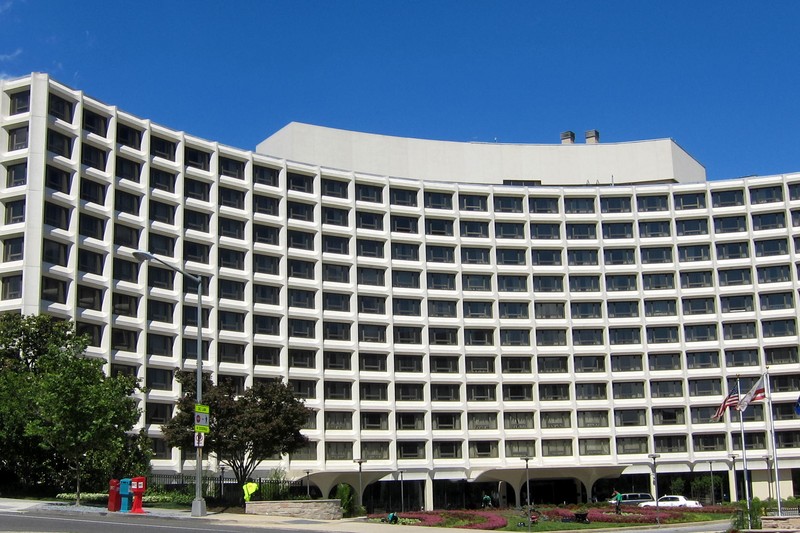
The suspect arrived at the Washington Hilton on Saturday night armed with guns and knives, according to Euronews. His target, according to CBS News, was officials in the Trump administration. His motive remains entirely unknown.
The annual White House Correspondents’ Dinner — attended by President Donald Trump, First Lady Melania Trump, Vice President JD Vance, and hundreds of journalists, politicians, and celebrities — was already underway in the hotel’s vast subterranean ballroom when the suspect charged a security checkpoint in the lobby outside. Shots were fired. One law enforcement officer was struck. Guests dove under banquet tables as Secret Service agents swarmed the armed man and brought him down.
Trump was rushed from the stage. The ballroom was evacuated. By Sunday morning, the questions already outnumbered the answers.
How the Attack Unfolded
The scene, as described by Euronews, was one of sudden chaos erupting during one of Washington’s most choreographed evenings. Allen, armed with guns and knives, stormed the lobby outside the ballroom and moved toward the crowd before Secret Service agents intercepted him. Guests reported hearing shots and loud bangs from outside the hall. Video from inside the venue shows agents rapidly surrounding the president and escorting him away.
Weijia Jiang, the CBS News senior White House correspondent and president of the White House Correspondents’ Association, was seated next to Trump when the incident began. She later addressed the shaken room, striking a note about the role of journalism in moments of crisis.
“When there is an emergency, we run to the crisis, not away from it,” Jiang said. “On a night when we are thinking about the freedoms in the First Amendment, we must also think about how fragile they are.”
One US law enforcement officer was shot during the confrontation. Israeli President Isaac Herzog, in a statement conveying solidarity with the United States, said the officer “is safe and on the path of recovery.” The officer’s identity has not been publicly released.
Washington, DC Mayor Muriel Bowser said there was no immediate reason to believe anyone besides the gunman was involved in the attack, dampening early speculation about a broader conspiracy.
The Arsenal and the Security Perimeter
The question now confronting the Secret Service is as direct as it is damning: how did a man carrying guns and knives get close enough to open fire at a checkpoint guarding an event attended by the president of the United States?
The Correspondents’ Dinner is not a modest affair. As MarketWatch reported the day before the attack, the event has morphed into a “Hollywoodified” weekend of parties hosted by dozens of media outlets and companies, with individual events costing as much as $300,000. This year carried additional significance: Trump was attending for the first time as a sitting president, transforming the dinner from a media tradition into a full-scale national security event.
Security for the main dinner is coordinated by the Secret Service in cooperation with local law enforcement, with checkpoint screening and perimeter control standard procedure. Allen appears to have entered the hotel lobby — within earshot and line of sight of the ballroom — carrying a full arsenal. The checkpoint held. Agents engaged and subdued him before he breached the ballroom itself. But the proximity was alarming: guests inside the hall heard shots clearly enough to take cover.
The Secret Service has not yet publicly detailed how Allen entered the building, whether he passed through any initial screening, or when officers first identified him as a threat. A full security review is expected, though the agency has not announced a timeline.
A Suspect With No Clear Profile
Authorities have identified a suspect in the attack, though little has been released about his background, affiliations, or what compelled him to arm himself and head for the Washington Hilton on a Saturday night in April.
CBS News reported that Allen told authorities after his arrest that he was targeting officials in the Trump administration, according to Al Jazeera’s coverage. That claim has not been independently confirmed. Whether Allen acted alone, how he acquired his weapons, and whether he was previously known to law enforcement or intelligence services all remain under investigation.
The absence of a confirmed motive has not slowed the political reaction. House Speaker Mike Johnson, who attended the dinner with his wife Kelly, said both were “praying for our country tonight.” House Democratic Leader Hakeem Jeffries of New York responded with a broader indictment: “The violence and chaos in America must end.”
Condemnation Across Every Time Zone
The diplomatic response from abroad was swift and remarkably uniform, cutting across alliances and rivalries alike.
British Prime Minister Keir Starmer said he was “shocked by the scenes” and declared that “any attack on democratic institutions or on the freedom of the press must be condemned in the strongest possible terms.” Canada’s Mark Carney, EU Commission President Ursula von der Leyen, India’s Narendra Modi, and Australia’s Antony Albanese all issued statements condemning political violence and expressing relief that attendees were unharmed.
Israel’s Benjamin Netanyahu described the incident as an “attempted assassination” of Trump. Pakistan’s Shehbaz Sharif — whose government has served as a mediator between Washington and Tehran during the ongoing Iran conflict — condemned the attack and expressed solidarity with the American president. Even Venezuela’s acting president Delcy Rodriguez, who assumed power after the US kidnapped and imprisoned her predecessor Nicolás Maduro in January, offered condolences and declared that “violence is never an option for those who uphold the values of peace.”
The breadth of the response reflects both the gravity of the incident and the global reach of American political life. When a gunman opens fire at an event attended by a sitting US president, every government with a stake in the American relationship feels compelled to speak. On Saturday night, nearly all of them did.
What Comes Next
Federal investigators will now attempt to reconstruct Allen’s movements in full: where he obtained his weapons, whether he was known to any intelligence service, and whether anyone else had prior knowledge of his plans. Tthe Secret Service will face scrutiny over how a man armed with guns entered the outer perimeter of a presidential event. And the White House Correspondents’ Association will confront hard questions about the future of a gathering that has become both a Washington institution and, as of Saturday night, a target.
For the journalists who returned to the room after the all-clear, Jiang’s closing remarks captured the tension between resolve and vulnerability. “Thank God everybody is safe, and thank you for coming together tonight,” she said. “We’ll do this again.”
Whether they should — and how safely they can — is a question that will outlast this weekend.
Discussion (13)