 lop News
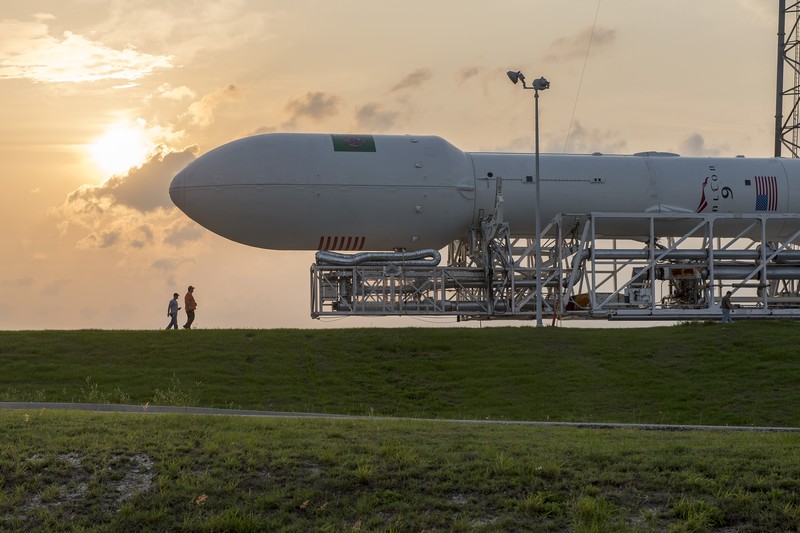
Dan Sundheim bet on SpaceX in early 2020, when the rocket company was worth $36 billion. Six years later, his hedge fund D1 Capital Partners sits on a stake worth roughly $20 billion — a return that makes even venture capital’s greatest hits look restrained.
D1’s windfall is the most arresting number in what promises to be the largest initial public offering in history. SpaceX is expected to file its prospectus as early as this week and begin trading on the Nasdaq around June 12 under the ticker SPCX, according to Reuters. The company is targeting a valuation between $1.75 trillion and $2 trillion, placing it immediately among the most valuable publicly traded companies on Earth.
A second hedge fund, Darsana Capital Partners, which first invested in 2019, could see its stake reach $15 billion, according to the Financial Times. D1 and Darsana declined to comment.
Sundheim has signaled no intention to sell. In an investor letter sent Friday, he called SpaceX’s progress “transformational” and said the company could be “the largest driver of value creation” for his fund. D1’s private-investment portfolio returned 39% last year, with SpaceX accounting for roughly 45% of its venture and private-equity exposure. Without that single position, returns would have been roughly 18%, according to people familiar with the matter.
SpaceX is the fund’s largest position by far — ahead of corporate-spending platform Ramp, which makes up 7% of the portfolio, and Collectors Universe and ride-hailing firm Bolt, at 4% each. D1 managed $31.1 billion in total assets as of December 31.
Two Musk Stocks, One Problem
For years, retail investors had exactly one way to bet on Elon Musk’s ambitions: buy Tesla shares. That monopoly ends next month.
The consequences for Tesla shareholders are difficult to spin positively. Tesla trades at about 195 times forward earnings — the second most expensive valuation in the S&P 500 — a multiple justified almost entirely by faith in Musk’s vision rather than the company’s actual financials. “For Tesla, it has been 90-10 future-to-present value for as long as I’ve looked at it,” said Nicholas Colas, co-founder of DataTrek Research and a former auto analyst.
Add a second Musk vehicle to the market and that faith gets divided. Retail investors own roughly 40% of Tesla shares, according to BNP Paribas analyst James Picariello, who rates the stock underperform. The SpaceX IPO will weigh on Tesla by “‘splitting’ the pro-Musk retail shareholder base,” Picariello wrote in a note to clients.
The data already shows cracks. Since December, when SpaceX confirmed its IPO plans, Tesla has seen roughly equal days of retail inflows and outflows, according to Vanda Research data through May 13. The shares are down 8.9% year to date.
“This cannot be a positive for Tesla,” said Joe Gilbert, portfolio manager at Integrity Asset Management. “Musk has proved to be able to balance multiple initiatives simultaneously in the past, but it feels like SpaceX is his new baby at the expense of Tesla.”
The Billion-Dollar Payday
SpaceX’s listing will also be the biggest underwriting payday in IPO history. At least 21 banks are working on the deal, with Morgan Stanley, Goldman Sachs, JPMorgan Chase, Bank of America, and Citigroup leading the syndicate, according to Reuters.
Underwriting fees for IPOs typically range from 4% to 7% of gross proceeds, though the largest offerings tend to carry lower spreads. Facebook paid a 1.1% spread on its $16 billion offering in 2012; Visa paid 2.8% on its $17.9 billion IPO in 2008. Even a 1% spread on SpaceX’s expected $75 billion to $80 billion raise would generate $750 million to $800 million for the banks. The total could reach $1 billion.
“Unless it’s a much lower percentage spread than that, it’s likely to be the biggest underwriting payday ever for an IPO in terms of the total dollar amount that underwriters will be getting,” Jay Ritter, a University of Florida finance professor known as “Mr. IPO,” told MarketWatch.
The real money, though, isn’t in the fees — it’s in share allocation. Banks distributing shares to preferred clients can capture enormous first-day pops. If SpaceX is underpriced by even 10%, Ritter noted, that represents billions in profit for institutions lucky enough to receive allocations.
Rules Rewritten
The IPO’s unprecedented scale has already forced structural changes to accommodate it. Nasdaq amended its index-inclusion rules effective May 1, eliminating the typical three-month seasoning period and 10% minimum float requirement. SpaceX’s float will be roughly 4.3% of shares — an unusually thin slice for a public company. Morningstar predicts that could produce price swings of 20-30% on catalyst events, compared to Tesla’s 10-15%.
Musk is also pushing to shorten or eliminate the standard 180-day lock-up period that prevents insiders from selling after an IPO, according to Semafor. Combined with an above-average retail allocation of 20% to 30% of shares — versus the typical 5% to 10% — the structure has drawn pointed criticism. FT Alphaville’s Robinson Wigglesworth described it as potentially “the biggest bagholder exercise of all time.”
Sundheim, for his part, appears untroubled. His investor letter cited four growth vectors: Starlink, direct-to-cell satellite service, defense contracts as space becomes a “critical frontier” for warfare, and the long-term potential to build data centers in orbit. The bet that started at a $36 billion valuation is now worth roughly half of Iceland’s GDP.
The rest of the market is left to calculate what a $2 trillion rocket company means for everyone else — particularly the electric-car maker that used to be the only ticket into the Musk economy.
Sources
- Hedge Fund D1’s SpaceX Bet Fuels Its 39% Private Book Gain — Financial Post (Bloomberg)
- SpaceX’s explosive IPO could turn these early investors into mega winners: report — Benzinga (MSN)
- SpaceX IPO adds second Musk stock – it’s a problem for Tesla — Moneyweb (Bloomberg)
- Wall Street is set to reap a fee bonanza from the SpaceX IPO that could reach $1 billion — MarketWatch (via Morningstar)
- SpaceX IPO Is Forcing Changes To Index And Underwriting Rules — Forbes
Discussion (9)