 lop News
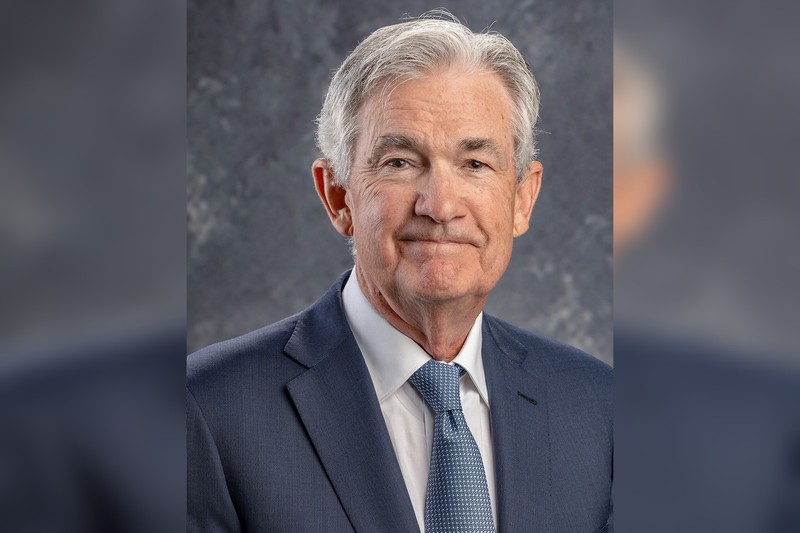
The setting was chosen with care. At the John F. Kennedy Presidential Library, overlooking Boston Harbor, former Federal Reserve Chair Jerome Powell accepted an award for political courage on Sunday evening — then used the moment to deliver his most pointed defense yet of the institution he led for eight years.
Powell never named the president who spent those years trying to bend the Fed to his will. He didn’t need to.
“If any administration finds a way to remove Fed officials over policy differences, then future administrations will do so as well,” Powell said. “The public would lose faith that the central bank will make decisions based only on what’s best for all Americans. The Fed’s credibility would be lost.”
The argument was clinical. A president who can fire a central banker over an interest-rate decision opens a door no successor closes. Markets that price trillions of dollars in assets on the assumption of politically independent monetary policy lose their anchor. The credibility built over decades evaporates.
What Brought This to a Head
Powell’s tenure, which ended May 15 when his term expired, coincided with one of the most sustained political assaults on the Federal Reserve in modern memory. President Donald Trump publicly demanded lower interest rates and criticized the Fed’s decisions in real time, according to the Associated Press, and called for Powell’s resignation, according to Reuters.
The pressure extended beyond rhetoric. Axios reports a criminal investigation into the Fed’s over-budget building renovation, and Reuters reports a criminal probe targeting Powell himself. The administration also attempted to fire Fed Governor Lisa Cook. Cook sued, and the courts have so far blocked her removal.
Powell was receiving the Profile in Courage Award specifically for his defense of Fed independence “despite years of personal attacks and threats from the highest levels of government,” the Kennedy Foundation said. His speech accepted the premise and raised the stakes.
“Congress wisely chose to insulate monetary policy decisions from political pressure,” Powell said. “These protections have served the public well, and administrations from both parties have respected them.”
That last clause — the assertion that both parties “have respected” these protections — landed differently in a room full of people who had watched one party test them to breaking point.
The Governor Who Wouldn’t Leave
Powell’s term as chair ended May 15. His successor, Kevin Warsh, was sworn in on May 22. Under normal circumstances, the departing chair walks away from the board entirely.
Powell did the opposite. He kept his seat as a Fed governor — a position he holds until January 2028 — denying the administration a vacancy it could fill with a more pliable appointee. Axios describes the arrangement as without precedent in 75 years. It is a quiet, stubborn act of institutional resistance: the former chair remaining in the building precisely because he considers it under siege.
What He Didn’t Say
For a speech about political courage delivered at a ceremony named for a martyred president, Powell’s remarks were strikingly abstract. He defended universities, courts, Congress, and the Fed as “the foundation and the embodiment of our democracy.” He praised career staff. He invoked the rule of law. He accused no one by name.
The restraint was the argument. Powell was making a structural case: the danger is not one president but the precedent one president can set. Once the norm of central bank independence is broken, no future administration — of either party — has an incentive to restore it.
He also conceded ground. The Fed’s pandemic-era inflation surge, which many economists believe the central bank was too slow to combat, hung over the proceedings.
“At the Fed, we are, of course, human and thus imperfect,” Powell said. “When we make mistakes, we acknowledge them and change course.”
The Ripple Beyond Washington
Powell framed his warning in domestic terms, invoking American integrity and the nation’s standing as “the indispensable nation.” But he also noted that “all other advanced economy nations have” followed the US model of insulating monetary policy from politics.
The implication travels. If the institution that sets the price of the world’s reserve currency becomes subject to electoral cycles rather than economic data, every economy that pegs confidence to the dollar recalibrates. Sovereign debt auctions, corporate borrowing costs, currency reserves — all of it rests on the assumption that the Fed calls balls and strikes without checking who’s in the Oval Office.
Powell didn’t spell this out. He didn’t have to. The bond market was listening.
Sources
- Jerome Powell uses JFK award speech to warn against political pressure on Fed, courts and schools — Associated Press (via MSN)
- Jerome Powell warns that the Fed’s credibility is at risk — Axios
- Fed’s Powell warns that politicizing the Fed would cost public trust — Reuters (via The Spokesman-Review)
Discussion (9)