 lop News
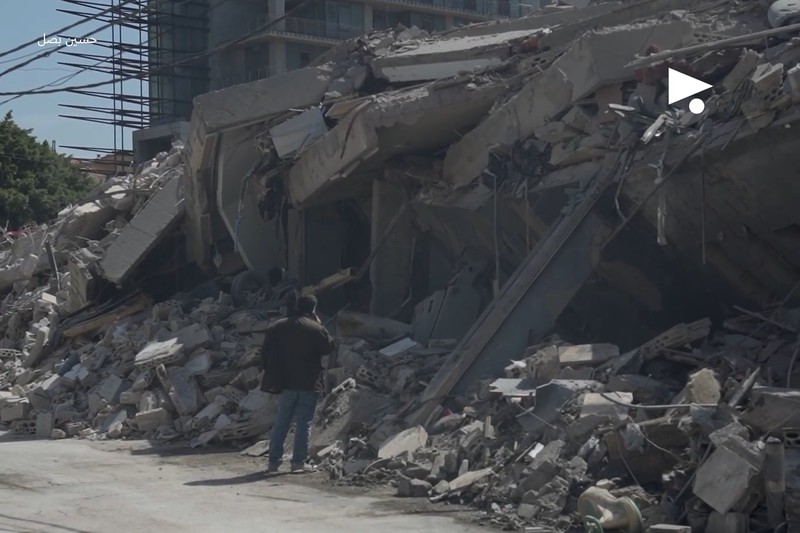
Less than twelve hours after a ceasefire silenced the skies over Iran, Israeli warplanes leveled buildings in central Beirut.
Over 100 targets struck across Lebanon. No prior warning. The largest coordinated wave of airstrikes against Hezbollah since the war began on 2 March — and the first time Israel has hit central Beirut at this scale since the conflict erupted.
The message from Prime Minister Benjamin Netanyahu’s office was unambiguous: the two-week pause in hostilities with Iran “does not include Lebanon.” Israel’s military spokesperson, Avichay Adraee, reinforced the point on Wednesday. “The battle in Lebanon continues, and the ceasefire does not include Lebanon,” he said in a statement.
The strikes shattered any illusion that Pakistan’s brokered truce would bring quiet to the entire region. Instead, the conflict has split into two independent tracks — one paused, one accelerating — and Lebanon is caught in the gap.
War on the Ground
Israeli warplanes struck what the military described as “more than 100 Hezbollah command centres and military sites,” saying most of the targeted infrastructure was “within the heart of the civilian population.”
Several buildings in central Beirut were flattened without warning. The streets filled with crumpled cars, burning wreckage, and the sound of sirens. A man was filmed running toward a destroyed building in the Chiyah neighbourhood, screaming: “There are people inside!” Images of dust-covered children circulated on social media as families searched for loved ones.
Lebanese hospitals issued urgent calls for blood donations. The health ministry urged people to “clear the streets.” The Lebanese Red Cross described “a huge number of dead and wounded,” though exact casualty figures had not been released by Wednesday afternoon.
Even before the main wave began, Israel struck a car in front of beachside cafes in Saida, killing eight and wounding 22, according to Lebanon’s health ministry. Artillery fire continued across the south into the morning, with drone strikes hitting the towns of Qana and al-Qleileh.
The cumulative toll is staggering. As of Tuesday, Lebanon’s health ministry reported more than 1,530 people killed and 4,812 wounded since 2 March — including more than 130 children and more than 100 women. Over 1.2 million people have been displaced. Evacuation orders cover approximately 15 percent of Lebanese territory. Israel has pledged to occupy the south up to the Litani River as a “security zone.”
Two Wars, One Ceasefire
The dissonance is structural, not accidental.
Pakistan’s Prime Minister Shehbaz Sharif announced that Washington and Tehran had “agreed to an immediate ceasefire everywhere including Lebanon and elsewhere.” Iran’s 10-point peace plan — which Trump called a “workable basis” for negotiations — demands an end to the war against “all components of the ‘axis of resistance’,” language that for Tehran explicitly includes Hezbollah.
Israel sees it differently. Netanyahu told his security cabinet on Sunday that no ceasefire with Iran would extend to Lebanon, and that the war would continue. Trump did not mention Lebanon in his ceasefire statements, leaving the question unresolved.
Robert Geist Pinfold, a lecturer in international security at King’s College London, put it plainly: “Israel maintains it will not. Pakistan maintains that it will.”
A ceasefire that covers one war but not the other is not a ceasefire. It is a scheduling conflict — a distinction that matters enormously to the people sorting through rubble in Chiyah, and not at all to the diplomats preparing for talks in Islamabad on Friday.
Israel’s opposition leader, Yair Lapid, accused Netanyahu of a historic failure. “There has never been such a political disaster in all of our history,” he wrote. “Israel wasn’t even at the table when decisions were made concerning the core of our national security.” The Guardian reported that Trump called Netanyahu to inform the Israeli leader of his decision shortly before making the announcement — consultation, not negotiation.
Hezbollah Waits
Hezbollah had not announced any attacks against Israel overnight — the first such pause since the war began. Three Lebanese sources close to the group told Reuters that Hezbollah halted fire as part of the ceasefire.
But patience has conditions. MP Ibrahim Moussawi warned that if Israel does not adhere to the truce, “no party will commit to it, and there will be a response from the region, including Iran.”
Hezbollah’s willingness to hold fire even as Israel pounds Lebanese cities suggests the group is coordinating with Tehran rather than acting independently. Whether that discipline holds if civilian casualties continue to mount is the question that will define the next two weeks.
A senior Lebanese official told Reuters that Beirut had received no guarantees about inclusion in the ceasefire and had not been part of the talks. “We have informed all relevant parties that the Lebanese authorities are the only ones authorized to negotiate on behalf of Lebanon,” the official said — a pointed reminder that neither Iran nor the US was empowered to bargain over Lebanese sovereignty.
French President Emmanuel Macron called for Lebanon to be included in the deal. France maintains close ties with its former protectorate. But whether Paris has the leverage to shift either Jerusalem’s or Washington’s position remains unclear.
The Regional Calculus
The wider regional picture compounds the uncertainty. Pakistan, the broker, has a defense pact with Saudi Arabia — a pact not invoked despite repeated Iranian attacks on the kingdom during the conflict. Pakistan’s army chief, Field Marshall Asim Munir, criticized Iran’s strike on Saudi Arabia in unusually blunt terms, saying it “spoils sincere efforts to resolve the conflict through peaceful means.”
The Gulf states have their own reasons to want de-escalation, but those reasons do not necessarily extend to protecting Lebanon. Each government in the region is calculating whether a US-Iran deal serves its interests — and Lebanon’s fate is a secondary consideration at best.
The negotiations set for 10 April in Islamabad will focus on the gap between Iran’s 10-point proposal and Washington’s 15-point plan. That gap includes uranium enrichment, which Washington previously ruled out; Iran’s ballistic missile capabilities, which neither the US nor Israel has agreed to leave intact; sanctions relief; and the presence of American forces in the region.
Iran expert Trita Parsi argued that the terrain has shifted. “Trump’s failed use of force has blunted the credibility of American military threats,” he said. “The United States is no longer in a position to dictate terms; any agreement will have to rest on genuine compromise.”
Trump told AFP that Iran’s nuclear stockpile would be “taken care of” in any deal, and suggested to Sky News that the actual terms under negotiation were “not the maximalist demands that Iran is claiming.” He added: “If it isn’t good, we’ll go right back to it very easily.”
Whether that threat still carries weight after six weeks of inconclusive fighting — and whether a deal with Iran can hold while Israel independently escalates in Lebanon — are questions the two-week ceasefire window is unlikely to resolve.
Ahmed Harm, a 54-year-old displaced from Beirut’s southern suburbs, told Reuters what the diplomats cannot: “Lebanon can’t take it anymore. The country is collapsing economically, and everything is collapsing.”
Sources
- Israel conducts massive wave of airstrikes on Lebanon amid ceasefire confusion — The Guardian
- What the US, Iran, Israel and Pakistan have said about the ceasefire — Reuters
- US-Iran ceasefire deal: What are the terms, and what’s next? — Al Jazeera
- Hezbollah pauses attacks, sources say, Israel says operations in Lebanon continue — Reuters
- How Pakistan helped secure a fragile ceasefire between the US and Iran — BBC
Discussion (14)