 lop News
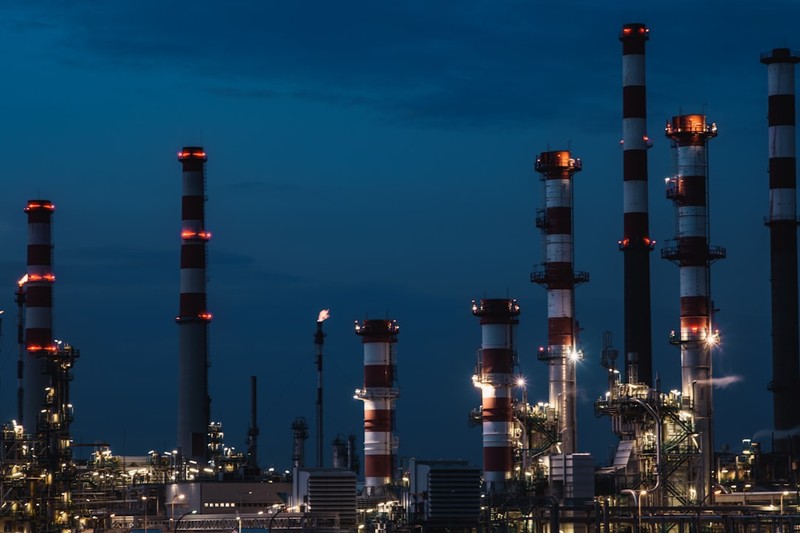
Brent crude surged past $126 a barrel on Thursday, its highest level since Russia invaded Ukraine in 2022. The catalyst: a report that US Central Command has prepared plans for “short and powerful” strikes on Iranian infrastructure. A second plan, focused on taking partial control of the Strait of Hormuz to reopen it to commercial shipping, could involve troops on the ground, according to Axios. Brent’s June futures contract climbed nearly 7% in Asian trading, according to the BBC. West Texas Intermediate rose to around $109.
The $125 mark isn’t just a round number. It’s the threshold where expensive oil becomes an economy-wide tax — on food, on medicine, on getting to work. The Iran war started as a military story. At $126 a barrel, it’s everybody’s problem.
What $126 Looks Like at the Checkout
The International Energy Agency has called this “the largest supply disruption in the history of the global oil market.” Production from Kuwait, Iraq, Saudi Arabia, and the UAE has fallen by at least 10 million barrels per day since early March. Vitol CEO Russell Hardy estimated on April 21 that cumulative production losses will reach one billion barrels.
Oil has surged more than 55% since the war began on February 28 with joint US-Israeli strikes that killed Iranian Supreme Leader Ayatollah Ali Khamenei and other key officials. The Strait of Hormuz — through which roughly a fifth of the world’s energy normally flows — has been effectively closed since early March. China, India, Japan, and South Korea account for 75% of oil and 59% of LNG exports through the strait, making Asian economies the most exposed.
In the UK, Lloyds Banking Group now expects inflation to hit 3.9% by year-end, up from 3.3%, with GDP growth throttled to just 0.5% — well below the International Monetary Fund’s 0.8% forecast. Unemployment is projected to climb from 4.9% to 5.6% by the second half of 2026. Lloyds CFO William Chalmers called it “a slowdown in growth expectation since the beginning of the year due to the Middle East conflict” — stagflation in everything but name.
In South Korea, police are investigating companies for hoarding medical syringes after naphtha supplies — the petroleum-derived feedstock essential for medical plastics — were disrupted. More than half of South Korea’s naphtha imports last year transited the Strait of Hormuz. Airlines face mounting pressure from the conflict, with the war more than doubling the price of jet fuel.
European chemical and steel manufacturers have imposed surcharges of up to 30% to offset surging electricity and feedstock costs. The European Central Bank has postponed planned rate cuts, raised its inflation forecast, and cut growth projections.
Record Profits, Record Provisions
On the same day oil breached $126, Standard Chartered reported first-quarter pretax profit of $2.45 billion — a 17% increase that crushed the $2.14 billion analyst consensus. Its wealth business surged 32% on heavy demand for investment products; its global banking division climbed 19%, driven by corporate bond issuance.
The bank also booked a $190 million charge for expected credit losses tied to the Iran conflict.
That earnings report is the war’s economics compressed into a single frame: the volatility is generating trading fees and underwriting revenue even as it eats into loan books. Standard Chartered and HSBC, which both positioned themselves to profit from growing Middle East-Asia trade corridors, are among the global banks most exposed to the conflict, according to sector analysts.
Lloyds took a £151 million ($204 million) charge. Deutsche Bank booked $90 million. StanChart’s global head of investor relations, Manus Costello, said the provisions reflect scenario planning “rather than any underlying significant deterioration in credit.” The banks don’t see widespread defaults yet. They’re provisioning because the trajectory says they will.
Wall Street’s largest lenders pulled in nearly $50 billion in Q1 profits from the market turbulence, according to The Guardian. Oil majors, too, have reported soaring earnings — and faced accusations of profiting handsomely from the conflict.
An Accelerating Spiral
Brent crossed $120 on March 9 after the first strikes on Iranian oil facilities. It dipped below $100 on March 23 when Trump confirmed the US and Iran were in contact. It surged again on April 13 when the US Navy blockaded Iranian ports. Iran’s foreign minister declared Hormuz open on April 17; oil fell 10% in relief. Two days later, the Navy seized an Iranian container ship. Iran re-imposed tighter control over the strait within hours of its reopening declaration. Trump called it a “total violation” and renewed threats to strike Iranian power plants and bridges.
Each cycle ends higher than the last. Iran has offered to reopen Hormuz if the US lifts its blockade — but with no concessions on its nuclear program, which Trump has insisted must be dismantled. Secretary of State Marco Rubio said the nuclear question “remains the core issue.”
Meanwhile, a Financial Times investigation found suspicious trading patterns surrounding the war’s false dawns. $580 million in bets on falling oil prices were placed 15 minutes before Trump’s March 23 statement postponing attacks. A second series worth $950 million appeared on April 7, again before a policy shift. Someone with advance knowledge is positioning for ceasefires that don’t hold.
Commodity Context founder Rory Johnston estimated that a sustained Hormuz reopening would trigger an immediate $10-$20 price drop but that structural damage would anchor Brent at $80-$90 — well above the $72 pre-war level.
The Cascade Keeps Spreading
In the Gulf Cooperation Council states, where over 80% of caloric intake arrives via the Strait of Hormuz, 70% of food imports were disrupted by mid-March. Consumer prices spiked between 40% and 120%. QatarEnergy declared force majeure on all exports. The Philippines has declared a state of emergency. Zimbabwe, Pakistan, Bangladesh, Nigeria, and Vietnam face severe fuel shortages.
LNG spot prices in Asia surged more than 140% after Iran struck Qatar’s Ras Laffan complex on March 18 — destroying 17% of Qatar’s LNG production capacity and requiring three to five years of repairs.
UN Secretary-General António Guterres put it plainly: “These pressures are cascading into empty fuel tanks, empty shelves — and empty plates.”
At $126 a barrel, the Iran war is a levy on everything that moves, everything manufactured, and everything that needs refrigeration. The people collecting — oil majors, trading desks, banks earning fees on the chaos — are posting record quarters. The people paying are standing at the pump, or discovering that the local hospital has run out of syringes.
Sources
- Oil jumps to highest price since 2022 after report Trump to be briefed on new Iran options — BBC News
- Standard Chartered profit jumps 17%, books US$190 million charge on Iran war — Business Times Singapore (Reuters)
- Lloyds takes £151m hit from Iran war as it forecasts rise in UK unemployment — The Guardian
- How the Iran war shook oil prices, and what comes next — CNBC
- Oil prices rise as U.S. and Iran appear locked in a costly stalemate — CBS News
- Economic impact of the 2026 Iran war — Wikipedia
Discussion (15)