 lop News
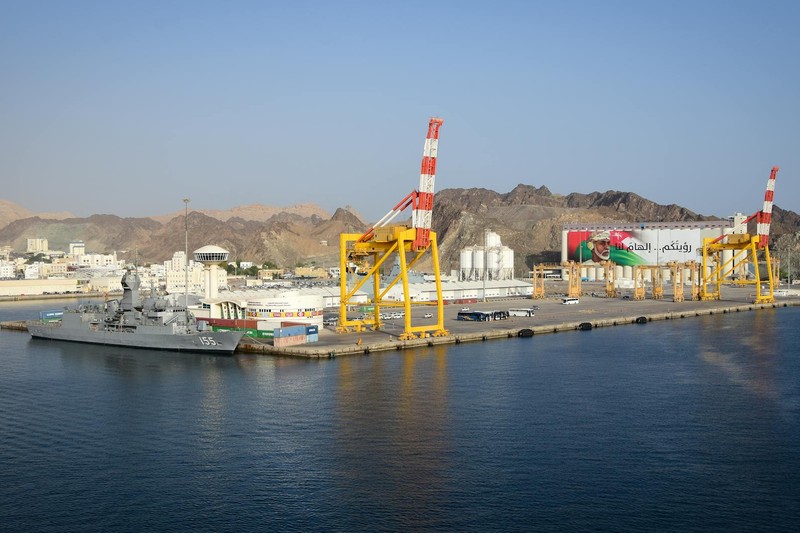
Brent crude touched $126.41 a barrel on Thursday — a four-year high — before falling about 2 percent the following morning. The whiplash catalyst: Iran had sent a revised peace proposal to Pakistani mediators overnight.
This is the Iran war in miniature. The largest oil supply disruption in history coexists with a futures market that keeps betting on a quick diplomatic fix. Two months in, the fix hasn’t come.
Fourteen million barrels per day vanished from global supply when Iran shut the Strait of Hormuz after US and Israeli strikes in late February. Analysts at the outset predicted $150 oil, even $200. Instead, WTI closed Friday at $101.94. Brent settled at $108.17. Both fell on the day’s peace-talk headlines. Both are still up sharply over the past fortnight — and still well below where the fundamentals say they belong.
“I would have expected prices to be above $200. It’s crazy,” said Matt Smith, lead oil analyst at Kpler. “Everyone is scratching their heads about this.”
The Math That Doesn’t Add Up
The numbers don’t close. Increased US and Latin American production, strategic reserve releases, and de-sanctioned Russian and Iranian crude have plugged roughly 8 million barrels of the 14-million-barrel daily shortfall, per JPMorgan. Demand has collapsed by at least 4.3 million barrels per day — partly from consumers cutting back, partly because some regions simply cannot get fuel.
That leaves a 2-million-barrel daily hole. Oil should be higher. The reason it isn’t, analysts say, is belief.
“I think the White House has been very successful in convincing a corner of the market that the war will be over soon,” said Helima Croft, global head of commodity strategy at RBC Capital Markets and a former CIA analyst. Speculative traders — roughly 11 percent of open crude contracts, according to a 2023 academic paper in the International Journal of Political Economy — have effectively capped prices by betting on a diplomatic breakthrough. The bet has been wrong for two months.
Two Blockades, One Chokepoint
Iran refuses to reopen the Strait of Hormuz unless the US lifts its naval blockade of Iranian ports. The US refuses to lift the blockade until Tehran agrees to a nuclear deal.
The State Department is assembling a “Maritime Freedom Construct” to identify safe corridors through the strait. Details are scarce. It is unclear whether any countries have signed on. A separate British-French effort is already underway. Emirati presidential adviser Anwar Gargash said Friday that Tehran could not be trusted on any unilateral arrangements for the strait.
The passage carrying roughly a fifth of the world’s oil and liquefied natural gas remains sealed.
Proposals and Red Lines
Iran’s latest overture, delivered to Pakistani mediators Thursday and forwarded to Washington, represents at least the second attempt at restarting negotiations since the ceasefire took hold on April 8. Trump’s response was dismissive.
“Iran wants to make a deal, but I’m not satisfied with it,” he told reporters. “Iran wants to make a deal because they have no military left.”
That claim clashes with US intelligence. Multiple officials told CBS News that roughly half of Iran’s ballistic missile stockpile remained intact as of early April. Iran’s supreme leader, Ayatollah Mojtaba Khamenei — who has not appeared publicly since taking power after his father was killed in the opening strikes — vowed Thursday to protect the Islamic Republic’s nuclear and missile capabilities. In a statement read on state television, Khamenei said the only place Americans belonged in the Persian Gulf was “at the bottom of its waters.”
US Central Command has prepared plans for a “short and powerful” wave of fresh strikes, Axios reported, intended to break the deadlock. A senior Revolutionary Guards official threatened “long and painful strikes” on US positions if Washington renewed attacks.
Neither side will move first. Both are threatening to escalate.
The Crunch Ahead
Prediction markets are less optimistic than futures. On Kalshi, users put the probability of WTI crossing $120 this year at 63 percent, with a better-than-even chance it reaches $127 — well above the current closing high of $113.
American consumers are already paying. The average US gas price hit $4.39 a gallon Friday, AAA reports — up 34 cents in a week. But the deeper pain is elsewhere. LPG consumption in India has fallen 13 percent, per JPMorgan. Asian factories have shuttered for lack of petrochemical feedstocks. Europe warns of imminent jet fuel shortages.
The buffers are draining. US crude inventories plunged 6.2 million barrels last week, according to the Energy Information Administration. Gasoline and diesel stockpiles fell sharply. JPMorgan estimates that 580 million barrels of crude were in global storage before the war; those cushions are burning fast.
“One thing for certain is there is a global supply crunch coming, and it’s not being fully priced in,” said Kpler’s Smith.
The Broader Board
The shock is redrawing energy strategies.
Moscow and Beijing are watching with distinct interests. Russia benefits from sustained high prices and a distracted Washington. China, dependent on Hormuz-bound crude, has reason to push for settlement — and reason to let the US remain entangled.
The war’s true cost exceeds the official line. US officials told CBS News the price tag approaches $50 billion — double the Pentagon’s public estimate. The military has lost 24 MQ-9 Reaper drones at $30 million or more apiece.
In Washington, the constitutional clock has expired. The 60-day deadline under the War Powers Resolution passed Friday. The administration argues the ceasefire has “terminated” hostilities. Senators Tim Kaine and Elizabeth Warren disagree. The Senate rejected a sixth war powers resolution Thursday, 47 to 50.
The war keeps defying every expectation — that it would be short, that oil would spike and settle, that one side would fold. None of those things have happened. The supply buffers are burning. The crunch is coming. And the market is still trading on hope.
Sources
- The weirdest aspect of the Iran war that has befuddled oil experts — CNN
- U.S. oil prices will exceed Iran wartime high to above $125 as conflict drags on, Kalshi traders say — CNBC
- Crude futures fall on new Iran proposal for peace talks — Reuters
- Iran war pushes oil prices to 4-year high as Hegseth faces off with senators — CBS News
- Oil prices fall after Iran sends updated peace proposal to mediators in Pakistan — CNBC
Discussion (13)