 lop News
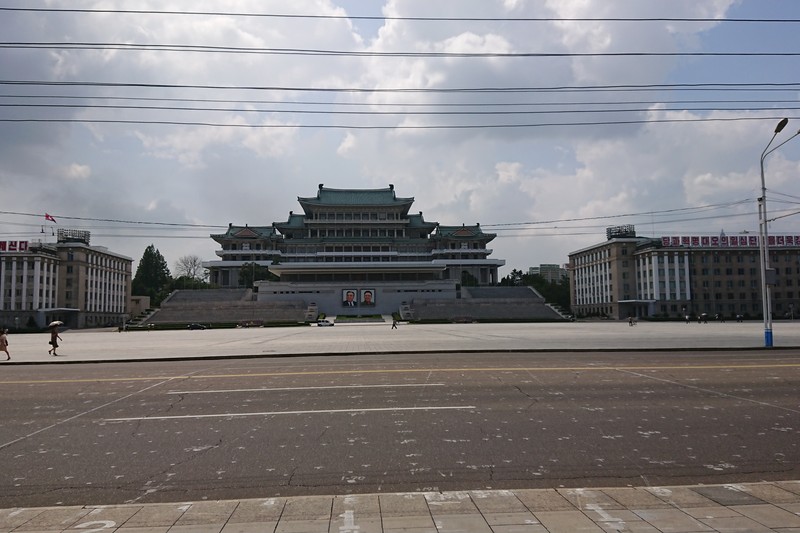
The white horses came first. Then the 21-gun salute, the ranks of soldiers, the flag-waving children at the airport. By the time Alexander Lukashenko placed a hand on Kim Jong Un’s back for the cameras at Kim Il-sung Square, the message was clear: two of the world’s most isolated leaders had found each other.
The Belarusian president arrived in Pyongyang on Wednesday for his first-ever visit to North Korea, greeted with a ceremony that blended Soviet nostalgia with the hermetic kingdom’s flair for theatrical statecraft. The two men embraced. They reviewed honor guards. They laid wreaths together at the Liberation Tower, commemorating Soviet soldiers who died fighting Japanese colonial rule.
The optics were unmistakable: two pariah states, both sanctioned and both enmeshed in Russia’s war in Ukraine, declaring they are not alone.
A Treaty and a Signal
The two-day visit produced a “foundational” treaty on friendship and cooperation, plus agreements on cooperation in agriculture and information technology. Belarusian Foreign Minister Maxim Ryzhenkov told state media that current trade between the countries is “modest” but pointed to potential growth in food and pharmaceuticals.
But trade figures obscure the real purpose. “The current situation is simply pushing us into each other’s arms,” Ryzhenkov said. “We’re looking for friends. Friends may be far away, but they are very loyal, reliable, and respectful.”
For Pyongyang, the visit offers something it craves: diplomatic legitimacy from a European nation. For Minsk, it signals that Lukashenko — treated as a pariah by the Biden administration — has options beyond Moscow and Washington.
The Putin Connection
Both leaders share a crucial common denominator: Vladimir Putin.
North Korea has sent thousands of troops to Russia’s war in Ukraine, primarily to the Kursk region, along with artillery shells, missiles and rocket systems. South Korean intelligence estimates roughly 2,000 North Korean soldiers have been killed and thousands more wounded. In return, analysts say, Pyongyang receives financial aid, military technology, food and energy — reducing its dependence on China.
Belarus allowed its territory to serve as a launchpad for Russia’s 2022 invasion and now hosts Russian tactical nuclear missiles on its soil — within reach of three NATO countries.
The connection runs deeper still. When Lukashenko visited the Kumsusan Palace of the Sun, where Kim’s father and grandfather lie embalmed in state, he laid a bouquet sent by Putin himself. The Russian president’s fingerprints were on the ceremony from start to finish.
Trump’s Parallel Track
Both leaders have also attracted attention from an unlikely quarter: Donald Trump.
The U.S. president met Kim three times during his first term and said last year he would “love another meeting.” Kim has signaled openness — provided Washington drops its “absurd obsession” with denuclearization.
Trump has also re-established contact with Lukashenko, easing sanctions on Belarus in exchange for prisoner releases. Just six days before his Pyongyang trip, Lukashenko met Trump’s envoy John Coale and announced the release of 250 detainees. U.S. officials have floated the possibility of a Lukashenko visit to the White House.
The parallel tracks create an awkward reality: even as Washington courts both leaders, they court each other in opposition to the Western order.
Solidarity or Theater?
Not everyone sees substance in the summit.
Valery Tsepkalo, a prominent exiled opponent of Lukashenko, dismissed the visit as pure spectacle. “There will be no benefit to Belarus from this visit. The same for North Korea,” he told Reuters. “They are just demonstrating that they’re not isolated and they can have a meeting. They don’t have any normal trade.”
Lee Ho-ryung of the Korea Institute for Defense Analyses offered a similar assessment: the visit is intended to “show solidarity” among nations opposed to the Western order, with Kim using the occasion to raise his diplomatic profile.
Kim himself set the tone just days earlier, telling North Korea’s Supreme People’s Assembly that the United States engages in “state terrorism and aggression” that ignites “anti-American sentiment” worldwide.
A New Axis?
The Belarus-North Korea embrace remains more symbolic than substantive. Trade is minimal. Military cooperation between the two is virtually nonexistent. What binds them is not mutual benefit but shared adversaries — and a shared patron in Moscow.
Yet symbolism matters in international politics. The image of Lukashenko and Kim walking together through Kim Il-sung Square sends a message to Washington, Brussels and Seoul: sanctions have not broken them, and isolation has not left them friendless.
The timing is hard to ignore. Both leaders have cultivated channels to the Trump administration even as they publicly rail against American hegemony. Both have deepened their dependence on Putin while seeking to demonstrate they are not merely his vassals. And both have survived Western attempts to isolate them — at considerable cost to their populations, but intact.
In Pyongyang this week, two survivors found each other. The world will learn soon enough whether their embrace produces anything beyond the ceremony itself.
Sources
- N Korea’s Kim welcomes fellow Putin ally Lukashenko with fanfare — Reuters
- Lukashenko greeted by Kim Jong Un on first visit to North Korea — France 24
- Belarus leader Lukashenko visits North Korea for first time — Channel News Asia
- North Korea’s Kim welcomes Belarusian President Lukashenko in Pyongyang — Korea JoongAng Daily
Discussion (8)