 lop News
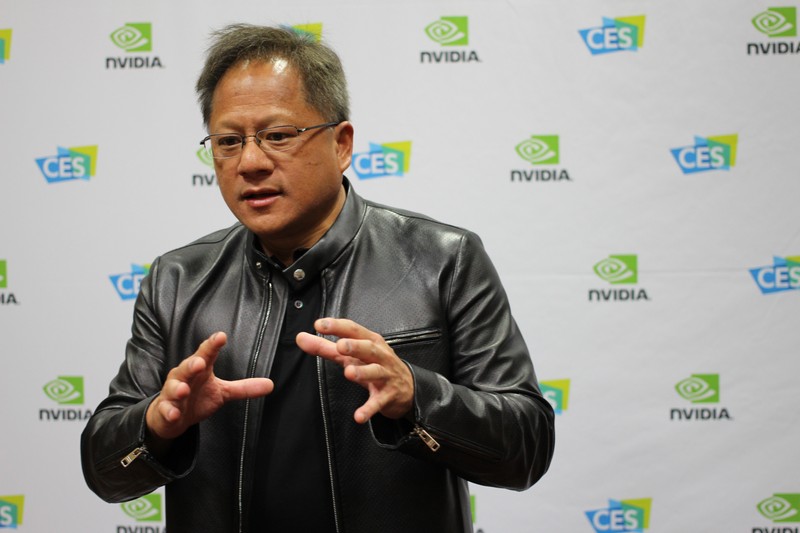
$81.6 billion in revenue. $58.3 billion in profit. A dividend multiplied 25 times over. By any reasonable standard, Nvidia’s first quarter of fiscal 2027 was a blowout. Wall Street’s response? Shares fell 1.6 percent in extended trading.
The disconnect tells you everything. Nvidia beat analyst estimates on every major metric. Revenue of $81.6 billion topped the $78.86 billion consensus, according to LSEG data. Non-GAAP earnings per share of $1.87 cleared the $1.76 bar. Data center revenue alone hit $75.2 billion, sailing past estimates of $72.8 billion. But for the world’s most valuable company, beating expectations is the minimum viable performance. The question is what comes next.
The Vera Play
CEO Jensen Huang used the earnings call to point well past this quarter’s results. Nvidia’s new “Vera” central processor, he told analysts, opens up a $200 billion market the company wasn’t previously counting. Nvidia expects $20 billion in Vera revenue by the end of this fiscal year — a figure Huang confirmed sits outside the company’s earlier $1 trillion forecast for Blackwell and Rubin AI chip sales between 2025 and 2027.
“All of our customers are quite excited about Vera,” Huang said, adding that he expects it to become the second-largest revenue contributor after the Blackwell and Rubin chip families.
The catch: supply. Huang conceded that Nvidia expects to be “supply-constrained through the entire life of Vera Rubin,” the combined platform launching later this year. The company’s supply commitments rose to $119 billion in the first quarter, up from $95.2 billion the previous quarter — a clear signal Nvidia is spending heavily to lock down manufacturing capacity during a global memory chip crunch.
Slower Growth, Bigger Bets
Nvidia’s second-quarter outlook calls for revenue of $91 billion, plus or minus 2 percent. That tops the $86.84 billion consensus, but sequential growth of roughly 11.5 percent marks a sharp deceleration from the 20 percent quarter-over-quarter jump just posted. The company also disclosed that its outlook assumes zero data center compute revenue from China.
“The lack of any China sales in the outlook and guidance that was only modestly ahead of expectations left some investors wanting a bit more fireworks,” said Tony Sycamore, market analyst at IG in Sydney.
Gross margins held firm at 74.9 percent. Nvidia is raising its quarterly dividend from one cent to 25 cents per share and adding $80 billion to its share buyback program — gestures of confidence, but also the kind of capital-return firepower a company deploys when growth rates are plateauing rather than accelerating.
Who Else Gets Rich
Nvidia’s results didn’t just move its own stock. Asian chipmakers rallied across the board. MSCI’s broadest index of Asia-Pacific shares outside Japan climbed 2.6 percent, snapping a four-day losing streak. South Korea’s Kospi surged more than 7 percent, amplified by Samsung Electronics’ union suspending a planned strike after reaching a tentative pay deal. Samsung shares jumped 6 percent. Taiwanese equities rose 3.5 percent.
“The chip landscape remains Nvidia’s world with everybody else paying rent, as more sovereigns and enterprises wait in line for Nvidia’s chips,” said Dan Ives, global head of technology research at Wedbush Securities.
US tech giants — Alphabet, Amazon, Microsoft — are expected to spend more than $700 billion on AI infrastructure this year, up from roughly $400 billion in 2025, according to Reuters. The catch for Nvidia: those same customers are pouring money into custom silicon designed to reduce their dependence on its chips.
The Durability Question
Nvidia moved to shore up its position in March, unveiling a new AI system built on technology from Groq, a startup specializing in inference processing. Intel and AMD are circling the same market. The company also disclosed $30 billion in cloud computing agreements, up from $27 billion the prior quarter — arrangements analysts have described as backstops in which Nvidia compensates cloud providers for excess capacity on their Nvidia-powered systems.
“Nvidia delivered another beat, but at this point that’s essentially priced in as it keeps beating quarter after quarter,” said eMarketer analyst Jacob Bourne. “The lingering question is whether it can convince investors the AI buildout has durability into 2027 and 2028, especially as the narrative shifts toward inference workloads and competing silicon from Google, Amazon, AMD, and Intel.”
Huang is betting it does — and that a $200 billion CPU market nobody was talking about a year ago will prove him right. The numbers say he’s earned the benefit of the doubt. The stock price says the doubt hasn’t gone anywhere.
Discussion (10)