 lop News
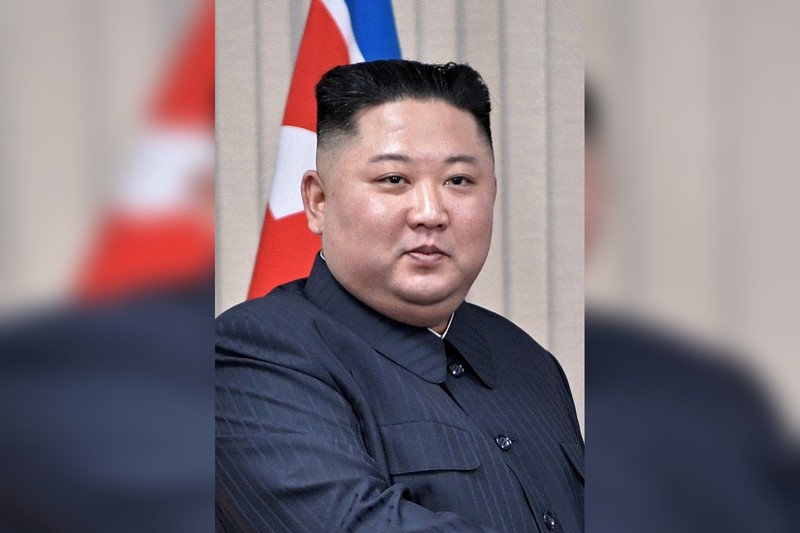
North Korean soldiers fighting in Russia’s war against Ukraine operate under explicit orders to blow themselves up rather than be captured. Kim Jong-un confirmed the policy this week — not with denial or discretion, but with praise.
Speaking at the completion ceremony for a memorial honoring North Korean soldiers killed in Russia’s western Kursk region, Kim lauded troops who, in his words, “unhesitatingly chose the path of self-destruction and suicide to defend great honour,” according to a transcript published by the North Korean state news agency KCNA on Monday. He called them heroes.
It is the first time Kim has publicly acknowledged both the deployment of North Korean combat forces to Russia and the extreme measures they are instructed to take to avoid falling into enemy hands. The admission removes any remaining ambiguity about Pyongyang’s direct military involvement in the war — and about the value the regime assigns to the lives of its own soldiers.
A Deployment of 14,000 — and at Least 6,000 Dead
In 2024, North Korea dispatched approximately 14,000 elite troops to join Russia’s war effort, according to The Guardian. The soldiers were thrown into battle around the border town of Sudzha in the Kursk region, which Ukrainian forces had captured in a surprise cross-border incursion that summer — the first time foreign tanks had entered Russian territory since the Second World War.
The toll was severe. According to South Korean and Ukrainian officials, more than 6,000 North Korean soldiers were killed in the intense fighting. That figure, if accurate, represents a casualty rate of roughly 43 percent — a degree of attrition that would be difficult for any military to sustain, let alone one operating far from home, in unfamiliar terrain, alongside an allied force.
Russian forces eventually recaptured the Ukrainian salient around Sudzha in spring 2025.
The Prisoners Who Failed to Die
Two North Korean soldiers are currently being held as prisoners of war in Kyiv. Both attempted to carry out the suicide orders but were unable to do so because of the severity of their injuries, according to reports. One of the captives has expressed guilt at his failure to follow through — a detail that underscores the psychological conditioning the regime imposes on its forces long before they reach a battlefield.
Mounting evidence from intelligence reports and defector testimony had indicated for months that North Korean troops receive explicit instructions to resort to self-detonation or other forms of suicide rather than allow themselves to be taken alive. Kim’s speech is the first official confirmation from Pyongyang itself.
What Pyongyang Gets in Return
North Korea’s military commitment to Russia extends well beyond manpower. Pyongyang has supplied Moscow with millions of artillery shells and large numbers of short-range ballistic missiles, according to South Korean intelligence assessments cited by The Guardian.
In return, North Korea has received economic and military technology assistance from Moscow. The flow of munitions in one direction and technological know-how in the other points to a transactional alliance that both governments evidently find valuable — valuable enough that Pyongyang is willing to absorb thousands of military casualties to sustain it.
Soldiers as Expendable Assets
Kim’s speech did more than confirm battlefield facts. It revealed the regime’s willingness to treat its soldiers as expendable instruments of foreign policy — and to frame their deaths as patriotic virtue rather than strategic waste.
His praise extended beyond the dead. “Those who writhed in frustration at failing to fulfil their duty as soldiers rather than suffering the agony of their bodies being torn apart by bullets and shells … these too can be called the party’s loyal warriors and patriots,” Kim said, according to the KCNA transcript. The phrasing is telling: even survival, in Kim’s framing, is acceptable only when accompanied by anguish at having lived.
For a regime that has long prioritized its own survival above all else, the calculation is straightforward. Dead soldiers cannot be interrogated. They cannot reveal operational details, troop movements, or the terms of the arrangement between Moscow and Pyongyang. They cannot become propaganda tools for Ukraine or its allies. Better, from Pyongyang’s perspective, that they detonate a grenade and disappear entirely.
The confirmation raises questions about the trajectory of the Russia-North Korea partnership. With thousands of soldiers already killed and the policy of battlefield suicide now openly endorsed by Kim himself, the regime has signaled that it views this not as a limited deployment but as a sustained commitment — one in which the cost to its own forces is not merely acceptable, but doctrinal.
Discussion (8)