 lop News
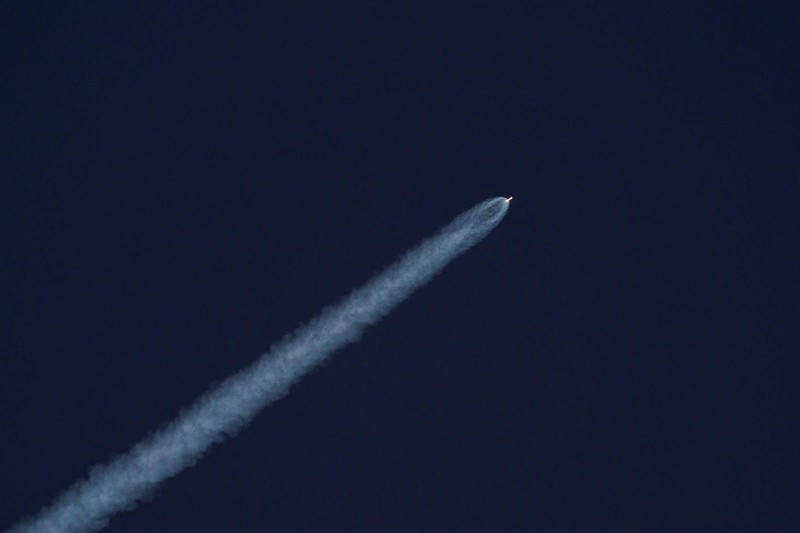
North Korea has test-fired so many ballistic missiles in recent years that individual launches barely register anymore. This week was different.
Over three days of testing that ended Wednesday, Pyongyang unveiled two weapons that are not simply iterations of its growing missile arsenal: an electromagnetic weapon system and a carbon fibre bomb. Both target electronics infrastructure rather than people or buildings — and both represent capabilities North Korea has not previously demonstrated publicly.
General Kim Jong-sik, who oversaw the tests for the Central Military Commission, described the new systems as “special assets of strategic nature to be combined with and applied to various military means in different spheres,” according to the Korean Central News Agency (KCNA).
Beyond the usual provocations
The tests also included more conventional fare. North Korea fired its Hwasong-11Ka surface-to-surface missile — part of the KN-23 family, modeled on Russia’s Iskander — tipped with a cluster bomb warhead that KCNA claimed can “reduce to ashes any target” covering up to 7 hectares, or about 17 acres. A mobile short-range anti-aircraft missile system was also tested.
South Korea’s Joint Chiefs of Staff tracked the launches throughout the week. Several missiles fired from Wonsan on Wednesday traveled roughly 240 kilometers into the East Sea. A later launch that day covered more than 700 kilometers. An earlier salvo from Pyongyang on Tuesday was assessed as a failure after trajectories were lost shortly after launch, according to the Joint Chiefs of Staff.
The ballistic missile launches violate United Nations Security Council resolutions. South Korea’s Blue House convened an emergency security meeting Wednesday, condemning the tests as provocative.
But it is the electromagnetic weapon and carbon fibre bomb that distinguish this week’s testing from Pyongyang’s routine demonstrations of force. Electromagnetic weapons use directed energy to disable or damage electronic systems — power grids, communications networks, radar installations — without explosive force. Carbon fibre bombs, sometimes called graphite bombs, disperse fine conductive filaments over electrical infrastructure to cause short circuits. Both are designed to cripple a modern military or civilian command structure without leveling a city.
The Russia connection
The provenance of this technology raises questions North Korea has no interest in answering. Pyongyang has deepened its military relationship with Moscow significantly since Russia’s full-scale invasion of Ukraine in 2022, providing artillery, munitions, and reportedly thousands of troops to support Russian operations. What North Korea receives in return has been the subject of sustained speculation among analysts — with advanced weapons technology widely considered a likely currency.
The KN-23 missile tested this week is itself based on the Russian Iskander system. Electromagnetic weapons technology adds a new dimension to the question of what technical know-how may be flowing from Moscow to Pyongyang.
The timing sharpens the picture. Chinese Foreign Minister Wang Yi arrived in North Korea on Thursday for his first visit in more than six years, according to the South China Morning Post. Beijing has been Pyongyang’s most important patron for decades, and the visit comes as North Korea pursues what amounts to a diplomatic triad — strengthening ties with both Moscow and Beijing simultaneously.
Three theaters, one moment
The tests unfolded against a backdrop of compounding global instability. Russia’s war in Ukraine grinds on with North Korean materiel supporting the Russian side. In the Middle East, conflicts continue to reshape alliances and draw in external powers. And on the Korean Peninsula itself, the briefest diplomatic flicker between Seoul and Pyongyang was extinguished almost as soon as it appeared.
South Korean President Lee Jae Myung expressed regret Monday over drone flights by civilians into North Korean territory. Kim Yo-jong, the sister of North Korean leader Kim Jong-un, responded with what Seoul initially interpreted as a conciliatory signal, issuing a statement that said the North’s head of state called Lee “frank and broad-minded.” South Korea’s government described the exchange as “meaningful progress.” Within days, North Korea’s first vice foreign minister Jang Kum-chol dismissed Seoul’s optimism as a “pipe dream,” calling the message a “clear warning” and reaffirming that the South remains the North’s “most hostile state.”
Then came the missiles.
None of these three theaters — Eastern Europe, the Middle East, the Korean Peninsula — operates in isolation. Arms flows, diplomatic realignments, and the demonstration of new weapons capabilities in one reverberate through the others. North Korea’s electromagnetic weapon may be a regional development. The technology and alliances behind it are not.
Sources
- North Korea tests electromagnetic weapon and carbon fibre bomb: state media — South China Morning Post
- North Korea tests military assets including ballistic missile, KCNA reports — Reuters
- North Korea tests cluster-bomb warhead capable of ‘reducing any target to ashes’ — Korea JoongAng Daily
- N. Korea says test-fired tactical ballistic missile tipped with cluster bomb warhead — Korea Times
Discussion (8)