 lop News
Editor’s note: This article discusses suicide and euthanasia. If you or someone you know needs help, international helplines can be found at iasp.info/suicidalthoughts.
Noelia Castillo wanted to die alone. She had picked out her prettiest dress, done her own makeup, and selected four photographs to keep beside her: a childhood picture, her first day of school, a snapshot of her puppy, and an image of herself painting a portrait of her mother. On Thursday evening, at a care facility in Sant Pere de Ribes near Barcelona, her wish was granted.
Castillo was 25 years old. Her death by euthanasia ended a legal battle that had stretched nearly two years, drawn national attention across Spain, and forced a confrontation with difficult questions the country’s 2021 euthanasia law was bound to face eventually.
A Law Meant for Extreme Cases
Spain legalized euthanasia and physician-assisted suicide in June 2021, becoming one of nine European countries to do so. The law allows adults with “serious and incurable illness or a serious, chronic, and disabling condition” to request life-ending treatment if they are “capable and conscious” when making the decision. Candidates must submit two written requests and undergo consultations with medical professionals who have not previously treated them, followed by review from a regional committee of doctors, lawyers, and bioethics experts.
Between the law’s passage and the end of 2024, 1,123 people in Spain have received euthanasia, according to the health ministry. Castillo was the third-youngest among them.
Her case tested the law in ways its drafters may not have fully anticipated.
The Question of Mental Capacity
Castillo had been in psychiatric treatment since she was 13, when her parents separated and she entered social care. She was eventually diagnosed with obsessive-compulsive disorder and borderline personality disorder. She told Spanish television she had survived three sexual assaults — one by an ex-partner, two others by groups of men at a nightclub — none of which she reported to police.
Days after the second assault, in October 2022, she attempted suicide by jumping from a fifth-floor window. She survived. The fall left her paraplegic, in constant pain, and using a wheelchair.
When Catalonia’s Guarantee and Evaluation Commission approved her euthanasia request in July 2024, it found she had a “nonrecoverable clinical situation” causing “severe dependence, pain, and chronic, disabling suffering.” But her father, supported by the conservative Catholic organization Christian Lawyers (Abogados Cristianos), argued that her psychiatric conditions rendered her incapable of making such a decision.
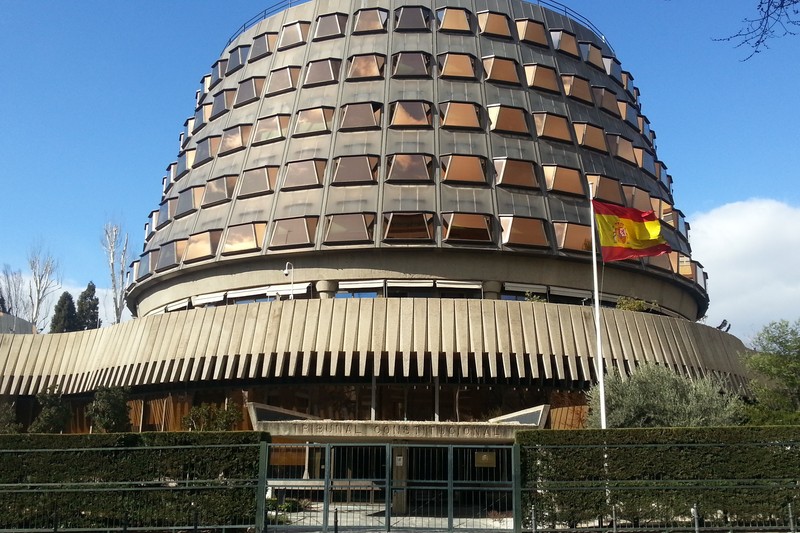
The case proceeded through five judicial levels — a Barcelona court, the High Court of Justice of Catalonia, the Supreme Court, the Constitutional Court, and finally the European Court of Human Rights. None agreed with her father. All found Castillo met the legal requirements and had the capacity to decide.
Competing Visions of Compassion
The opposition framed the case as a failure of the Spanish state.
“For a girl who obviously has had a very tough life, which we all regret, the only thing that could be offered to her by the healthcare system is death,” said José María Fernández of Christian Lawyers.
The conservative People’s Party, which voted against the 2021 law, echoed that sentiment. “The institutions that should have protected Noelia failed her,” wrote party leader Alberto Núñez Feijóo on social media. “I refuse to believe that the state did not have the tools to give her care.”
The Catholic Church called Castillo’s story “an accumulation of personal suffering and institutional failures.”
But supporters of Castillo’s decision saw the legal obstruction itself as cruel. The left-leaning newspaper El País wrote that her wish to end her suffering was “sabotaged by a legal crusade that added nearly two years of pain to her existence.”
A disability rights group in Madrid called for improved resources for those with chronic conditions. “Before facilitating death, the system must effectively guarantee the conditions for living with dignity,” said Javier Font, president of the Federation of Associations of People with Physical and Organic Disabilities of Madrid.
What the Law Revealed
Castillo never wavered. “I’ve always felt alone because I’ve never felt understood,” she told Antena 3 the day before she died. “I just want to go peacefully now and to stop suffering.”
She was clear about what the legal process had cost her. “The happiness of a father or a mother should not supersede the happiness of a daughter,” she said.
The courts’ unanimous rulings affirmed that Spain’s euthanasia law can apply to psychiatric conditions — provided patients are deemed capable of consent. What remains unresolved is whether the law adequately balances patient autonomy against society’s obligation to provide meaningful alternatives to death.
Castillo did not want to be an example. “I don’t want anyone to follow in my footsteps,” she said. Her case may have made that impossible.
Sources
- 25-year-old Noelia Castillo dies by legal euthanasia in case that drew national spotlight in Spain — AP News
- Noelia Castillo spent 20 months battling to die under a euthanasia law meant to end suffering — CNN
- Spanish woman who won legal battle for right to euthanasia has assisted death — The Guardian
- Noelia Castillo euthanasia case — Wikipedia