 lop News
Red Square’s cobblestones have hosted Soviet tanks, nuclear-tipped missiles, and rows of armored vehicles every May for nearly two decades. This year, they got foot soldiers and a flyover.
The absence — the first time since 2008 that heavy weapons were missing from Russia’s most important military parade — was officially attributed to the “current operational situation.” The subtext was hard to miss: Russia’s tanks are in Ukraine, and the military that once projected power across Europe is stretched thin enough that rolling hardware through central Moscow was a security risk it could not afford.
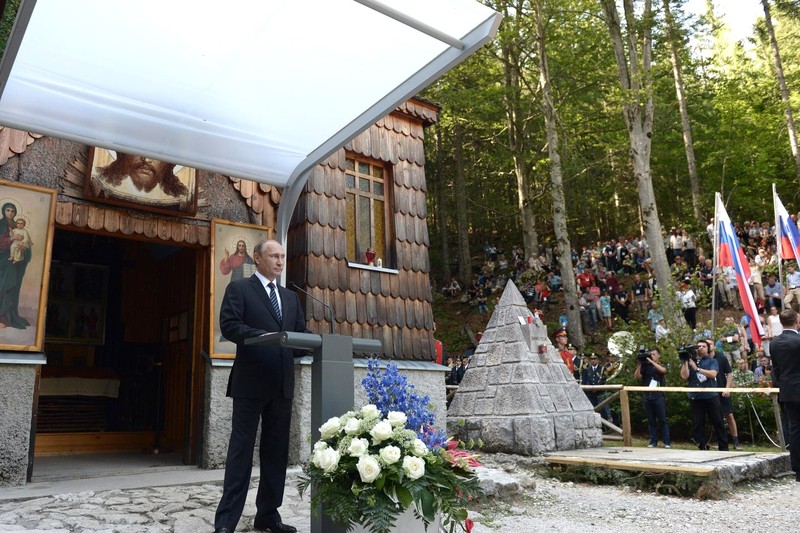
President Vladimir Putin’s eight-minute speech did not acknowledge the stripped-down format. Instead, he declared that Russian forces in Ukraine are “confronting an aggressive force armed and supported by the whole bloc of NATO” and insisted that “Victory has always been and will be ours.” He thanked scientists, doctors, teachers, and military correspondents — a wartime mobilization address dressed in holiday clothing.
The gap between the rhetoric and the reality was difficult to ignore.
A Parade Under Siege
Security in Moscow was extraordinary. Mobile internet and text messaging services were restricted across the capital. Soldiers with machine guns rode atop trucks. Roads around the city centre were blocked. The Russian defence ministry warned that any Ukrainian attempt to disrupt the event would trigger a “massive missile strike on the centre of Kyiv,” and told foreign diplomats to evacuate the Ukrainian capital. The EU told its diplomats to stay.
The threats reshaped the entire event. Victory Day parades across Russia were curtailed or canceled outright. In Moscow, heavy weapons were replaced by footage on giant screens — Yars intercontinental ballistic missiles, Su-57 fighters, the new Arkhangelsk nuclear submarine — projected for an audience that could not see the real thing on the square.
Chatham House analysis noted that, fearing Ukrainian drone attacks, Russia had “vastly scaled down its traditional celebration of military power,” and that Putin is reported to be “increasingly isolated, micromanaging the war from an assortment of bunkers” while the economic crisis deepens and major cities face regular internet blackouts.
Russian MP Yevgeny Popov put it more directly: “Our tanks are busy right now. They are fighting. We need them more on the battlefield than on Red Square.”
What the Guest List Signaled
The foreign leaders who attended — and who did not — told their own story. Belarus’s Alexander Lukashenko, Uzbekistan’s Shavkat Mirziyoyev, Kazakhstan’s Kassym-Jomart Tokayev, Laos President Thongloun Sisoulith, and Malaysia’s King Sultan Ibrahim Iskandar sat alongside Putin. Slovakia’s Robert Fico, the sole EU representative, met Putin at the Kremlin and laid flowers at the Tomb of the Unknown Soldier but stayed away from the parade itself.
Last year’s 80th anniversary drew 27 heads of state, including China’s Xi Jinping and Brazil’s Luiz Inácio Lula da Silva. This year’s roster was notably thinner — a reflection of the costs of associating too closely with a wartime Kremlin.
North Korean troops who fought alongside Russian forces in the Kursk region marched on Red Square, a visual reminder of the partnerships Moscow has cultivated out of necessity.
A Ceasefire, Tenuously Held
The parade took place under a three-day ceasefire brokered by US President Donald Trump, running Saturday through Monday, which also includes a prisoner exchange of 1,000. Both sides accused each other of violating earlier unilateral ceasefires, but the Trump-brokered truce appeared to hold through the ceremony.
Trump said he wanted a “big extension,” calling the conflict “the worst thing since World War II in terms of life” and claiming 25,000 young soldiers die every month. Kremlin spokesman Dmitry Peskov was less sanguine, telling state television that “reaching a peace agreement is a very long way with complex details.”
Ukrainians welcomed the pause cautiously. “Honestly, the sleepless nights have gotten a bit tiresome,” said Kateryna Kizev, a 22-year-old who fled Kherson. Kharkiv resident Ramaz Tsytsyashvili said he hoped the silence would lead to negotiations — “in offices, not on the battlefield.”
What the Missing Tanks Said
Russia has made slow but steady gains along the 1,000-kilometre front, but at enormous cost. Ukraine has developed drones capable of striking targets more than 1,000 kilometres inside Russia. Jailed pro-war nationalist Igor Girkin, a former intelligence officer who has criticized the Kremlin’s war conduct, wrote on Telegram that “the crisis is still deepening gradually, but any sharp movement can send the economy (and not only the economy) into a tailspin.”
He added that Russia’s leaders were more worried about being thrown out of their cabins than about the ship sinking.
On Red Square, the cannons fired. The brass band played. Screens displayed weapons that were not there. The speech promised victory.
The parade, in its diminished state, told a different story.
Sources
- Russia is fighting an ‘aggressive’ NATO-backed force, Putin says in Victory Day speech — France 24
- Putin denounces Nato at scaled back Victory Day parade — BBC
- Putin attends scaled-back World War II victory parade as worries deepen in Russia over war in Ukraine — ABC News Australia
- Is Putin losing control of his war in Ukraine? — Chatham House
Discussion (10)