 lop News
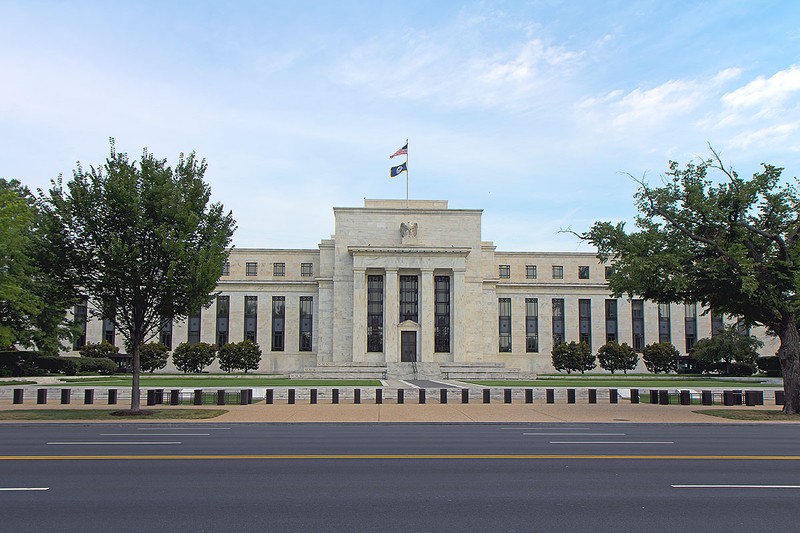
For 113 years, through wars, depressions, and stagflation, no American president has fired a Federal Reserve chair. Donald Trump says he will be the first.
“Then I’ll have to fire him,” Trump told Fox Business host Maria Bartiromo on Wednesday, responding to a question about what happens if Jerome Powell refuses to leave when his term as Fed chair expires on May 15.
A Legal Gray Area No One Has Tested
The threat lands in a patch of law Congress never clarified. The Federal Reserve Act of 1913 allows governors to be removed “for cause” — but says nothing about removing the chair of the Federal Open Market Committee. No president has tested the gap.
Daniel Tarullo, a Harvard law professor who served on the Fed Board from 2009 to 2017, outlined the two questions at play. First: does the “for cause” protection for Board governors also cover the chair’s separate four-year term? Second: does the Constitution give the president removal power over anyone at an independent agency performing “executive” functions, regardless of statute?
The Supreme Court has been eroding the 1935 Humphrey’s Executor precedent that shielded independent agency officials. In 2020’s Seila Law decision, the court struck “for cause” protections for the Consumer Financial Protection Bureau director. But conservative justices Samuel Alito, John Roberts, and Brett Kavanaugh have hinted they may view the Fed differently, though they have not specified a basis. Tarullo noted one available argument: the Fed’s lineage from the First and Second Banks of the United States, which dates to the first Congress after the Constitution was ratified.
Nothing is settled. That’s the problem.
The Warsh Confirmation Tangle
Trump’s pick to replace Powell is Kevin Warsh, a former Fed governor whose 69-page financial disclosure — filed Monday — details extensive corporate board positions and the substantial wealth of his spouse, Jane Lauder, granddaughter of cosmetics magnate Estée Lauder. The Senate Banking Committee scheduled his confirmation hearing for April 21.
The path runs through Senator Thom Tillis of North Carolina, a Republican who says he will not vote to confirm Warsh until the Justice Department concludes a criminal investigation into Powell. With Republicans holding a razor-thin committee majority, Tillis has effective veto power.
That investigation, led by DC US Attorney Jeanine Pirro, centers on the Fed’s headquarters renovation. Trump claimed Wednesday the project could cost “$4 billion,” though the Fed has put it at $2.5 billion, blaming overruns on “unforeseen conditions” including asbestos, toxic soil contamination, and a high water table.
The probe has stumbled. US District Judge James Boasberg quashed Pirro’s subpoenas in March, writing that a “mountain of evidence suggests that the Government served these subpoenas on the Board to pressure its Chair into voting for lower interest rates or resigning.” Boasberg denied her motion to reconsider. Pirro plans to appeal — a process that could take months.
Tillis framed the dilemma for CNN: “What’s a greater value? Getting Warsh into the chairman’s role or continuing a frivolous investigation?”
Trump said he won’t ask Pirro to drop the case. “Does that mean we stop a probe of a building that I would have done for $25 million that’s going to cost maybe $4 billion?” he said.
Why Every Central Bank Is Watching
The stakes extend well beyond one man’s job. The question is whether the institution that sets interest rates for the world’s reserve currency operates independently — or clears its decisions with the West Wing first.
Tarullo was blunt about the consequences. Markets would read a firing as an attempt to install a rate-cutter. “Longer-term interest rates will then rise, probably dramatically,” he said. The perverse outcome: short-term rates falling on presidential demand while long-term borrowing costs spike on inflation fears, undercutting the growth the president wants.
The Fed’s independence is the global benchmark. Central banks from Frankfurt to Tokyo model their own autonomy on it. A successful firing would signal that even the gold standard of central bank independence can be revoked by a president who wants cheaper money.
Powell Isn’t Blinking
Powell has shown no inclination to leave. At a March press conference, he confirmed he would remain as chair “pro tem” if no successor is confirmed by May 15 — standard Fed practice — and said he has “no intention of leaving the Board until the investigation is well and truly over with transparency and finality.”
His governor term runs until January 2028. Even replaced as chair, he could keep voting on the rate-setting Federal Open Market Committee. Trump on Wednesday threatened to fire him from that role too.
The geometry is fixed: Trump wants Powell out and Warsh in. Tillis won’t budge until Pirro finishes. Pirro won’t stop. May 15 is one month away.
Discussion (9)