 lop News
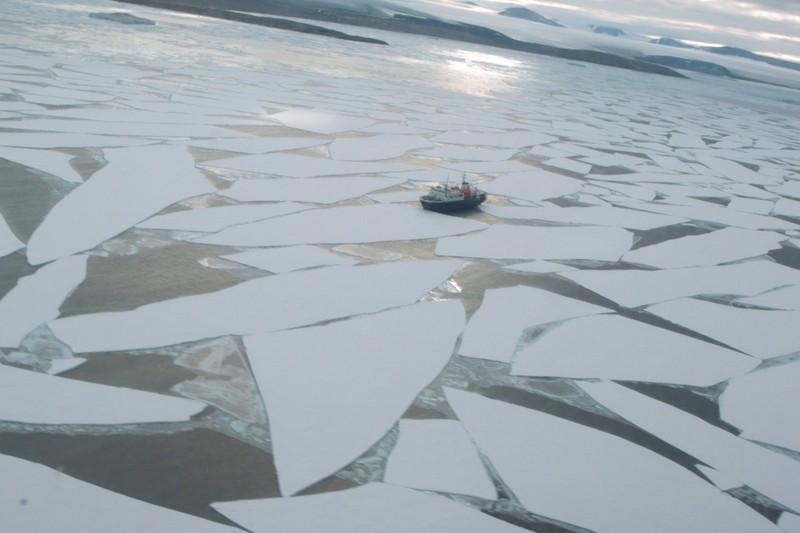
The decks are deserted. Medical teams in white overalls and face masks board from smaller vessels. Nearly 150 people sit in their cabins, waiting for a country — any country — to let them dock.
The MV Hondius, a Dutch-flagged expedition cruise ship, has been anchored off the coast of Cape Verde for days, caught in a diplomatic and medical limbo after three passengers died and four others fell ill in what the World Health Organization has described as a hantavirus outbreak. The vessel has no confirmed destination. Spain, whose Canary Islands lie roughly three days’ sail north, says it is monitoring the situation but has not committed to accepting the ship.
On Tuesday, the WHO added a new layer of urgency: the organization suspects the virus may have spread between passengers through human-to-human transmission — something almost never seen with hantavirus.
A virus that shouldn’t behave this way
Hantavirus is a zoonotic disease, meaning it jumps from animals to humans. The usual route is inhalation of particles from infected rodent urine, feces, or saliva. It is not, under normal circumstances, contagious between people.
But Andes virus — a hantavirus species found primarily in Argentina and Chile — is a rare exception. Limited person-to-person transmission has been documented in a handful of cases, typically involving prolonged, close contact. The WHO is now investigating whether something similar happened aboard the Hondius.
“We do believe that there may be some human-to-human transmission that is happening among the really close contacts,” Dr. Maria Van Kerkhove, the WHO’s director of epidemic and pandemic preparedness, told the BBC on Tuesday. She stressed the global risk remains low.
Van Kerkhove added that officials had been told there are no rats on board — which, if accurate, makes the conventional rodent-transmission story harder to sustain for cases beyond the first infection.
Investigators suspect the initial case — a 70-year-old Dutch man — contracted the virus before boarding, likely during travel in Argentina. He and his wife had visited South America prior to the cruise’s April 1 departure from Ushuaia. He fell ill on April 6 with fever, headache, and diarrhea. Five days later, he was dead. No microbiological tests were performed.
His wife disembarked at Saint Helena on April 24, then flew to South Africa. She collapsed at a Johannesburg airport and died on April 26. Posthumous testing later confirmed hantavirus.
A British man fell ill after the ship left Saint Helena. He was evacuated from Ascension Island to South Africa on April 27, where he remains in intensive care. His was the first confirmed hantavirus case, diagnosed on May 2 — nearly three weeks after the first death.
A German woman developed symptoms on April 28 and died on board on May 2. Three additional suspected cases — passengers reporting high fever and/or gastrointestinal symptoms — remain on the ship.
A ship nobody wants
The Hondius was built for isolation. Its itineraries include Antarctica, South Georgia, Tristan da Cunha — places where the nearest hospital is measured in days, not hours. Tickets cost between $6,000 and $25,000.
Now that isolation has become a liability. Cape Verde, whose capital Praia is a city of fewer than 200,000 people, has sent medical teams but has not offered to dock the vessel. Spain’s health ministry issued a statement saying it would decide on “the most appropriate port of call” based on epidemiological data — language that signals caution, if not reluctance. A ministry spokesperson told the BBC that Spain had not yet received a formal request.
The WHO, for its part, says Spain has granted permission for the ship to dock in the Canary Islands. The Spanish government has not confirmed this.
Oceanwide Expeditions, the ship’s Dutch operator, said two specially equipped aircraft were en route to Cape Verde to evacuate those needing urgent medical care. Once evacuations are complete, the company plans to sail to the Canary Islands — whether or not Spain has formally agreed.
Waiting inside
Passengers have been told to practice “maximal physical distancing” and remain in their cabins, a lockdown that echoes protocols most people last lived through during COVID-19.
“Our days have been close to normal, just waiting for authorities to find a solution,” passenger Qasem Elhato, 31, told the Associated Press via WhatsApp. “But morale on the ship is high and we’re keeping ourselves busy with reading, watching movies, having hot drinks and that kind of things.”
Another passenger, travel vlogger Jake Rosmarin, struck a different tone: “There’s a lot of uncertainty, and that’s the hardest part. All we want right now is to feel safe, to have clarity, and to get home.”
The WHO says it has activated three-level coordination and is supporting laboratory testing through South Africa’s National Institute for Communicable Diseases and the Institut Pasteur de Dakar in Senegal. Sequencing and metagenomics are ongoing — work that could determine whether the Andes strain is responsible and confirm whether human-to-human transmission occurred.
The family of the Dutch couple released a statement: “The beautiful journey they experienced together was abruptly and permanently cut short.”
Somewhere in the Atlantic, their ship is still waiting.
Sources
- Hantavirus cluster linked to cruise ship travel, Multi-country — World Health Organization
- Inside the cruise ship at the center of a rare hantavirus outbreak — AP News
- How a deadly hantavirus outbreak unfolded on a cruise ship for weeks before it was identified — AP News
- Hantavirus may have spread between passengers on cruise ship, WHO says — BBC News
Discussion (8)