 lop News
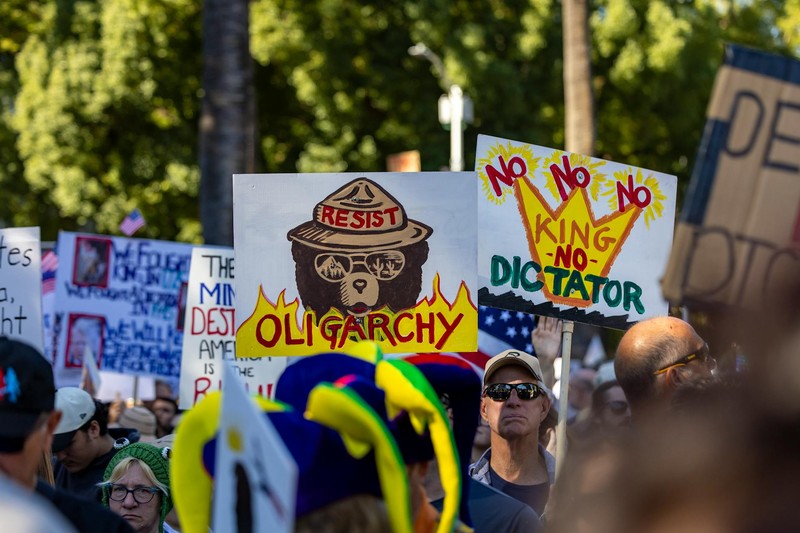
Seven million people across twenty-seven hundred cities. That was October. Organizers say Saturday will be bigger.
More than 3,200 events are planned across all 50 states and at least 16 countries for what the No Kings coalition calls the largest single-day nonviolent protest in American history. If the projections hold, March 28 will eclipse the movement’s own record set just five months ago.
No Kings launched last June on President Trump’s birthday — a deliberate counterpoint to the military parade he staged in Washington. It has since become the most sustained protest movement of his second term, driven not by a single flashpoint but by a growing accumulation of grievances.
The Geography of Defiance
What distinguishes this round is where the protests are happening. More than half of registered events are in Republican-leaning or battleground areas. Two-thirds of RSVPs come from outside major urban centers — a roughly 40 percent increase in smaller-community participation since June.
“The defining story of this Saturday’s mobilization is not just how many people are protesting, but where they are protesting,” said Leah Greenberg, co-founder of Indivisible, the group that started the movement.
A Growing List of Grievances
Each round has been fueled by the crisis of the moment. In October: a government shutdown, National Guard deployments, aggressive immigration crackdowns. Saturday’s demonstration adds new layers. The United States and Israel have been bombarding Iran for four weeks. Gas and grocery prices are climbing. In January, federal immigration agents killed two American citizens — Alex Pretti and Renee Good — in Minneapolis during mass deportation operations.
The Twin Cities will host a flagship rally in St. Paul, with Senator Bernie Sanders, Jane Fonda, Bruce Springsteen, and Joan Baez scheduled to appear.
“Since the last No Kings, we’re seeing higher gas prices and groceries, all while there’s an illegal war in Iran,” said Sarah Parker, executive director of Voices of Florida and a national coordinator for the 50501 movement. “The people of America are pissed.”
A Global Concern
Demonstrations in at least 16 countries — including Mexico and Canada — signal that opposition to Trump’s presidency has become a global preoccupation. When foreign cities host rallies against a sitting American president, the coordinates of U.S. politics have genuinely shifted.
The Crown He Embraced
The White House has dismissed the movement with characteristic flair. Spokesperson Abigail Jackson called the protests “Trump Derangement Therapy Sessions.” Trump himself has oscillated between mockery and menace — warning that June parade protesters would face “very big force” while posting an AI-generated video of himself wearing a crown.
The name “No Kings” takes direct aim at that image. Bill McKibben, founder of Third Act, a No Kings-affiliated group for people over 60, described the moment as unlike any in his lifetime. “Look, there have been plenty of presidents in my lifetime I didn’t much like or didn’t agree with politically, but there’s never been any that I thought were fascist, and I think that that’s very clear what we’re now starting to deal with in this country,” he said.
Organizers are clear-eyed about what a single day can accomplish. “Our third No Kings Day of Action will happen on Saturday, and Trump will still be in the White House,” Greenberg acknowledged. The goal is to convert energy into organizing ahead of midterm elections later this year.
The protests carry real risk. Organizers have warned that ICE agents may be present. Journalist Mario Guevara was detained and deported after livestreaming the June demonstration. Leaders are training participants in de-escalation and directing them to ACLU know-your-rights resources.
But the prevailing mood is less fearful than determined. As Visibility Brigade leader Dana Glazer put it: people come to these events and realize, “Oh wow, we have some power.”
Sources
- ‘No Kings’ aims for record turnout in Saturday’s anti-Trump protests — NPR
- Rallies planned in thousands of US cities for ‘No Kings’ protest against Trump — Reuters
- Third No Kings protests to see millions across US push back on Trump — The Guardian
- Third round of ‘No Kings’ protests are expected to be the largest so far — NBC News
Discussion (10)