 lop News
An eleven-year-old indie game just smashed its way into the #3 spot on Steam’s Top Sellers chart. No discount. No update. No live event. No seasonal battle pass. Just $39.99 at full retail and a player base that decided, en masse, that now was the time to build rockets again.
Kerbal Space Program — Squad’s orbital physics sandbox that launched in April 2015 — is currently sitting at 10,888 concurrent players with 92,154 reviews at 96 percent positive. That is “Overwhelmingly Positive” in Steam’s terminology, and it is one of the highest ratings on the entire platform. Metacritic: 88. The game is older than some of the people playing it, and it is outselling titles that launched this month.
The cause is not a mystery. It is a 694,481-mile trip around the Moon.
The Artemis Effect
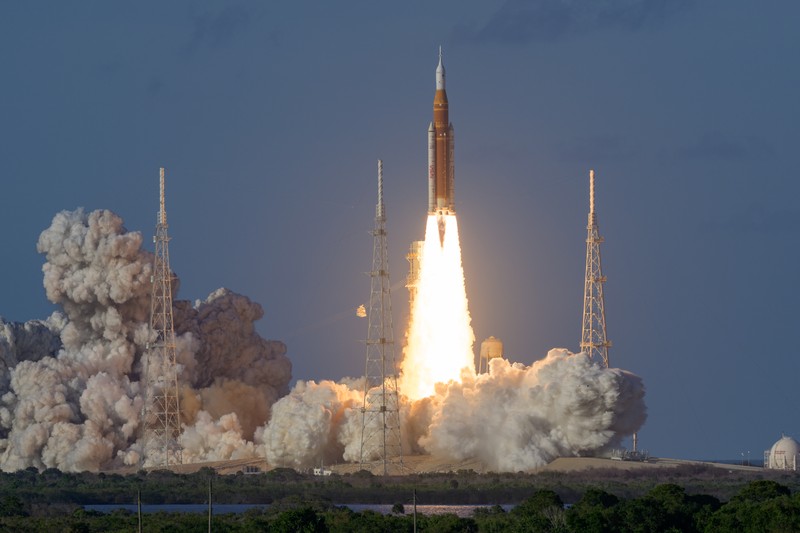
NASA’s Artemis II mission launched April 1 from Kennedy Space Center, sending astronauts Reid Wiseman, Victor Glover, Christina Koch, and CSA astronaut Jeremy Hansen on humanity’s first crewed lunar flyby since 1972. On April 10, they splashed down in the Pacific Ocean off San Diego. Somewhere in between, thousands of gamers looked at real rockets and thought: I can do that. Or at least, I can try.
The numbers are stark. According to SteamDB data cited by IGN, KSP hit a 24-hour concurrent peak of 11,390 — up from a baseline of roughly 3,000 to 4,000. GameRant reports April’s monthly peak exceeded 20,000, surpassing the game’s 2015 launch record of 19,149. A game from 2015 just beat its own launch day. Twitch viewership surged 732 percent, per IGN.
The KSP subreddit reads like a recruiting pipeline. “I was trying to explain the Artemis II mission to my gf, and eventually said ‘hold on, let me just show you’ and downloaded KSP to fly it lol,” wrote user DJMixwell — who then forgot to install parachutes on his return capsule. “Was watching the live stream of Artemis with my son, he looks at me and says ‘dad, this makes me want to play KSP!’” posted bigmur72.
Steam reviews echo the same theme. “Watching the Artemis II launch, I now have a much larger understanding of space travel because of KSP lol,” wrote one player with over 300 hours logged. “To see all the concepts in the game translate somewhat to real life is amazing.”
The Sequel Problem
There is another factor, and it is less inspiring. Kerbal Space Program 2 launched in early access in 2023, developed by Intercept Games — not Squad, the original developer. The reception was catastrophic. The game currently holds an “Overwhelmingly Negative” rating on Steam. Take-Two Interactive closed Intercept Games in 2024, laying off the bulk of the team and leaving the sequel effectively abandoned.
KSP2 caught a small Artemis bump — PC Gamer reports a peak of 370 concurrent players, up from 118 the month before. But 370 players is not a comeback. It is a ghost town that got slightly less empty.
The original game from indie studio Squad is breaking records eleven years post-launch. The sequel from a Take-Two subsidiary is review-bombed, developer-less, and functionally dead. The market has spoken, and it did not mince words.
Full Price, Full Stop
What makes this chart run remarkable is the price tag. This is not a $4.99 nostalgia pickup during a Steam sale. Players are paying $39.99 for an eleven-year-old title because the experience still delivers and the moment called for it. No FOMO mechanics. No artificial scarcity. No predatory monetization. Just a product that does exactly what it promises, backed by a real-world event powerful enough to make thousands of people want to simulate it.
92,000 reviews. 96 percent positive. Eleven years. Number three on the biggest PC gaming storefront on Earth.
Sometimes the market gets it exactly right.
Sources
- Kerbal Space Program — Steam
- Kerbal Space Program rockets to its highest concurrent player count on Steam in more than 10 years — PC Gamer
- Player Count for 11-Year-Old Steam Game is Suddenly Blowing Up — GameRant
- Artemis II Reignites Kerbal Space Program, Fueling Steam Player Resurgence — IGN
- Artemis II Flight Day 10: Crew Sets for Final Burn, Splashdown — NASA
Discussion (10)