 lop News
Twenty-one hours across a locked-down hotel in Islamabad. Two fundamentally opposed positions on what peace should look like. By early Sunday, the first direct, high-level talks between the United States and Iran since the 1979 Islamic Revolution had produced no agreement, no framework, and no ceasefire.
Vice President JD Vance delivered the American verdict bluntly. “The good news is that we’ve had substantive discussions. The bad news is that we have not reached an agreement.” Washington had presented its “final and best offer.” Iran had declined it.
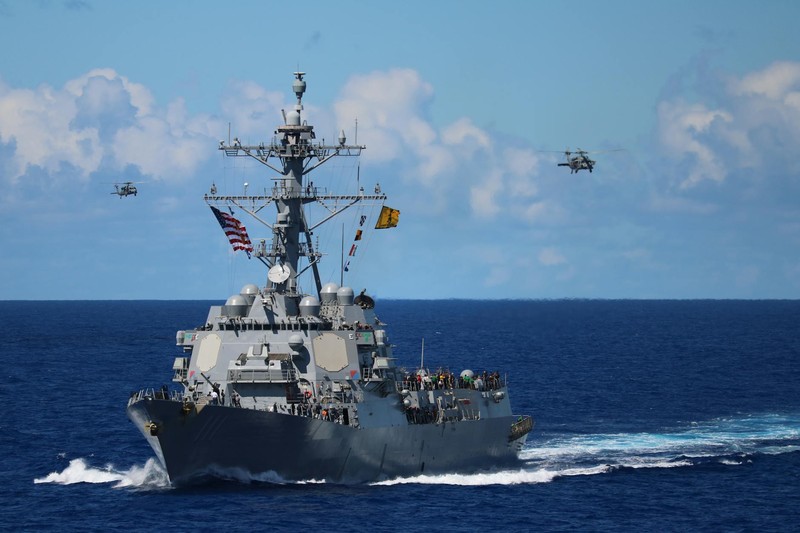
Within hours, President Donald Trump ordered the US Navy to blockade all Iranian ports. The war, now in its seventh week, has entered a new phase — one where the diplomatic track has been exhausted and the economic fallout is compounding far beyond the oil markets that dominate headlines.
What collapsed in Islamabad
Pakistan’s role as mediator was no accident. It shares a long border with Iran, maintains close ties with Gulf states and China, and does not host US military bases. More than 10,000 security personnel were deployed across the capital. The Serena Hotel, the venue, was emptied of guests days in advance.
The format itself was historic: Vance and Iranian parliament speaker Mohammad Bagher Ghalibaf in the same room, the highest-level direct contact between the two governments in nearly half a century. Multiple rounds of drafts were exchanged. Communications with both capitals remained active throughout.
The sticking point, according to Vance, was nuclear. “We need to see an affirmative commitment that they will not seek a nuclear weapon – not just now, but for the long term. We haven’t seen that yet,” he said.
Iran’s demands ran in a different direction. Tehran wanted a ceasefire covering the Lebanon front, where Israel has continued its campaign, and the unfreezing of Iranian assets held abroad under years of US sanctions. Iranian Foreign Minister Abbas Araghachi said his delegation had “engaged with the US in good faith to end the war,” but encountered “maximalism, shifting goalposts, and blockade.”
The gap was structural. Washington wanted concessions on enrichment before offering relief; Tehran wanted relief before discussing its nuclear programme. Neither side was willing to move first.
The blockade: a different escalation
The US military’s Central Command announced the blockade would take effect at 10am Eastern time on Monday. “The blockade will be enforced impartially against vessels of all nations entering or departing Iranian ports and coastal areas, including all Iranian ports on the Arabian Gulf and Gulf of Oman,” CENTCOM said.
The operation is distinct from Iran’s earlier shutdown of the Strait of Hormuz. Tehran’s move controlled a chokepoint through which nearly 20 percent of global oil and gas supplies normally flow. The US blockade targets Iran directly — sealing off its ports while explicitly promising not to impede traffic to and from non-Iranian ports.
Trump also instructed the Navy to “seek and interdict every vessel in International Waters that has paid a toll to Iran,” referring to fees Tehran has demanded from some commercial ships transiting the strait.
Iran’s military spokesman, Ebrahim Zolfaghari, warned that “warships nearing the Strait of Hormuz will be met with a strong and decisive response” and threatened to block the Bab el-Mandeb Strait between Yemen and the Horn of Africa — a move that would sever traffic through the Suez Canal.
Nicole Grajewski, an assistant professor at Sciences Po in Paris, told Al Jazeera the US blockade was “not a minor coercive signal” but could be considered “essentially a resumption of the war.”
The oil shock is worse than it looks
Brent crude jumped 7.4 percent to $102.24 a barrel on Monday, according to AP, up from roughly $70 before the war began in late February. But the headline number understates the disruption.
Dated Brent — the benchmark for physical oil delivered within 10 to 30 days — hit an all-time high above $144 a barrel last week, roughly $35 above futures prices, according to Al Jazeera. Only 17 vessels transited the Strait of Hormuz on Saturday, according to maritime intelligence firm Windward, down from roughly 130 daily before the war. Kpler, a market intelligence firm, estimates a daily shortfall of about 8 million barrels.
“The fact that the Strait of Hormuz remains at a near-standstill means that the oil market is facing a physical supply deficit right now,” said Pavel Molchanov, an investment strategist at Raymond James & Associates. Buyers willing to pay a “hefty premium” for immediately available oil are driving the gap between physical and paper prices.
Adi Imsirovic, a veteran oil trader who lectures at the University of Oxford, warned that governments are being “complacent regarding this energy shock” and should already be advising citizens on energy rationing.
The sulphuric acid domino
The fallout extends well beyond petroleum. China, the world’s largest sulphuric acid exporter, is expected to halt shipments from May, according to reports. No official announcement has been made, but Lynn Song, chief economist for Greater China at ING, said administrative controls would amount to “a de facto suspension.”
China exported $290 million worth of sulphuric acid in 2025, primarily to Chile, Indonesia, Saudi Arabia, Morocco, and India, according to the Observatory of Economic Complexity. The chemical is essential for manufacturing fertiliser, processing minerals, and refining oil. Song said Beijing’s motivation was straightforward: safeguarding domestic fertiliser supply in a market already disrupted by the Hormuz crisis, which has blocked roughly a third of seaborne fertiliser trade.
The decision illustrates how the war’s consequences are cascading through supply chains with no connection to oil. Food security, mineral processing, and industrial chemical production across the Global South are now directly exposed.
Allies step back
Washington’s escalation has met broad resistance from its own allies. British Prime Minister Keir Starmer told BBC Radio the UK “is not getting dragged in” and would focus on reopening the strait using minesweeping capabilities. France’s Emmanuel Macron announced plans for a “peaceful multinational mission” to restore freedom of navigation, explicitly separate from the warring parties.
Spain’s Defence Minister Margarita Robles called the blockade “one more episode in this whole downward spiral.” Turkey urged negotiations. China’s foreign ministry called Hormuz “an important international trade route” and urged both sides not to reignite the war.
Global markets declined across the board on Monday.
What comes next
The two-week ceasefire technically runs until April 22. Its status is now uncertain. Vance left open the possibility that Iran could still accept Washington’s offer. Iranian officials called the Islamabad talks “not an event, but a process” and said progress would depend on “seriousness and good faith.”
On the ground, the trajectory is unmistakable. Two US Navy guided-missile destroyers transited the Strait of Hormuz on Saturday — the first American warships to pass through since the war began. CENTCOM has started clearing Iranian sea mines from the waterway. The blockade of Iranian ports is underway.
The door to diplomacy, as Pakistan’s framing implied, is not locked. But it is closing.
Sources
- How the US-Iran talks in Islamabad unfolded — Al Jazeera
- U.S. military to block ships from Iran’s ports after peace talks fail — NPR
- Why oil prices aren’t what you think – and what it means for global supply — Al Jazeera
- China, the Iran war and the chemical suddenly stoking global supply fears — South China Morning Post
- Oil prices climb and global markets decline as US prepares for blockade of Iran’s ports — AP News
- Starmer says UK will not support US blockade of Strait of Hormuz — Al Jazeera
Discussion (13)