 lop News
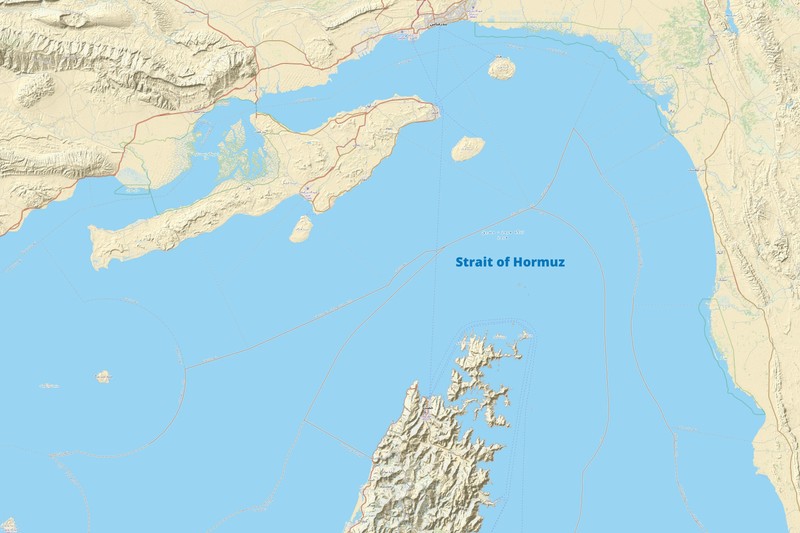
Twenty-one hours of talks produced no agreement. Two US warships steamed into contested waters and destroyed an Iranian drone. And somewhere beneath the Strait of Hormuz, dozens — perhaps hundreds — of naval mines sit in positions nobody can identify with certainty.
The highest-level direct engagement between American and Iranian officials since the 1979 Islamic Revolution ended without a deal early Sunday in Islamabad. Vice President JD Vance delivered the verdict plainly: “They have chosen not to accept our terms.” He left the door open — “We’ll see if the Iranians accept it” — but the impasse leaves a two-week cease-fire, set to expire around April 22, as the only thing standing between a fragile calm and the resumption of a war that has already killed thousands.
The diplomatic failure was predictable. The Strait of Hormuz problem is not.
The Mines Nobody Can Find
Iran laid naval mines across the Strait of Hormuz during the opening days of its war with the United States and Israel, using small boats to scatter ordnance across one of the world’s most critical shipping lanes. The tactic worked: the strait, through which roughly 20 million barrels of oil passed daily before the conflict, effectively closed. Global energy markets convulsed.
But the operation, according to US officials cited by The New York Times, was carried out in a haphazard and disorganized fashion. Iran may not have accurate records of where all the mines ended up. Some were placed without recorded coordinates. Others may have drifted with currents. The result is a waterway littered with explosives that neither Iran nor the United States can fully map.
Iranian Foreign Minister Abbas Araghchi acknowledged the difficulty indirectly, saying the strait would be reopened “taking into account technical constraints.” American officials told The New York Times that phrase referred directly to Tehran’s inability to locate or clear its own ordnance.
This is not a minor logistical headache. Sea mine clearance is among the most complex operations in naval warfare, and even the United States does not have a surplus of mine-hunting vessels suited to a waterway as large and turbulent as the Strait of Hormuz. The Pentagon has said underwater drones will join the effort, but the scale of the problem remains undefined. Nobody knows how many mines are there, or precisely where.
The Islamabad Impasse
The talks in Pakistan were always a long shot. Negotiators on both sides carried maximalist positions into a room in Islamabad, mediated by Pakistani officials who shuttled between the delegations rather than bringing them face-to-face for much of the session.
Iran’s demands, laid out by foreign ministry spokesman Esmaeil Baqaei, included control of the Strait of Hormuz, resolution of the nuclear issue, war reparations, and a complete end to the war across the region. Conservative analyst Ali Gholhaki, who is close to the Iranian government, said the American side demanded zero enrichment, the removal of nearly 900 pounds of stockpile uranium, and US management of strait security on Washington’s terms. Gholhaki added that the Americans provided no commitment to end Israel’s bombing of Lebanon. “It seems the Americans didn’t come to negotiate!” he wrote.
The United States saw things differently. Vance characterized the American offer as a “final and best” proposal and placed the blame for its rejection squarely on Tehran. President Donald Trump, for his part, projected indifference. “We win, regardless,” he said from Washington. “We’ve defeated them militarily.”
Trump also issued a warning, telling journalists: “We are currently loading ships with the best ammunition, the best weapons ever made. Unless we reach an agreement, we’re going to use them very effectively.”
A Strait in Name Only
The mine problem has rendered the strait functionally impassable for normal commercial traffic. Only a handful of ships have transited since the cease-fire began, according to US officials, and those passages were limited to a narrow corridor whose safety Iran cannot guarantee.
The closure has cascaded far beyond oil. Global fertilizer and aluminum supply chains rely on shipments through the strait, and both have been disrupted by the standoff. In the United States, the latest consumer price index report showed annual inflation jumping to 3.3 percent, driven largely by energy costs tied to the conflict.
Iran had attempted to impose a toll system on the strait — requiring laden tankers to email cargo details to Iranian authorities and pay $1 per barrel of oil in Bitcoin within seconds. At pre-war traffic levels, that scheme could have generated roughly $7.3 billion annually, according to The Hormuz Letter. But with uncharted mines still drifting through the shipping lanes, the revenue potential is largely theoretical. A toll-collection apparatus does little good when no ships can safely pass.
Two Warships and a Denial
As talks dragged on in Islamabad, the Pentagon made its own move. Two guided-missile destroyers — the USS Frank E. Petersen Jr. and the USS Michael Murphy — entered the strait on Saturday, sailing from the Gulf of Oman through to the Persian Gulf before turning back. US Central Command said the transit was the first stage of a mine-clearing operation. Along the way, the ships destroyed an Iranian surveillance drone that approached one of the vessels.
Iran denied that any of this happened. The Khatam al-Anbiya Central Headquarters, Iran’s top military command, rejected the American account entirely, insisting that passage through the strait remained “only at the initiative of the armed forces of the Islamic Republic of Iran.” The IRGC issued its own warning that any military vessels entering the strait would be “dealt with severely.” Neither claim could be independently verified.
A Clock With No Hands
The cease-fire expires around April 22. Whether the mine-clearing operation — still in its earliest stages — can make the strait safe for commercial traffic by then is an open question, and not a hopeful one. US officials have said more resources, including additional underwater drones, will join the effort. But clearing an unmapped minefield in one of the world’s busiest shipping lanes is a problem measured in weeks and months, not days.
France has offered to contribute to clearance operations, with President Emmanuel Macron telling Iranian President Massoud Pezeshkian that France stands “ready to contribute” to restoring freedom of navigation. The UN’s humanitarian leadership has called for an immediate end to violations of international law across the region, citing thousands of civilians killed and injured and hundreds of thousands of displacements in just the past month.
The war’s toll continues to mount. In Iran, at least 1,701 civilians have been killed, including 254 children, according to the Human Rights Activists News Agency. Lebanon’s health ministry reports 2,020 dead in the latest fighting between Israel and Hezbollah. Thirty-two people have been killed in Gulf nations in attacks attributed to Iran. Israel has lost at least 20 people. Thirteen American service members have died.
The negotiators in Islamabad could not agree on how to open a waterway. The waterway, meanwhile, remains closed — not by politics alone, but by explosives that nobody can find.
Discussion (15)