 lop News
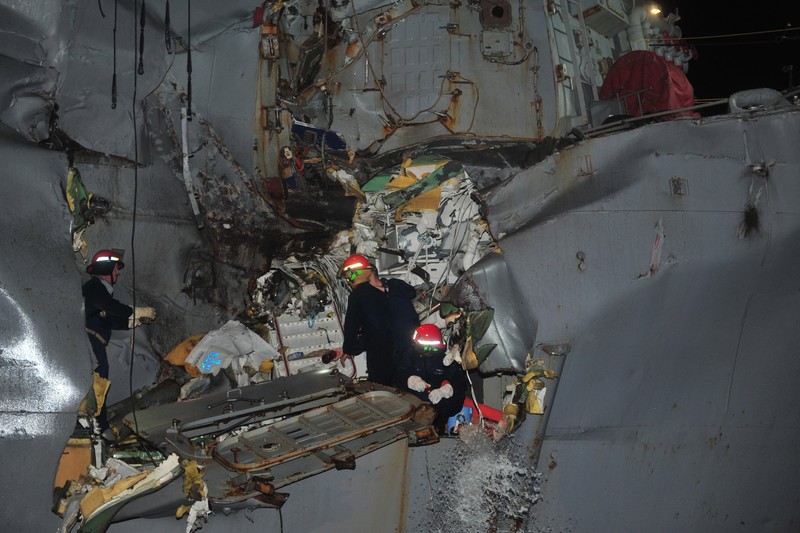
Fifty-three days of war. Two weeks of ceasefire. Perhaps hours left before the shooting resumes.
The truce that paused the US-Israel war on Iran is set to expire Wednesday evening Eastern time, and US President Donald Trump has said Iran will negotiate and has threatened further military action if a deal is not reached. No deal appears imminent. The gap between what Washington demands and what Tehran will accept has not narrowed across 21 hours of face-to-face negotiation. What has changed is the cost of failure — and the number of actors positioning themselves for whatever comes next.
A ceasefire that never truly held
Even before the deadline arrived, the truce was fraying. On Sunday, US Marines rappelled from helicopters onto the Iranian-flagged container ship Touska in the Gulf of Oman, seizing the vessel after what US Central Command described as a six-hour standoff. Iran’s foreign ministry called it “maritime piracy” and a “clear violation” of the ceasefire.
The seizure was the sharpest illustration of a pause in fighting that never stopped hostilities. The US maintained its naval blockade of Iranian ports throughout. Iran briefly lifted its own blockade of the Strait of Hormuz on Friday, sending crude prices tumbling more than 10 percent, only to reimpose it Saturday after Trump refused to end the American blockade. Vessels attempting transit came under fire and were forced to withdraw.
“We had the most violent day in the strait on Saturday that we’ve had since the beginning of this crisis,” said Rory Johnston, founder of Commodity Context. “The strait still isn’t flowing, and 13 million barrels a day of production remains shut in.”
The cumulative supply loss has exceeded 500 million barrels of crude and condensate, according to Kpler data — the largest energy disruption in modern history. International Energy Agency chief Fatih Birol estimated it would take roughly two years to recover the lost output.
Two sides, incompatible demands
The first round of talks in Islamabad on April 12 stretched over 21 hours. Vice President JD Vance phoned Trump more than a dozen times. Vance boarded his flight back to Washington empty-handed.
The core dispute centers on Iran’s nuclear program. Washington reportedly demanded a 20-year pause on Iranian uranium enrichment; Tehran countered with five years. Trump insists Iran cannot have the means to develop a nuclear weapon. Tehran has insisted any deal must not impede its nuclear program, offering only a five-year enrichment pause versus Washington’s demand for 20 years.
Trump’s own claims about “Operation Midnight Hammer” — the June 2025 bombing of Iranian nuclear facilities — have complicated matters. He has declared the strikes “a complete and total obliteration” of Iran’s nuclear sites. But the bombs did not destroy deep underground facilities at Isfahan and Natanz, and Trump himself acknowledged that retrieving Iran’s enriched uranium would be “a long and difficult process.” The material’s current whereabouts are unknown.
Trump claimed last week that Iran had agreed to hand over its enriched uranium. Iran said it had not.
Alan Eyre, a diplomatic fellow at the Middle East Institute and former member of the US team that negotiated the 2015 Iran nuclear deal, said the problem runs deeper than any single provision.
“The US side has really not been focused on negotiation per se,” Eyre said. “What they’ve been waiting for is Iranian capitulation.”
A new front in the information war
As the military and diplomatic tracks stall, a new dimension has surfaced. Iranian media has reported that US-made networking equipment — including hardware from Cisco, Juniper Networks, and Fortinet — stopped functioning simultaneously during American attacks, even though Iran had disconnected from the global internet.
Iran’s Fars News Agency called the timing “suspicious” and said the failures showed signs of “deep-seated sabotage” embedded in the equipment. Iranian cybersecurity sources said technical evidence of coordination between manufacturers and what Fars called U.S. and Israeli “enemies” would be released soon.
The claims are unverifiable — Iran’s internet has been largely shut off for 52 days, according to NetBlocks — and the manufacturers have not responded publicly. US Cyber Command’s role in Operation Midnight Hammer has been acknowledged by General Dan Caine, chairman of the Joint Chiefs of Staff, though he did not elaborate.
But the allegation has gained traction well beyond Tehran. Chinese state media has amplified the reports extensively. China’s National Computer Virus Emergency Response Center, which regularly argues that the US embeds backdoors in networking equipment, has used the Iranian claims to restate Beijing’s position that Washington is the true cyber-aggressor — the same apparatus that previously insisted the Volt Typhoon intrusions into US critical infrastructure, attributed to China by Five Eyes intelligence agencies, were a false-flag operation.
This is not merely propaganda. Beijing is the largest buyer of Iranian crude and has expressed concern over the “forced interception” of Iranian vessels. China’s investment in shaping the narrative signals that a permanent member of the UN Security Council sees strategic value in how this war is understood globally.
The world is already paying
The economic damage stretches far beyond oil markets. In Pakistan, which has staked considerable diplomatic capital on hosting the talks, cities including Islamabad face blackouts lasting more than seven hours. Bangladesh has warned its mobile networks face imminent shutdown as fuel for power stations runs dry.
The IMF has warned that global growth will inevitably take a hit even if the ceasefire holds, citing persistent uncertainty over the Strait of Hormuz as a drag on energy costs and inflation.
What Wednesday brings
As of Tuesday, momentum appeared to be building for talks to resume. A Pakistani source involved in the discussions told Reuters negotiations were “on track” for Wednesday, and Vance was reported to be traveling to Pakistan. An Iranian official said Tehran was “positively reviewing” participation.
Trump has said Iran will negotiate. Iran’s parliament speaker, Mohammad Bagher Ghalibaf, has said the country will not negotiate under threat and is “prepared to reveal new cards on the battlefield.” Both can be true right up until the moment they cannot.
If the ceasefire expires without a deal, the immediate risks are clear: renewed US bombing campaigns, Trump’s threat to “destroy every bridge and power plant in Iran,” Iran’s counter-threat to strike power stations and desalination plants in Gulf Arab states, and a Strait of Hormuz that stays shut indefinitely. The less visible risks — the erosion of trust in global technology supply chains, the hardening of geopolitical blocs, the precedent of a war launched over a nuclear program that may still be intact — will take longer to measure.
“There’s an escalatory predisposition here where both sides could escalate and go back into a shooting war, which no one wants,” Eyre said. But he added that a resumption of hostilities was “unfortunately more likely.”
Day 53 is not a milestone. It is the last quiet moment before something changes.
Sources
- US positive on Iran deal but talks still uncertain as ceasefire end nears — Channel News Asia
- Seized ship, vessel attacks push U.S.-Iran ceasefire toward brink — CNBC
- Middle East crisis live: Iran claims it has ‘new cards for battlefield’, and IEA calls it biggest energy crisis in history — The Guardian
- Iran claims US used backdoors to knock out networking equipment during war — The Register
- Iranian media claims U.S.-made network equipment stopped working during attack — Xinhua
Discussion (15)