 lop News
Iran’s answer to Washington’s 48-hour ceasefire proposal arrived not through diplomatic channels but through semi-official media: a flat no, delivered with a reminder that Tehran sets the terms now.
Fars News Agency reported on Friday that Tehran rejected the US proposal, which had been conveyed through an unnamed intermediary country on Wednesday. There was no immediate confirmation from the White House. The rejection itself was the message.
Iranian Foreign Minister Abbas Araghchi had signaled this days earlier. In an interview with Al Jazeera on Tuesday, Araghchi said trust between Tehran and Washington was “at zero” and described some American demands as “excessive.” He confirmed direct contact with Trump’s envoy Steve Witkoff but was blunt about what those conversations were not: “This does not mean that we are in negotiations.”
The 48-hour proposal — temporary, limited, conditional — was never going to satisfy a government that has spent five weeks absorbing airstrikes and now believes it holds the stronger hand. Iran’s ambassador to Russia, Kazem Jalali, outlined Tehran’s four conditions to TASS: a complete and permanent cessation of hostilities, guarantees against future attacks, compensation for damages, and recognition of Iranian jurisdiction over the Strait of Hormuz. A pause was never on the list.
The calculus in Tehran
Read the rejection carefully and a strategic logic emerges. Iran appears to calculate that time, global economic pain, and coalition fatigue all work in its favor — and the evidence so far supports that assessment.
The Strait of Hormuz remains effectively closed. Roughly 20 percent of the world’s daily oil supply passes through it in peacetime. tanker traffic dropped by 70 percent within hours of the war’s start on February 28 and fell to near zero shortly after, according to tracking data. Brent crude surpassed $100 per barrel on March 8 and peaked at $126 — the fastest oil price surge in modern conflict history. The disruption has been described as the largest to global energy supply since the 1970s crisis.
Iran has not merely blocked the strait by threat. It has attacked at least 21 merchant vessels, killing 10 seafarers, according to the International Maritime Organisation. It has deployed naval mines, drone boats, missiles, and GPS jamming to make the waterway unusable. Insurance underwriters pulled war-risk coverage in early March, making it economically impossible for most shipowners to even attempt the passage.
An estimated 2,000 ships and 20,000 seafarers remain trapped inside the Persian Gulf, running low on food and water, according to accounts gathered by ABC Australia. One sailor texted his union: “Continuous missile attacks are taking place — please help us.” Another told the network their company was still forcing them to conduct cargo operations in the war zone.
A new maritime order, built in yuan
Tehran is not just holding the strait closed — it is building a toll system for selective reopening.
Iranian state media reports that Tehran and Oman are drafting a protocol to oversee transit through Hormuz. Iran’s parliament has approved a bill to charge ships fees starting at roughly $1 per barrel, payable in Chinese yuan or cryptocurrency — which could mean charges of up to $2 million for a single supertanker. On April 2, the first non-Iranian supertankers transited the strait: two Oman-owned vessels carrying Saudi and Emirati oil, plus the first LNG carrier, all hugging the Omani coast under the new arrangement.
Ebrahim Azizi, head of the Iranian parliament’s National Security Committee, framed the shift with deliberate provocation. Trump, he wrote on X, had “finally achieved his dream of ‘regime change’ — but in the region’s maritime regime.” He added: “The Strait of Hormuz will certainly reopen, but not for you; it will be open for those who comply with the new laws of Iran.”
The message to Washington’s allies is unsubtle: negotiate with Tehran, pay in yuan, and your ships can move. The message to Washington is that it has been excluded from the conversation.
A bad day over Iran
While diplomats exchanged proposals and rejections, the military situation deteriorated sharply for the United States.
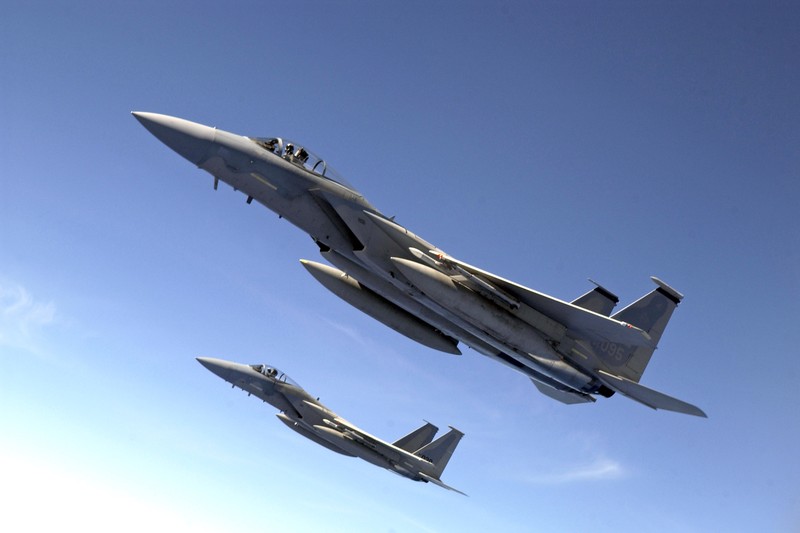
Iran shot down a US F-15E fighter jet on Friday, according to US Central Command. One crew member was recovered; the second — a weapon systems officer — remains missing inside Iran. Iranian state media has broadcast rewards of roughly $76,000 for anyone who hands over American aircrew.
A second US aircraft, an A-10 Thunderbolt, was struck by Iranian fire during the subsequent search-and-rescue operation and crashed in Kuwaiti airspace, NBC News reported. The pilot ejected safely. Two Blackhawk helicopters involved in the rescue were also struck, with minor injuries reported among their crews. In total, Iran forced down two military aircraft and damaged two helicopters in a single day — less than 48 hours after Trump declared in a national address that Iran’s military had been “completely decimated.”
The incidents underscore a gap between political rhetoric and operational reality that is shaping how Tehran reads the war.
What comes next
Trump’s public response has oscillated between bravado and something less confident. On Friday he posted that with “a little more time” the US could “easily OPEN THE HORMUZ STRAIT, TAKE THE OIL, & MAKE A FORTUNE.” He provided no operational details. The same day, his White House sent Congress a $1.5 trillion defense budget request for 2027 — a 42 percent increase over the previous year and the largest since World War II. The Pentagon separately requested $200 billion for the war effort and munitions replenishment.
Wars that outpace their political off-ramps tend to follow a familiar trajectory: each refusal of diplomacy narrows the available options until only escalation remains. The 48-hour ceasefire, however inadequate from Tehran’s perspective, represented one of the few visible exit points. Its rejection does not necessarily make wider war inevitable, but it removes the most accessible off-ramp.
Iran’s four conditions — permanent cease-fire, security guarantees, compensation, and Hormuz sovereignty — are expansive enough that Washington would struggle to accept them without appearing to have lost. Trump’s public demand that any cease-fire require Iran to first reopen Hormuz is equally uncompromising from the other direction. Two governments, each insisting the other move first, with 20,000 sailors and the global energy supply caught in between.
Araghchi told Al Jazeera that Iran is prepared for a US ground invasion: “We are waiting for them.” The Pentagon, meanwhile, has reportedly begun preparing options for exactly that scenario. The off-ramps are narrowing. The question now is how many more aircraft — and how many more oil prices — it takes before someone builds a new one.
Sources
- 2026 Strait of Hormuz crisis — Wikipedia
- Sailors trapped by Iran’s Strait of Hormuz blockade plead for help — ABC News Australia
- War on Iran: Three key takeaways from Araghchi’s interview with Al Jazeera — Al Jazeera
- Trump says US can open Hormuz with ‘a little more time’ and asks Congress for $1.5tr for defence — Euronews
- Iran sets four conditions for ending war with US and Israel — Middle East Monitor
Discussion (14)