 lop News
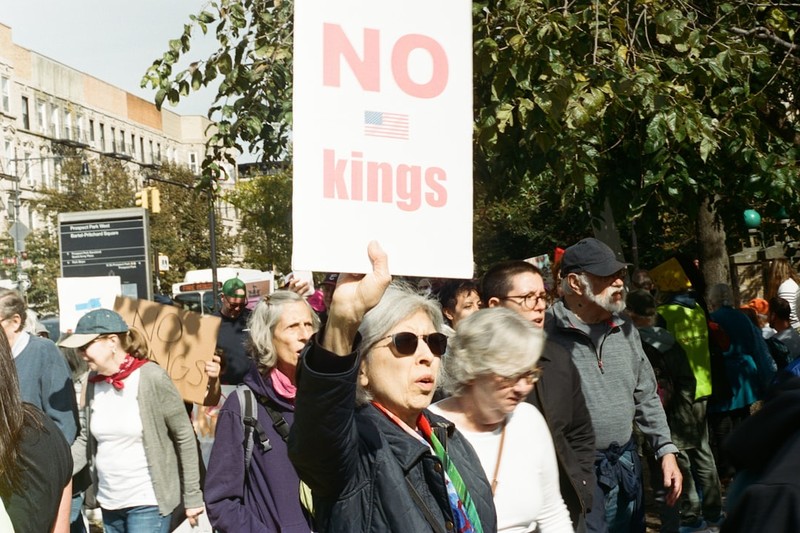
More than 3,100 events. All 50 states. Nine million participants, according to organisers. If those figures are confirmed, the third No Kings demonstration on Saturday will rank as the largest single-day protest in modern American history — exceeding the widely reported estimates for the 2017 Women’s March, which drew between three and five million, and far surpassing the 2018 March for Our Lives.
The No Kings movement has grown with each iteration. The first round, launched on Donald Trump’s birthday last June, drew an estimated four to six million people across roughly 2,100 sites. The second, in October, brought seven million to more than 2,700 cities, according to a crowd-sourcing analysis by data journalist G. Elliott Morris. Saturday’s edition registered 500 more events than October, with a nearly 40 percent jump in smaller communities compared to the movement’s first mobilisation, organisers said.
The geography is as significant as the raw numbers. Two-thirds of Saturday’s events took place outside major metropolitan areas — in towns like Driggs, Idaho (population under 2,000), Shelbyville, Kentucky, and Howell, Michigan. Organisers reported surges in RSVPs from deeply Republican states including Idaho, Wyoming, Montana, and Utah, as well as from competitive suburban areas in Pennsylvania, Georgia, and Arizona — the places that decide American elections.
“The defining story of this Saturday’s mobilisation is not just how many people are protesting, but where they are protesting,” said Leah Greenberg, co-founder of Indivisible, the group behind the movement.
A movement shaped by escalation
Each No Kings wave has been catalysed by a different crisis. October’s protests were fuelled by backlash to a government shutdown, aggressive federal immigration crackdowns, and the deployment of National Guard troops to US cities. Saturday’s demonstrations were supercharged by the war in Iran — now four weeks old — and the continued expansion of executive power.
Since returning to the White House, Trump has used executive orders to dismantle parts of the federal government, deployed National Guard troops over the objections of state governors, and called on top law enforcement officials to prosecute his perceived political enemies. His approval rating has fallen to 36 percent, its lowest since his return, according to a Reuters/Ipsos poll.
The Iran war was a dominant theme at rallies across the country. In Washington, Morgan Taylor, 45, attending with her 12-year-old son, called it a “stupid war.” “Nobody’s attacking us,” she told Reuters. “We don’t need to be there.” In Chicago, marchers carried Palestinian flags alongside signs reading “Hands off Gaza now.” In San Diego, police estimated 40,000 took to the streets.
Minnesota as ground zero
The flagship rally was held in St Paul, Minnesota, where organisers estimated at least 200,000 people packed the state capitol lawn. The location carried weight: in January, federal immigration agents shot and killed two American citizens, Renee Good and Alex Pretti, galvanising the state’s resistance to the administration’s immigration tactics.
Bruce Springsteen headlined, performing “Streets of Minneapolis,” written in response to the killings. “Your strength and your commitment told us that this was still America,” he told the crowd. “And this reactionary nightmare, and these invasions of American cities, will not stand.” The programme also featured Joan Baez, Jane Fonda, and Senator Bernie Sanders.
The White House fires back
The administration was dismissive. White House spokesperson Abigail Jackson called the protests “Trump Derangement Therapy Sessions” and said the only people who care “are the reporters who are paid to cover them.” The National Republican Congressional Committee labelled them “Hate America Rallies.”
Counter-protests were modest but volatile. In Dallas, Oath Keepers founder Stuart Rhodes and Proud Boys leader Enrique Tarrio — both pardoned by Trump after their convictions for the January 6 Capitol riot — disrupted a No Kings march, according to local media. In West Palm Beach, Florida, about 50 Trump supporters clashed verbally with demonstrators.
From streets to ballots
Organisers are already planning a 1 May action — described as a day of “No work. No school. No shopping” — in solidarity with labour unions as the administration moves to cut federal union jobs in Washington.
The more immediate question is November’s midterm elections. The surge in swing-district suburban participation suggests the energy on the streets may be convertible to votes. “Voters who decide elections, the people who do the door-knocking and the voter registration and all of the work of turning protests into power, they are taking to the streets right now, and they are furious,” Greenberg said.
Nine million people — roughly one in 36 Americans — is a number that commands attention. Whether it commands political change is a different question entirely.
Sources
- Anti-Trump rallies in thousands of US cities for ‘No Kings’ protest — Reuters
- ‘No Kings’ rallies draw crowds across U.S. and Europe as Springsteen headlines Minnesota demonstration — PBS NewsHour / Associated Press
- No Kings protests live updates: millions rally in cities around the world against Trump and his administration — The Guardian
- No Kings protests across the US rally against Donald Trump — BBC News
Discussion (9)