 lop News
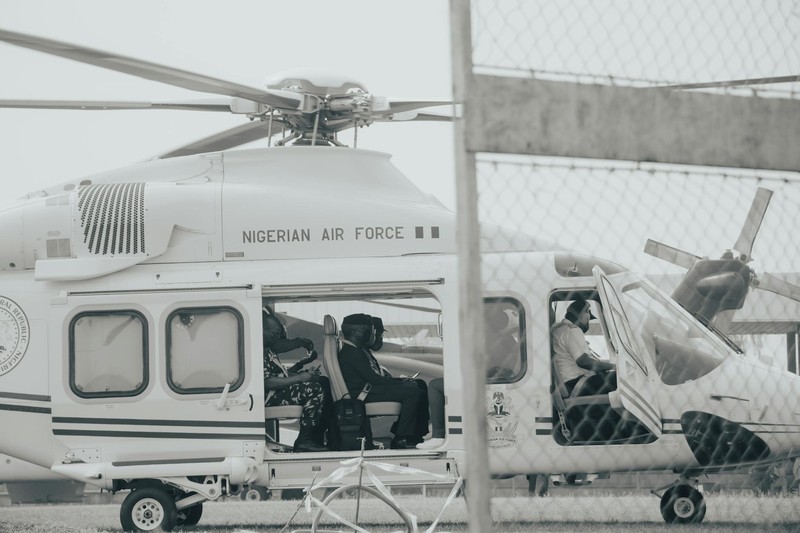
More than 100 people who went to a weekly market in northeast Nigeria on Saturday are dead — killed by bombs dropped from their own country’s military aircraft.
The strike hit Jilli village, which sits on the border between Yobe and Borno states, a region at the center of Nigeria’s 17-year fight against Boko Haram and its splinter factions. Amnesty International, citing direct contact with survivors and hospital staff, said Sunday that more than 100 people had been killed and 35 seriously wounded. Local chief Lawan Zanna Nur Geidam told AFP that “the total casualties, dead and injured, is around 200.” Reuters, citing the same official along with residents and a humanitarian agency worker, reported at least 200 killed.
The precise death toll remains contested. A market committee member, Bulama Mulima Abbas, told AFP that 36 bodies had been counted after the airstrike “on the traders.” Nigerian newspaper reports have ranged from 10 to 56 dead. What is not disputed is that the bombs fell on a market full of civilians.
Survivors and Staff Speak
Isa Sanusi, Amnesty International’s Nigeria director, said the organization verified the toll through on-the-ground contact. “We are in touch with people that are there; we spoke with the hospital. We spoke with the person in charge of casualties and we spoke with the victims,” he told the Associated Press, adding that the dead included children and that Amnesty had obtained photographs.
Ahmed Ali, a 43-year-old market trader, described the moment the strike hit. “I became so scared and attempted to run away, but a friend dragged me and we all lay on the ground,” he told Reuters. Many of the injured were taken to hospitals in nearby Geidam and Maiduguri. Zanna Nur Geidam said at least eight more of the wounded died in those facilities on Sunday.
The Yobe State Emergency Management Agency said it had received preliminary reports of casualties at the market and activated emergency response mechanisms, though it added that “details regarding the nature of the incident and the number of casualties remain unverified.” Assessment teams have been deployed to the area.
From ‘Precision Strike’ to Fact-Finding Mission
The Nigerian Air Force’s initial statement made no mention of civilians. It described “a carefully, well coordinated planned and intelligence-driven operation” — a “precision air strike on a known terrorist enclave and logistics hub” near what it called “the abandoned village of Jilli.” It claimed “scores of terrorists” had been killed.
An intelligence source offered a possible rationale, telling AFP that Jilli market “is wholly controlled by Boko Haram who provides security and collect tax from traders.” If so, the military may have viewed the market itself as a legitimate target — though this would not account for the civilian traders and buyers present.
After reports of civilian casualties mounted, the Air Force issued a second statement saying it had activated its Civilian Harm Accident and Investigation Cell and dispatched a team on a “fact-finding mission.” The Yobe state government confirmed that some of its residents who attended the market “were affected.” The Air Force did not directly confirm or deny striking the market.
A Pattern of Civilian Deaths From the Sky
If the death toll holds, Jilli would rank among the deadliest military air strikes to hit Nigerian civilians — and it would not be an anomaly. According to an Associated Press tally, Nigerian military airstrikes have killed at least 500 civilians since 2017. Previous misfires have struck villages, camps for displaced people, and other markets across the northeast.
Security analysts have pointed to persistent gaps in intelligence gathering and poor coordination between ground troops and air assets as contributing factors. The broader conflict shows no sign of resolution. The insurgency that began with Boko Haram’s 2009 uprising has killed more than 40,000 people and displaced around two million, according to the United Nations. After years of reduced violence, both Boko Haram and Islamic State West Africa Province have recently escalated attacks in the region.
Amnesty International condemned the strike in direct terms. “Launching air raids is not a legitimate law enforcement method by anyone’s standard,” the organization said. “Such reckless use of deadly force is unlawful, outrageous and lays bare the Nigerian military’s shocking disregard for the lives of those it supposedly exists to protect.” It has called for an immediate and impartial investigation, with perpetrators held to account.
The Air Force’s fact-finding mission is underway. Whether it produces accountability or simply joins the long list of similar inquiries with inconclusive results is the question facing Nigerian military leadership now.
Sources
- Civilians feared killed after reports of air strike on Nigerian market — BBC News
- Dozens feared dead in air strike on village in northeastern Nigeria — Al Jazeera
- Nigerian airstrike targeting jihadists reportedly kills at least 100 civilians — The Guardian
- Military air strikes kill dozens of people in northeast Nigeria, Amnesty International says — France 24
Discussion (8)