 lop News
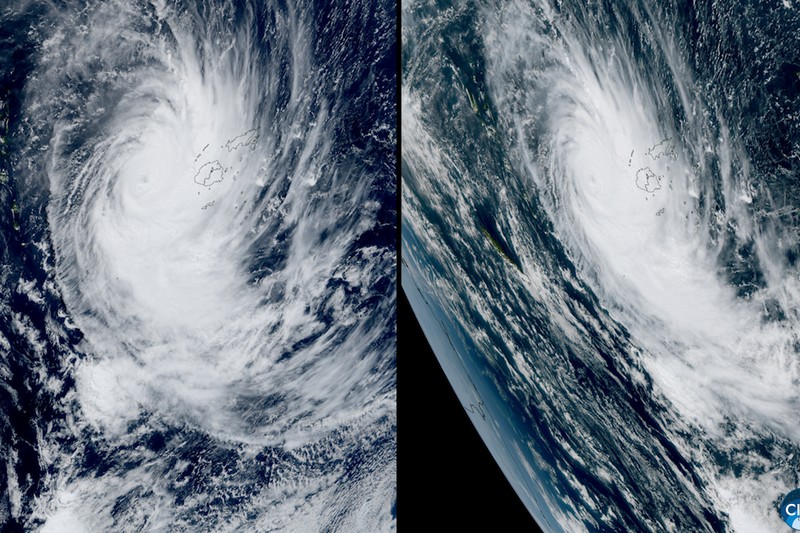
Cyclone Vaianu slammed into New Zealand’s North Island on Sunday, making landfall near the Maketu peninsula with winds exceeding 130 km/h, forcing hundreds of evacuations and cutting power to thousands of homes.
MetService, the national weather provider, designated the storm a “life-threatening” system and issued rare red-level wind warnings — the highest alert category, reserved for only the most extreme weather events. Gusts topped 130 km/h in exposed areas, 24-hour rainfall exceeded 100mm in Whangarei, and waves built to over six metres.
Emergency declarations now cover several North Island regions. In the coastal Whakatane District, authorities ordered mandatory evacuations at 270 properties. Roughly 5,000 homes lost electricity, with power restored to about 2,000 by late afternoon local time, according to Emergency Management Minister Mark Mitchell. New Zealand Defence Force personnel and heavy equipment have been deployed to assist.
The cyclone tracked towards the fringes and east of the North Island, sparing Auckland — a city of 1.7 million — from the worst of it. “It’s moved more to the fringes and more to the east, which means that we haven’t quite seen the intensity that we had prepared for or that we thought we were going to get hit with. So that is good news,” Mitchell said. But he warned the combination of high tide and large swells could still bring dangerous coastal inundation.
Air New Zealand cancelled more than 90 turboprop flights across regional North Island routes. Fire and Emergency New Zealand responded to over 100 calls for wind damage and surface flooding. In the Waikato region, south of Auckland, multiple homes were evacuated due to flooding and fallen trees closed roads.
MetService meteorologist John Law said the system was beginning to clear, with the cyclone’s centre tracking off the eastern coast towards Hawke’s Bay. “Over the next few hours, we’ll start to find even that pulling away, as this whole system continues to move through.” Most red and orange warnings had been lifted by Sunday evening.
The storm has drawn immediate comparisons to Cyclone Gabrielle, which killed 11 people and displaced thousands in 2023 — one of New Zealand’s worst natural disasters this century. Two direct cyclone strikes in three years is unusual for a country historically more accustomed to weakened ex-tropical systems. Whether warming Tasman Sea temperatures are shifting what’s possible at these latitudes is a question scientists have been raising since Gabrielle. Vaianu will sharpen it.
Discussion (5)