 lop News
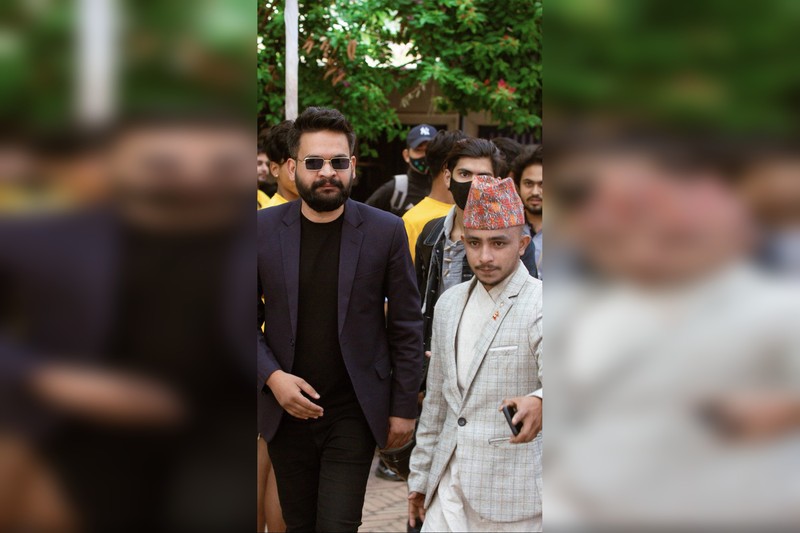
The day before he was sworn in as Nepal’s youngest prime minister, Balendra Shah did something no incoming head of state appears to have done. He released a rap song.
“Nepal is not scared this time, the heart is full of red blood,” Shah raps in “Jay Mahakaali,” a patriotic track that racked up nearly three million views within hours. The music video features visuals of large crowds cheering him during his election campaign. “Laughter and happiness will reach every household this time.”
By Friday afternoon, the 35-year-old former mayor of Kathmandu stood at the President House in his signature black Nepali cap and sunglasses, taking the oath of office. The ceremony, timed to 12:34 p.m. at astrologers’ recommendation, marked the culmination of a youth-led revolution that has upended one of Asia’s most unstable democracies.
The September uprising
Shah’s rise was seismic. His Rastriya Swatantra Party (RSP), founded just three years ago, won 182 seats in Nepal’s 275-member parliament in the March 5 election—a landslide that exceeded even the party’s expectations. The result was a direct response to Gen Z-led protests that shook the country last September.
The demonstrations were born of desperation. In a nation of 30 million where roughly one-fifth live in poverty and an estimated 1,500 people leave daily for work abroad, young Nepalis demanded an end to corruption and a gerontocracy that had delivered little but instability. Since 1990, Nepal has had 32 governments. None completed a five-year term.
The crackdown was brutal. Security forces fired into crowds, and coordinated arson attacks burned the prime minister’s office, government ministries, courts, and hundreds of police stations. In total, 76 people were killed. The government of Prime Minister KP Sharma Oli fell soon after.
Shah did not participate directly, but publicly supported the demonstrators. When the dust settled, they returned the favor at the ballot box.
A different kind of leader
Shah represents several firsts: Nepal’s youngest prime minister and its first Madhesi leader—a member of the southern plains community that has long faced marginalization. His political experience consists of a single term as Kathmandu mayor, elected as an independent in 2022.
He is not a typical politician. His lyrics capture the frustrations of a generation that grew up watching their parents struggle with graft and economic stagnation. His campaign style was crude and rebellious. He has posted social media attacks on Nepal’s neighbors and, as mayor, briefly banned Indian films while displaying a “Greater Nepal” map claiming Indian territory.
Analysts say those concerns are overblown. “When he made those remarks, he was a mayor, not a national leader responsible for foreign policy,” political analyst Bishnu Sapkota told Al Jazeera. “Shah does not have that baggage, which could give Nepal greater independence.”
The weight of expectation
The challenges ahead are immense. Shah’s first cabinet has already moved to implement a judicial commission’s findings on last year’s violence—a report recommending criminal investigations into former Prime Minister Oli and other senior officials. But the same report has drawn criticism for gaps regarding who was responsible for the arson attacks.
There are also questions about Shah’s political home. He joined the RSP only weeks before the election, and the party’s founder, Rabi Lamichhane, remains its chairman despite facing allegations of fraud and money laundering. He is currently out on bail.
Gehendra Lal Malla, a political science professor at Tribhuvan University, described their alliance as a “marriage of convenience.” The risk is that Shah will face pressure to protect party members from prosecution—the very impunity the Gen Z protesters rose against.
“We have a culture in Nepal where politicians protect each other,” Malla told Al Jazeera. “Shah must uphold the rule of law and not protect anyone from his own party.”
A global pattern?
Nepal’s generational revolt arrives as young people worldwide lose patience with established political orders. From climate protests to electoral upstarts, a generation shaped by economic crisis and pandemic is demanding leaders who share their concerns.
Whether Shah can deliver remains uncertain. The RSP’s own leaders acknowledge that their two-thirds majority creates pressure for rapid results that Nepal’s institutions may struggle to meet.
“With the RSP’s large majority, parliamentary opposition will be weak,” said Yujan Rajbhandari, a 23-year-old Gen Z activist. “So the streets will play a major role as opposition.”
Shah seems to understand what he represents. His rap song ends with a promise: “The strength of unity is my national power.” After decades of disappointment, Nepal’s young generation is about to discover whether their idol can govern as well as he rhymes.
Sources
- Nepal’s youngest premier sworn in after releasing new rap song about unity — Al Jazeera
- Now in power, Nepal’s rapper-politician Balen Shah faces new challenge — Al Jazeera
- A Rapper Who Won Over Gen Z Now Leads Nepal. Can He Bring Justice? — New York Times
- Karki probe report under fire for gaps, contradictions — The Kathmandu Post
- Govt to implement ‘Gen-Z’ probe report immediately — Khabarhub
Discussion (8)