 lop News
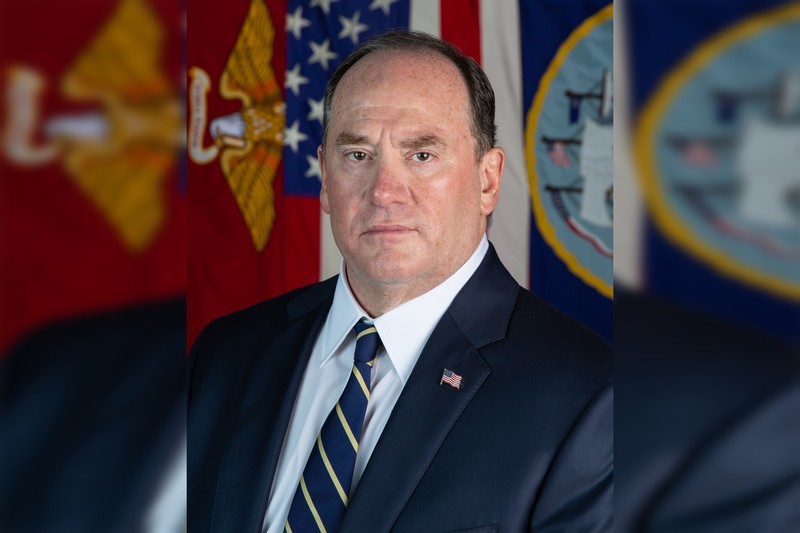
On Tuesday, Navy Secretary John Phelan addressed a packed hall of sailors and industry executives at the service’s annual conference in Washington, fielding questions about shipbuilding budgets and strategic priorities. He hosted the leadership of the House Armed Services Committee. He spoke with reporters about his agenda.
By Wednesday afternoon, he was gone. Pentagon spokesman Sean Parnell announced on X that Phelan was “departing the administration, effective immediately.” No reason given. No permanent successor named.
A vacancy amid active operations
The timing is difficult to overstate. The US Navy is currently enforcing a blockade of Iranian ports — a mission that has placed three aircraft carrier strike groups in or near the Middle East and tasked the service with interdicting vessels linked to Tehran around the world. All of this is unfolding during a ceasefire in the US-Israel war with Iran that neither side appears confident will hold.
On Wednesday, Iran’s chief negotiator Mohammad Bagher Ghalibaf declared that reopening the Strait of Hormuz — through which roughly one-fifth of the world’s oil transits — was “not possible” due to what he called “the blatant violations of the ceasefire” by the US and Israel. Iran also announced it had seized two ships in the strait. The White House said Trump is “satisfied” with the blockade and “understands Iran is in a very weak position.”
It is into this environment that Undersecretary Hung Cao steps in as acting secretary of the Navy — a position that encompasses recruiting, training, equipping, and budgeting for the entire service.
What the Pentagon won’t say
Parnell’s statement offered the standard formulation — gratitude for service, best wishes for the future — and nothing else. The White House declined to answer questions, referring reporters to the same social media post.
The New York Times and other US outlets report that tensions had been building for months between Phelan and his superiors, Defense Secretary Pete Hegseth and Deputy Secretary Stephen Feinberg. Feinberg was reportedly dissatisfied with Phelan’s stewardship of a new naval shipbuilding initiative.
Andrew Peek, a former State Department deputy assistant secretary, told the BBC he estimated roughly 30 percent of the departure reflected frustration over slow progress on expanding the merchant fleet — a priority Trump has publicly emphasized — and the remaining 70 percent was about installing “someone he likes and trusts better.”
The Financial Times characterized the departure as a firing.
Phelan’s rapid ascent and sudden exit follow a familiar trajectory. A private equity executive who founded Rugger Management LLC, he had no military service and no prior Pentagon leadership experience. Trump nominated him in late 2024; he was sworn in March 2025. He was a major Trump campaign donor — the two appeared together at Mar-a-Lago last December when Trump announced plans for a new “Golden Fleet” of battleships bearing his name.
Nothing in Phelan’s final public appearances suggested he knew what was coming 24 hours later.
The incoming acting secretary
Cao brings credentials Phelan lacked. A refugee from Vietnam who arrived in the US as a child in the 1970s, he graduated from the US Naval Academy and served 25 years as a special operations officer with SEAL teams in Iraq, Afghanistan, and Somalia. He holds a master’s degree in physics and completed fellowships at MIT and Harvard.
But Cao’s public identity is equally shaped by his political career. He ran unsuccessfully for Congress in Virginia in 2022 and for Senate against incumbent Democrat Tim Kaine in 2024 — a race in which Trump endorsed him. During his single debate with Kaine, Cao criticized COVID-19 vaccine mandates and military diversity programs. “What we need is alpha males and alpha females who are going to rip out their own guts, eat them and ask for seconds,” he said. He has also expressed opposition to military aid for Ukraine.
Since becoming undersecretary in October 2025, Cao has championed reinstating service members who refused the COVID-19 vaccine.
A broader house-cleaning
Phelan is the first service secretary to depart during Trump’s second term, but he joins an extensive roster of removed military leaders. Since February 2025, Hegseth has removed the chairman of the Joint Chiefs of Staff, the Navy’s top uniformed officer, the Air Force’s vice chief of staff, the Army chief of staff, the heads of the Coast Guard and National Security Agency, a Navy admiral assigned to NATO, and three top military lawyers. The Air Force chief of staff and the head of US Southern Command both retired without explanation partway through their terms.
Hegseth has additionally ordered at least a 20 percent cut in four-star generals and admirals, and a 10 percent reduction in the overall number of general and flag officers. Democratic lawmakers have raised concerns about politicization of the military, though the Pentagon has dismissed this, insisting the president is simply selecting leaders he prefers.
Three carrier groups remain deployed in a theater where the US has warned all armed forces are prepared to resume combat operations should the ceasefire collapse. The Strait of Hormuz is contested. Iran claims it has seized vessels there. A ceasefire that both sides accuse the other of violating is fraying by the day. The civilian leader overseeing the service most directly responsible for all of this has just been replaced overnight — and nobody in the administration is willing to explain why.
Discussion (9)