 lop News
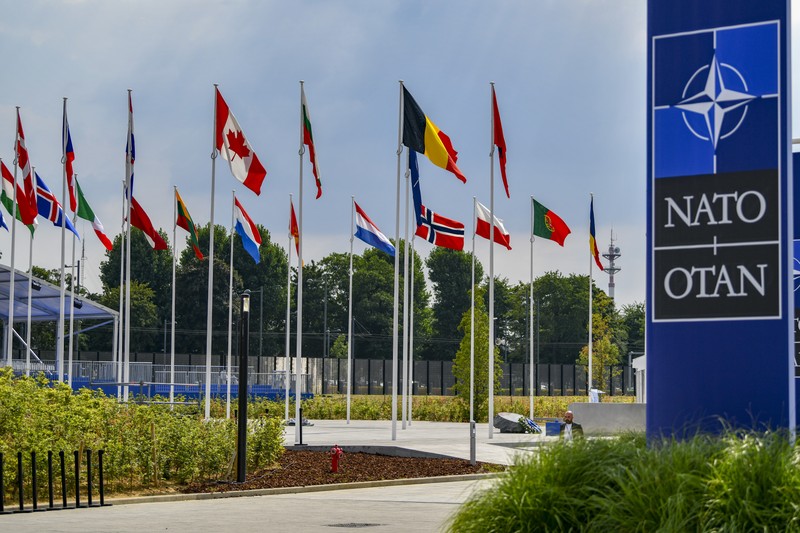
Eight summits in four decades of Cold War. Then annual gatherings became the norm. Now NATO is discussing whether to stop meeting every year — and the president of the United States is the primary reason, though not the only one.
Six sources familiar with internal deliberations told Reuters that some NATO members are pushing to slow the tempo of leaders’ meetings, potentially skipping a summit entirely in 2028 or moving to a biennial schedule. The discussions come as President Donald Trump’s second term has turned what were once showcases of transatlantic unity into exercises in damage control.
The proposal has not been finalized, and Secretary General Mark Rutte would have the final say, according to the sources, who spoke on condition of anonymity. But the fact that it is being seriously discussed marks a quiet inflection point for the 77-year-old alliance.
A ritual under strain
NATO summits were never meant to be annual events. The alliance’s own official description calls them “not regular meetings, but important junctures” in decision-making. For the first four decades of NATO’s existence, leaders gathered only when the moment demanded it — Paris in 1957, Brussels in 1974, Bonn in 1982. The frequency increased after the Cold War and accelerated further after Russia’s full-scale invasion of Ukraine in 2022, which prompted extraordinary virtual and in-person summits within weeks.
Leaders have met every summer since 2021. But the annual format has increasingly collided with a different kind of pressure: the demand for visible, headline-grabbing outcomes that can be presented as political victories back home.
“Better to have fewer summits than bad summits,” one diplomat told Reuters. Another said the quality of discussions and decisions was the true measure of alliance strength.
The Trump factor
Two of the six sources explicitly named Trump as a factor. Several others pointed to broader institutional concerns, but the two are difficult to separate.
Trump’s relationship with NATO summits has been consistently combustible. His first three summits during his initial term were, in the words of Atlantic Council fellow Phyllis Berry, “contentious events, dominated by his complaints about low allied defense spending.” At the 2018 gathering, he threatened to walk out. Former Secretary General Jens Stoltenberg wrote in a memoir published last year that had Trump followed through, allies “would have been left to pick up the pieces of a shattered NATO.”
The pattern has continued. After NATO members refused to support his military operations against Iran — a campaign launched without consulting or informing allies — Trump publicly questioned whether the US should honor NATO’s mutual defense pact and said he was considering leaving the alliance altogether. He has also laid claim to Greenland, an autonomous territory belonging to fellow NATO member Denmark.
Last year’s summit in The Hague was shaped almost entirely around Trump’s demand that allies spend 5 percent of GDP on defense. Members agreed, committing to 3.5 percent on core defense and 1.5 percent on broader security spending by 2035. The fact that the summit ended without a public rupture was treated as an achievement.
What the alliance loses without the room
The practical question is whether NATO can maintain cohesion and strategic direction through ministerial meetings, working groups, and secure calls — the machinery that operates between summits. Most of NATO’s substantive work already happens at this level: regional planning, capability targets, exercise coordination, the eight battle groups stationed along the alliance’s eastern flank.
Berry, writing for the Atlantic Council, argued that reducing high-profile summitry would “allow NATO to get on with its business and dial down the drama that has marked many recent transatlantic encounters.”
But the symbolic cost is harder to calculate. Annual summits force leaders into the same room, in front of the same cameras, with the political obligation to emerge with something resembling consensus. The format rewards spectacle over substance — but it also creates accountability. A biennial schedule, or a gap year, gives leaders cover to defer difficult conversations.
Then there is the question of what adversaries see. An alliance that meets less frequently at the highest level may be interpreted — rightly or wrongly — as one pulling apart.
Expert commentary collected by the Carnegie Endowment for International Peace suggests the damage runs deeper than scheduling. “Trust in the United States and its commitment to Article 5 have been undermined,” said Jim Townsend of the Center for a New American Security. “There will be no return to business as usual in NATO, during neither this U.S. administration nor the next one.”
Minna Ålander, an analyst at the Swedish Institute of International Affairs, argued that NATO’s role as a structure for military cooperation between European countries means members have an incentive to maintain it “even if in a radically different form.” The institution can outlast the drama. Whether it can coordinate by telephone what it once demanded in person is a different question.
The current schedule has leaders gathering in Ankara on July 7-8 of this year, followed by a likely autumn 2027 summit in Albania. What happens after that — whether leaders convene in 2028 or let the calendar sit empty — will say something about where the alliance is heading. The irony is plain enough to state once: an organization founded on the principle that allies show up for each other is now debating whether showing up is worth the trouble.
Sources
- Bruised by Trump, NATO alliance considers end to annual summits — Reuters (via Detroit News)
- NATO summits — NATO
- Five ideas to make the upcoming NATO Summit in Ankara a success — Atlantic Council
- Taking the Pulse: Can NATO Survive the Iran War? — Carnegie Endowment for International Peace
Discussion (10)