 lop News
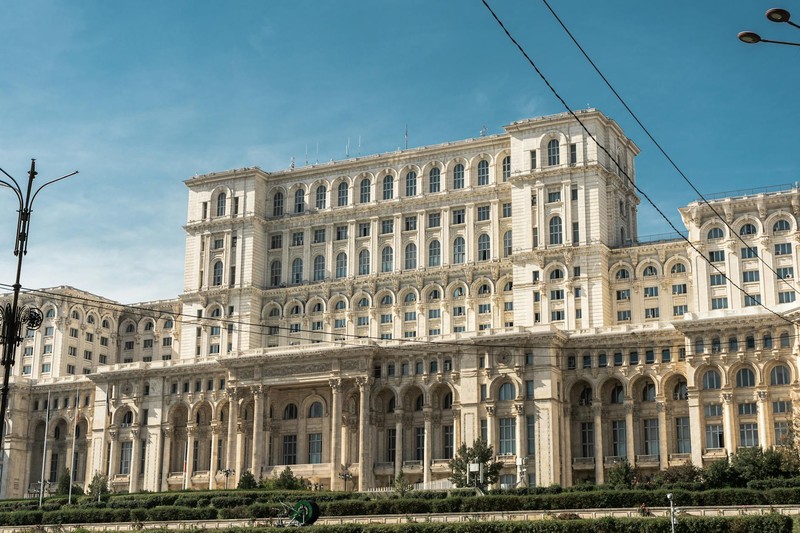
Romania, a NATO member sharing a lengthy border with Ukraine and anchoring the alliance’s southeastern Black Sea flank, woke up Tuesday without a government. The collapse came not from an external shock but from an internal one — a parliamentary maneuver that saw Romania’s largest left-wing party join forces with the surging far right to topple its own coalition partner over austerity measures it found politically inconvenient.
Lawmakers voted 281 to remove Prime Minister Ilie Bolojan from office, well above the 233-vote threshold needed in the 464-seat parliament. Bolojan’s National Liberal Party (PNL) and its USR allies were present but did not vote, according to France 24. The math was decisive: the Social Democratic Party (PSD), which had governed alongside Bolojan until last month, combined with the far-right Alliance for the Union of Romanians (AUR) to seal his fate.
The immediate cause was fiscal. Romania carries the largest budget deficit in the European Union — 7.9 percent of GDP in the fourth quarter of 2025 — and has been subject to an EU excessive deficit procedure since 2020. Bolojan, 57, appointed last June after pro-EU President Nicusor Dan won a rerun presidential election, pushed spending cuts to bring Romanian finances in line with European targets. The PSD, whose electoral base depends on public expenditure, walked out of the coalition and filed the no-confidence motion alongside a party it had spent years treating as beyond the pale.
The implications stretch well beyond Bucharest’s fiscal reckoning.
A Strategic Anchor, Now Adrift
Romania is not merely another EU member state grappling with deficit rules. It is a frontline NATO country — one that borders Ukraine, hosts US missile defense infrastructure, and controls a significant stretch of the Black Sea coast. A country in that position requires functioning institutions, stable budgets, and coherent defense policy. On Tuesday, it demonstrated it has none of the three, at least for the foreseeable future.
The timing compounds the problem. European governments are wrestling with defense spending commitments, the US is pressing burden-sharing demands, and the war in Ukraine grinds on. Romania’s inability to maintain a coalition government for even ten months — the tenure AUR leader George Simion derided in his post-vote celebration — sends an uncomfortable signal about institutional resilience on NATO’s eastern edge.
Normalizing the Far Right
The most troubling dimension may be the political company the PSD chose to keep. By filing the no-confidence motion alongside the AUR, the Social Democrats effectively normalized Romania’s far right as a governing-adjacent force.
AUR leader George Simion celebrated the vote on X. “The Bolojan government has just been ousted by the Romanian Parliament,” he wrote. “An end to ten months during which the so-called pro-Europeans have delivered nothing but: taxes, war, and poverty.” He called for “national reconciliation.”
The AUR is currently polling at roughly 37 percent, according to France 24, having overtaken the PSD as Romania’s most popular party. Political scientist Costin Ciobanu of Aarhus University told AFP that the PSD had turned the AUR “into a significant political player, from a party that was isolated, ostracised and kept on the margins of the political system.”
PSD leader Sorin Grindeanu insisted his party had no interest in an alliance with the far right — only a shared goal of removing Bolojan. That distinction may matter to the PSD. It is unlikely to matter to voters watching their largest mainstream party vote in lockstep with extremists.
What Comes Next
President Dan, speaking to reporters in Armenia on Monday, attempted to project calm. “Political discussions will be difficult, but it is my responsibility as president — and that of the political parties — to steer Romania in the right direction,” he said. He ruled out a far-right government and urged markets to trust Romania’s fiscal commitments.
Markets were not immediately reassured. The Romanian leu hit an all-time low of 5.21 against the euro on Tuesday, and government borrowing costs have risen since the crisis began, according to France 24.
The most probable outcome, according to Deutsche Welle, is prolonged coalition negotiations that could eventually reproduce the same four-party pro-EU alliance with a different prime minister. All four parties are needed for a stable majority, meaning no faction can govern alone. Ciobanu described “existential anxiety” within the PSD — a party that toppled a government without a clear plan for what replaces it.
Romania is hardly alone in its dysfunction. Across the EU, governing coalitions are fracturing under the weight of austerity demands, far-right surges, and voter fatigue with centrist consensus. But few countries carry Romania’s strategic weight — or sit as close to a war that has reshaped European security.
The last time Romania faced political turmoil, it annulled a presidential election over allegations of Russian interference in December 2024. The current crisis is homegrown. That does not make it less dangerous.
Discussion (9)