 lop News
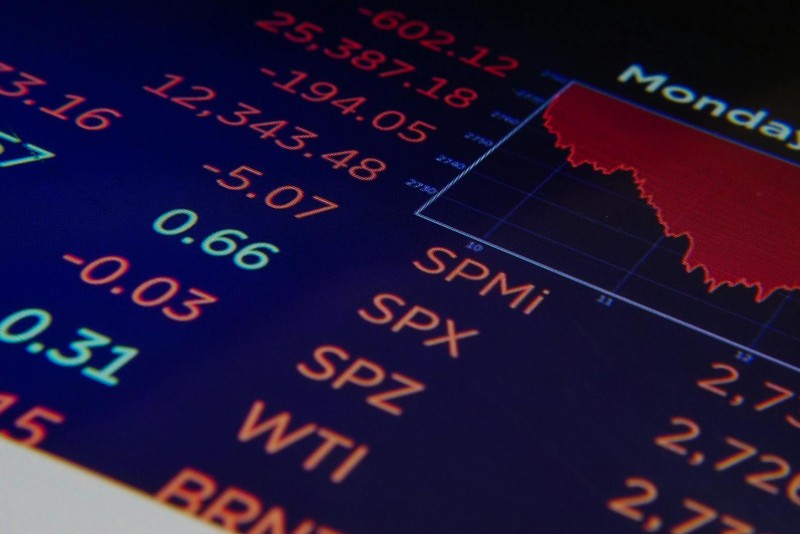
The Nasdaq Composite has a message for investors: welcome to correction territory. The tech-heavy index closed Thursday at 21,408.08 — down 10.7% from its October 29 record high, crossing the threshold that separates routine volatility from something market professionals take seriously.
A “correction” sounds like technical jargon, but the term does what it says on the tin: markets correcting course after running too hot. The formal definition is a decline of 10% or more from a recent peak. The Nasdaq crossed that line Thursday with a 2.38% single-day drop — its worst session since January.
The S&P 500 isn’t far behind. It fell 1.74% to 6,477.16, leaving it 7.2% below its own all-time high set in late January. The Dow Jones Industrial Average dropped 469 points, or 1%, to 45,960.11. All three indexes are on track for their worst month in a year.
Why Tech Took the Hardest Hit
Growth stocks live on borrowed time — or more precisely, on borrowed money at borrowed rates. When investors value a company like Nvidia or Meta, they’re estimating profits years into the future and discounting them back to present value. The higher interest rates climb, the less those future earnings are worth today.
The 10-year Treasury yield jumped to 4.43% on Thursday, up from 4.33% the day before and just 3.97% before the Iran war began. That’s a significant move in bond market terms, and it’s already pushing mortgage rates and other borrowing costs higher.
Traders have effectively abandoned hope for Federal Reserve rate cuts this year. Before the conflict erupted, markets expected two cuts. Now? The probability sits near zero, according to CME Group’s FedWatch Tool.
“The balance of risks has shifted toward inflation,” Federal Reserve Governor Lisa Cook said Thursday at Yale’s School of Management, noting that the Iran war “takes us even further away” from the central bank’s 2% inflation target.
The technology sector fell 2.7% on the day. The Philadelphia Semiconductor Index tumbled 4.8% after three sessions of gains. Meta dropped 8% and Alphabet lost 3.4% — declines compounded by a federal jury’s finding that Instagram and YouTube were liable in a landmark social media addiction trial. Nvidia fell 4.2%, while Apple was a rare outlier, inching up 0.1%.
The Oil Price Shock
The Strait of Hormuz is a 21-mile-wide chokepoint that typically sees one-fifth of the world’s petroleum pass through to global markets. Iran has effectively shut it down, and investors are pricing in the consequences.
Brent crude settled at $101.89 per barrel — up 4.8% on the day and roughly 45% higher than the $70 range before the war began. U.S. crude rose 4.6% to $94.48.
Higher oil prices mean higher inflation. The Organization for Economic Cooperation and Development warned Thursday that U.S. headline inflation could hit 4.2% this year, a significant upward revision from its December forecast of 3%.
“It all boils down to oil markets and the implications on inflation,” said Adam Turnquist, chief technical strategist at LPL Financial. “There’s really no clarity on when this war will end.”
What Corrections Typically Signal
A correction doesn’t guarantee a bear market — defined as a 20% decline — but it does signal that the easy money has left the room.
“After three good years for markets, a selloff of 10%-20% should not surprise anyone,” said Peter Tuz, president of Chase Investment Counsel. “We had one last year during the tariff proposals. Bad technical indicators might, however, encourage selling and discourage buying until the situation clears up.”
The S&P 500 is now on track for its fifth straight losing week — the longest such streak in nearly four years. The technical picture is worsening: declining issues outnumbered advancers by more than 3-to-1 on the New York Stock Exchange. Volume was light at 16.5 billion shares, below the recent 20.5 billion average — suggesting sellers aren’t panic-selling yet, but buyers aren’t stepping in either.
Few Places to Hide
The selloff has been unusually broad. Gold, typically a safe haven during geopolitical turmoil, fell 4% Thursday and is down nearly 17% this month — on track for its worst month since October 2008. Higher oil prices and the prospect of sustained inflation have eroded gold’s appeal as an inflation hedge.
The dollar has emerged as one of the few refuges, rising 2.4% in March. The only market winners Thursday were defensive: utilities gained 0.2%, and energy stocks rose 1.6% as oil prices surged.
President Donald Trump extended his deadline for Iran to reopen the Strait of Hormuz by 10 days to April 6, saying talks were “going very well.” Iran has dismissed U.S. ceasefire proposals as “one-sided and unfair,” though diplomacy continues through Pakistani intermediaries. After markets closed, oil prices trimmed some gains on Trump’s extension.
But with the Strait still effectively shut, thousands of U.S. troops heading to the region, and no clear endgame in sight, investors are pricing in more uncertainty before any clarity arrives.
Sources
- Wall Street falls to its worst drop since the Iran war as the Nasdaq sinks 10% below its record — AP News
- Nasdaq confirms correction, Wall Street slumps on Middle East war fears — Reuters
- Stocks, bonds and gold all fall in market slide — CNN Business
- US Inflation May Hit 4.2% This Year Due To Oil Price Surge From Iran War, OECD Warns — Forbes
- Fed’s Cook says the balance of risks has shifted toward inflation due to Iran war — Reuters
Discussion (8)