 lop News
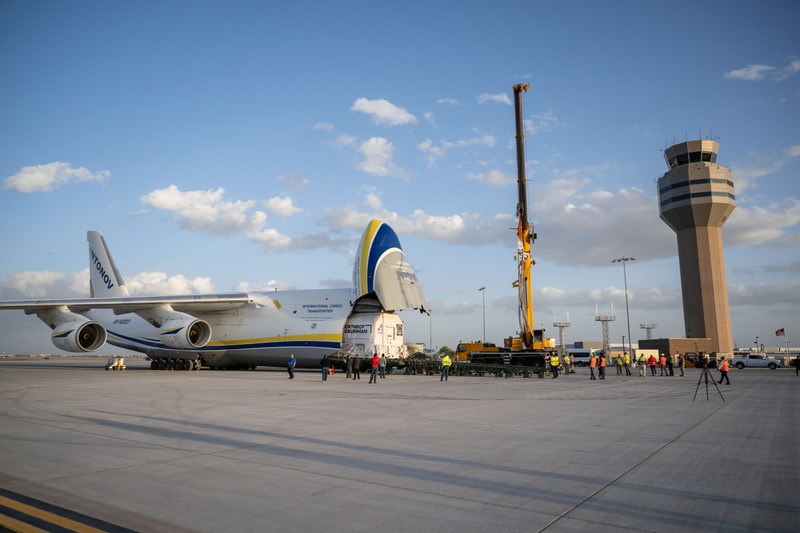
For a decade, NASA pitched the Lunar Gateway as humanity’s first permanent outpost in deep space — a small station orbiting the Moon that would support lunar exploration and test technologies needed for longer missions. What NASA didn’t mention was that the station’s primary modules couldn’t survive a warehouse in Italy.
During testimony before the US House Committee on Science, Space, and Technology on April 22, NASA Administrator Jared Isaacman revealed that both habitable modules delivered for the Gateway had arrived with corrosion damage.
“The only two habitable volumes that were delivered, both were corroded, and that’s unfortunate, because it would have delayed — probably beyond 2030 — the application of Gateway,” Isaacman told lawmakers.
The disclosure answered a question that had been hanging since March, when Isaacman announced Gateway was being “paused.” Now we know part of the reason: the hardware was deteriorating before it left the ground.
Two modules, two continents, one problem
The affected modules are the Habitation and Logistics Outpost (HALO) and the International Habitation Module (I-HAB). HALO, contracted to Northrop Grumman, was designed to provide the station’s initial living space and logistics. Its primary structure was manufactured in Italy by Thales Alenia Space — a company with decades of experience building pressurized modules for the International Space Station, including the Columbus laboratory and the Harmony module.
I-HAB, contributed by the European Space Agency with life-support systems from Japan’s JAXA, was meant to expand the station’s habitable volume. ESA awarded Thales Alenia Space the I-HAB contract in October 2020.
HALO arrived at Northrop Grumman’s facility in April 2025 for final outfitting. It was already showing signs of corrosion. I-HAB had a similar but less severe issue, though it had not yet been shipped, according to ESA.
“Following the identification of corrosion on HALO, a comprehensive investigation was promptly initiated,” an ESA spokesperson told European Spaceflight. “Preliminary findings indicate that the issue likely results from a combination of factors, including aspects of the forging process, surface treatment, and material properties.”
ESA assembled a dedicated “tiger team” for I-HAB and characterized the corrosion as “technically manageable” and not a showstopper. HALO, by implication, was in significantly worse condition.
A timeline that never held
The Gateway had been slipping for years. The first module was originally due to launch in 2022. Later plans called for HALO and a power-and-propulsion element to launch together in 2024, with I-HAB following in 2026. All those dates came and went without a single component reaching orbit.
The corrosion wasn’t the only culprit. ESA noted that other elements in the US supply chain — including the life-support system and a thermal control pump — were also experiencing “notable delays and technical complexity.” The modules were corroding while other critical systems were behind schedule. The program was failing on multiple fronts at once.
In March, Isaacman announced that NASA was halting Gateway entirely, redirecting resources toward a planned $20 billion lunar surface base. The effort would unfold in three phases: establishing reliable lunar access by 2028, constructing the base from 2029 to 2031, and enabling long-duration surface exploration from 2032 onward. The corrosion revelation, disclosed a month after the pivot, adds an engineering rationale to what had appeared to be a purely strategic decision.
Can the hardware be saved?
Northrop Grumman has pushed NASA to repurpose the HALO module for use in a lunar surface base. Isaacman told the committee that the agency was exploring whether Gateway components could be adapted for surface operations. Whether corroded pressure vessels can be safely refurbished — or whether they’ll need to be written off entirely — remains an open question.
The pivot from orbit to surface also requires congressional approval. A budget reconciliation bill passed last July allocated $2.6 billion to Gateway, legally defined as an “outpost in orbit around the Moon.” Redirecting those funds means rewriting law, not just reshuffling agency priorities.
Isaacman did not rule out reviving an orbital station eventually. But for now, the modules that were supposed to house astronauts in lunar orbit sit in storage, deteriorating — a physical reminder that the hardest part of space exploration is sometimes the part that happens on Earth.
Sources
- Well, this is embarrassing: The Lunar Gateway’s primary modules are corroded — Ars Technica
- ESA Sheds Light on NASA Administrator’s Claims on Gateway Modules — European Spaceflight
- NASA halts work on Gateway to develop a lunar base — SpaceNews
- House Science Committee members vow to reject NASA budget cuts — Aerospace America
Discussion (9)