 lop News
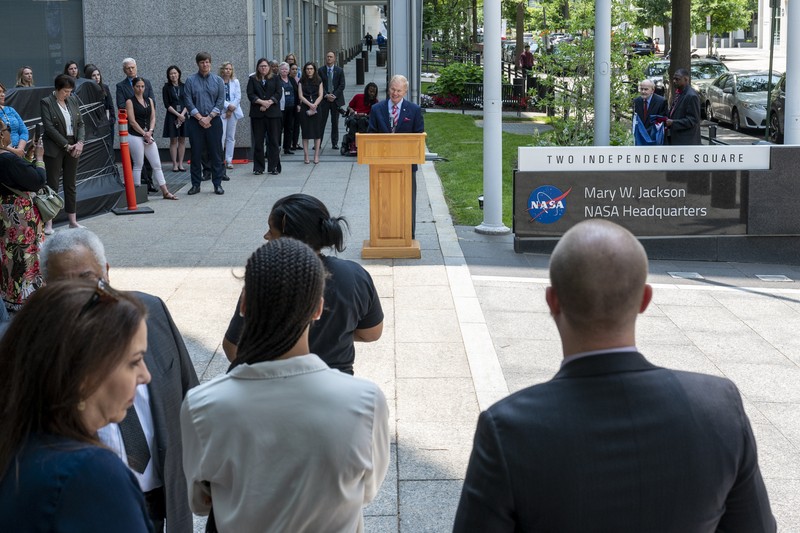
Jared Isaacman walked into NASA headquarters on Tuesday and torched the roadmap.
The agency’s new administrator announced he is canceling plans for an orbiting lunar station and redirecting its components to build a $20 billion base on the moon’s surface over the next seven years. The Lunar Gateway—a multinational project already under construction with hardware from Northrop Grumman and Maxar—will be “paused in its current form.”
“It should not really surprise anyone that we are pausing Gateway,” Isaacman told an audience at NASA’s Washington headquarters. His reasoning was blunt: the existing architecture was “not a path to success.”
What Went Wrong
The Gateway station was supposed to be a waypoint in lunar orbit—a research platform and transfer station where astronauts would dock before descending to the surface. But the Artemis program has been plagued by persistent delays, technical setbacks, and an unsustainable launch cadence. At one point, NASA faced a three-year gap between Space Launch System missions.
Isaacman, sworn in as administrator in December, has spent weeks reshaping billions of dollars in contracts. The changes are sweeping: canceling the planned Exploration Upper Stage for SLS, abandoning the $1 billion Mobile Launcher 2 tower already 90 percent complete, and reconfiguring mission sequencing to match the methodical approach of Apollo.
The reworked Artemis III—originally planned as the first lunar landing—will now be an all-up systems test in low Earth orbit, explicitly modeled on Apollo 9. Orion will rendezvous and dock with commercial landers from SpaceX and Blue Origin, testing life support, propulsion, and spacesuits before any astronaut attempts a descent. The first crewed landing is now targeted for early 2028 under Artemis IV.
The China Factor
Isaacman emphasized urgency in the face of what he called “credible competition from our greatest geopolitical adversary.” China has announced its own lunar landing ambitions for 2030, and the revised NASA plan is designed to establish an enduring American presence first—rather than isolated “flags and footprints” achievements.
The plan calls for at least one crewed lunar landing per year starting in 2028, with a standardized SLS configuration launching roughly every 10 months. That cadence, Isaacman argued, builds the “muscle memory, knowledge, and confidence” required for sustained operations.
International Partners in Limbo
The Gateway was never just a NASA project. The European Space Agency, Japan’s JAXA, and the Canadian Space Agency had committed to the orbiting station, providing hardware and expertise. Isaacman acknowledged the complexity of repurposing equipment and partner commitments but said the agency would adapt existing agreements to support surface operations.
The Power and Propulsion Element and Habitation and Logistics Outpost—Gateway’s core components—remain in production. Whether they end up in lunar orbit or on the lunar surface is now an open question.
Industry Endorsement
Despite the upheaval, major contractors have largely endorsed the streamlined approach. Boeing, SpaceX, Blue Origin, and United Launch Alliance issued statements of support. Former NASA Administrator Jim Bridenstine praised Isaacman’s “clarity and conviction.”
The logic is straightforward: a stable architecture with regular flights is better for business than an ambitious plan that never launches. Standardizing hardware configurations and eliminating complex upgrades means production lines can focus on repeatable manufacturing rather than constant redesign.
Questions remain. Funding details for the increased launch cadence have not been fully clarified. The impact on international partnerships will depend on negotiations still to come. And any plan this ambitious carries inherent schedule risk.
But after years of delays and architecture churn, NASA has made a choice: stop building waypoints and start building a presence.
Sources
- NASA to spend $20 billion on moon base, cancel orbiting lunar station — The Straits Times/Reuters
- NASA’s Artemis ‘Course Correction’ Boosts Moonward Momentum — NASA Space Flight
- NASA’s Bold Shift: From Lunar Gateways to Surface Bases — DevDiscourse
Discussion (8)