 lop News
The man who seized power in Myanmar five years ago has pardoned the president he overthrew.
On Friday, Min Aung Hlaing — the general who led the February 2021 coup and was sworn in as civilian president just last week — ordered the release of former president Win Myint as part of a broad amnesty spanning 4,335 prisoners. The order also reduced the prison sentence of Aung San Suu Kyi, the Nobel Peace Prize laureate whose government the military dismantled, by four and a half years.
Suu Kyi, 80, was serving a 27-year sentence on charges her allies and international observers have consistently described as politically motivated. Her sentence was cut by one-sixth under the amnesty’s general terms, her lawyer told Reuters. She has not been seen in public since the conclusion of her trials, and her whereabouts remain unknown. Her son, Kim Aris, told Reuters last year that he had received only limited information about her condition and that her health was declining.
Win Myint, who served as president from 2018 until the coup, was “granted a pardon and the reduction of his remaining sentences under specified conditions,” according to state television MRTV. He had been detained since February 2021.
The blanket order also commuted all death sentences to life imprisonment — a striking shift for a junta that resumed executions after decades of pausing them, targeting dissidents who opposed the coup. By 2022, more than 130 people had been sentenced to death, according to the United Nations, though definitive figures remain difficult to track in Myanmar’s opaque court system. Life sentences were reduced to 40 years, and all prison terms under 40 years were cut by one-sixth. An additional 179 foreign nationals are slated for release and deportation.
A Rebranding, Not a Reconciliation
The timing is not accidental. Min Aung Hlaing was installed as president last week by lawmakers elected in a January vote that delivered a walkover for pro-military parties. Suu Kyi’s National League for Democracy, which won the 2020 election in a landslide, was dissolved and barred from participating. Independent election monitors found no evidence of the voter fraud the military cited to justify the coup in the first place.
In his inauguration address, Min Aung Hlaing declared that “Myanmar has returned to the path of democracy and is heading towards a better future,” while acknowledging challenges ahead. Democracy watchdogs have described the transition as a civilian rebranding of military rule — and the accompanying amnesties as cosmetic measures to support that effort.
Prisoner releases are traditional during Myanmar’s Thingyan new year holiday, and Min Aung Hlaing stated in his inaugural speech that his government would implement amnesties contributing to “social reconciliation, justice and peace.” But the numbers tell a cautious story. According to the Institute for Strategy and Policy Myanmar, fewer than 14 percent of those released in successive amnesties since the coup have been political prisoners. The Assistance Association for Political Prisoners (AAPP) says more than 30,000 people have been detained on political charges since 2021, with approximately 22,170 political detainees still in custody.
The Calculus of Mercy
For the generals, the pardons serve a dual purpose. Internationally, they offer a talking point — evidence, however thin, of moderation at a moment when the regime is seeking legitimacy. Domestically, they cost almost nothing. The vast majority of those freed are not political prisoners. Suu Kyi’s sentence reduction, while notable, leaves the 80-year-old facing decades more in detention. Win Myint’s pardon comes with unspecified conditions.
Rights groups have long called for Suu Kyi’s unconditional release, arguing that charges rooted in political motivation should be annulled entirely rather than trimmed at the margins.
The broader picture is grim. Since the 2021 takeover, nearly 8,000 civilians have been killed, according to the AAPP, with total conflict deaths estimated to be far higher. What began as mass nonviolent resistance has evolved into a grinding civil war, pitting pro-democracy guerrillas and long-active ethnic minority armies against the military.
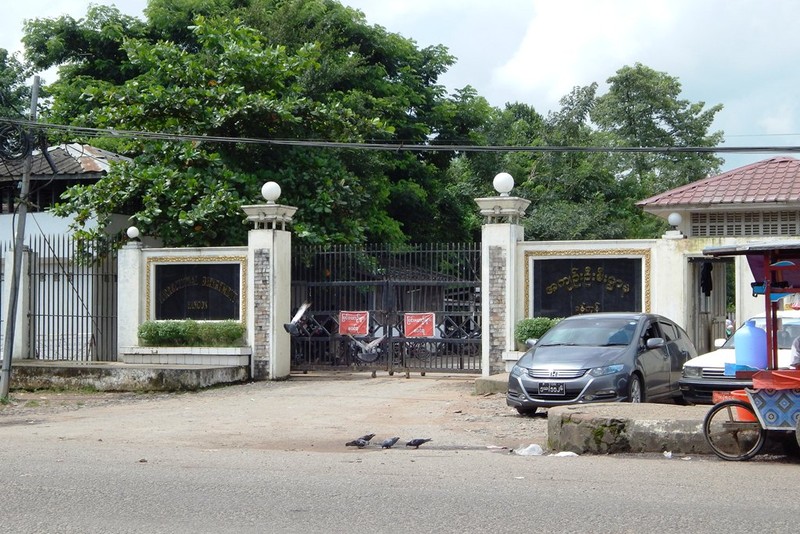
Outside Yangon’s Insein prison on Friday, families gathered in the sweltering heat, waiting to learn whether their relatives would be among the freed.
“My brother has been imprisoned for a political case,” 38-year-old Aung Htet Naing told AFP. “I am hoping that he might be included in today’s release. We cannot expect much because he wasn’t included in previous pardons.”
His tempered expectations reflect a hard-learned lesson: in Myanmar’s new civilian guise, the military’s grip has not loosened. The uniform has simply changed.
Discussion (8)