 lop News
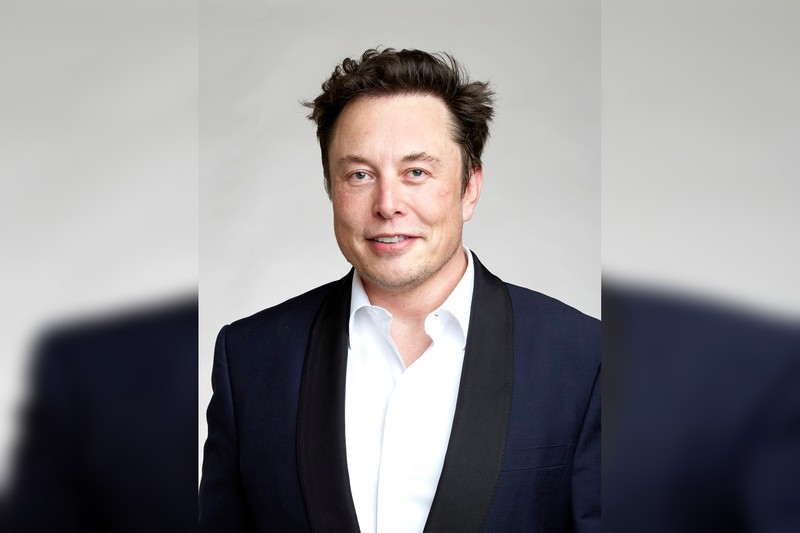
Nine strangers in Oakland, California, will this week confront a question that has haunted the artificial intelligence industry for years: can Sam Altman be trusted?
Jury selection begins Monday in a federal courtroom across the bay from OpenAI’s San Francisco headquarters, where the world’s most consequential AI company faces its founding co-chairman in a bitter civil trial. Elon Musk sued Altman and OpenAI president Greg Brockman in 2024, alleging they hijacked a nonprofit created to benefit humanity and turned it into a for-profit machine now valued at $852 billion, according to the Associated Press.
The trial is scheduled to run four weeks. Nine jurors. No alternates. Their verdict will be advisory — Judge Yvonne Gonzalez Rogers makes the final call — but their judgment on credibility could shape the outcome.
A Founding Story, Under Oath
The broad facts are not in dispute. Musk and Altman co-founded OpenAI in 2015 as a nonprofit, spurred by concern that profit-driven companies like Google would control powerful AI. Musk contributed roughly $38 million — what he says was 60 percent of the nonprofit’s seed funding — and helped recruit chief scientist Ilya Sutskever from DeepMind.
What happened next depends entirely on who is telling the story.
Musk says Altman and Brockman secretly pursued a for-profit structure, partnering with Microsoft while freezing him out. He calls the result a “for-profit, market-paralyzing gorgon” that became a de facto Microsoft subsidiary built on his generosity.
OpenAI counters that Musk himself agreed a for-profit arm was necessary to fund the computing power AI demands — and that he left only after failing to fold the company into Tesla. Their lawyers call the lawsuit a “harassment campaign that’s driven by ego, jealousy and a desire to slow down a competitor.”
The Trust Question
The trial’s central question isn’t really about corporate structure. It’s about whether Altman looked a friend and collaborator in the eye and lied about his intentions.
Questions about Altman’s candor are not new. OpenAI’s own board cited his honesty when it briefly ousted him as CEO in November 2023. Sutskever, the company’s first chief scientist, has said Altman “exhibits a consistent pattern of lying,” according to Politico. A 16,000-word New Yorker profile this month painted him as an unscrupulous executive.
Just days after that profile ran, a 20-year-old man worried about AI’s effect on humanity was arrested on attempted murder charges after throwing a Molotov cocktail at Altman’s San Francisco home, AP News reported.
Musk’s attorneys want the jury to see a pattern. Altman’s team wants them to see a billionaire rival weaponizing old grievances.
Billionaires, Under Oath
The witness list reads like a tech industry all-star game. Microsoft CEO Satya Nadella and CTO Kevin Scott will testify about their company’s partnership with OpenAI. Sutskever, now running his own AI lab, will discuss the early days. Former OpenAI CTO Mira Murati is expected to testify about the chaos surrounding Altman’s firing and rehiring.
Shivon Zilis, a former OpenAI board member and mother of several of Musk’s children, may testify about the nonprofit’s founding mission. Bret Taylor, OpenAI’s current chair, is expected to explain its present structure.
Then there are the exhibits. In a September 2017 journal entry obtained by Musk’s lawyers, Brockman mused about ousting Musk and making $1 billion for himself. Two months later, he wrote: “it’d be wrong to steal the non-profit from him. to convert to a b-corp without him. that’d be pretty morally bankrupt. and he’s really not an idiot.”
What’s at Stake
Musk initially sought $134 billion in damages. He has since backed away from personal claims, now asking that any disgorged profits flow to OpenAI’s charitable arm. He also wants Altman and Brockman removed from leadership and the for-profit conversion unwound.
Polymarket traders gave Musk a 32 percent chance of success as of Friday, after weeks of volatile swings, according to NBC News.
The trial carries risks for both men. Musk was held liable by another jury last month for defrauding investors during his Twitter takeover. Damaging testimony about his own business tactics could undermine his narrative — and the timing is awkward, with SpaceX preparing an IPO expected to make him the world’s first trillionaire.
For Altman, the trial is a public dissection of his character just months before OpenAI’s own expected market debut. The company flagged the litigation as a risk to prospective investors in documents distributed earlier this year, CNBC reported.
Gonzalez Rogers, who previously oversaw the Epic Games v. Apple antitrust case, has kept a firm grip. She warned both parties they had “over-litigated this case” and ordered everyone — billionaires included — to enter through the regular front door and go through standard security screenings.
Part of her reasoning for allowing a trial was straightforward. “Part of this is about whether a jury believes the people who will testify and whether they are credible,” she said during a hearing earlier this year.
Nine ordinary people might now answer whether the world’s most important AI company was built on a lie.
Sources
- Can Sam Altman be trusted? Elon Musk wants a jury to answer Big Tech’s hottest question. — Politico
- What’s at stake in the Elon Musk-Sam Altman trial — NBC News
- Musk v. Altman heads to court next week. Here’s what’s at stake — CNBC
- AI showdown: Musk and Altman go to trial in fight over OpenAI’s future — AP News
Discussion (10)