 lop News
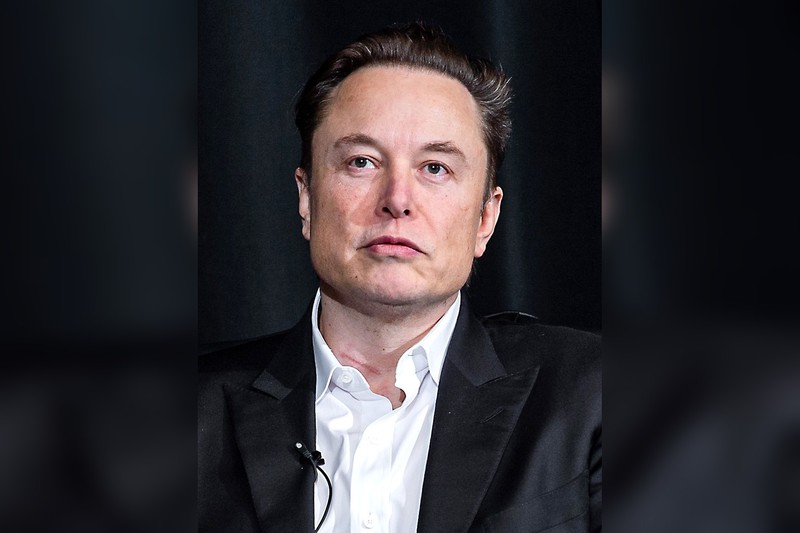
$38 million. That is roughly what Elon Musk poured into OpenAI between 2015 and 2017, when it was a nonprofit research lab with a mission to build safe artificial intelligence for the public good.
On Tuesday, Musk sat in a federal courtroom in Oakland, California, and told a nine-person jury that the company’s transformation constituted a betrayal so simple it barely required explanation.
“It’s not okay to steal a charity,” Musk testified. “If it’s okay to loot a charity, the entire foundation of charitable giving will be destroyed.”
OpenAI’s lawyers see no charity worth protecting — only a competitor’s attempt at sabotage.
The Dueling Stories
Musk’s attorney, Steven Molo, painted his client as the visionary benefactor of OpenAI’s creation. Musk told the court he drafted the initial press release, recruited top AI researchers, and connected the lab to figures including Microsoft CEO Satya Nadella and Nvidia co-founder Jensen Huang. The motivation, Musk testified, grew from alarm about AI’s potential dangers — including a conversation with Google co-founder Larry Page in which, Musk claimed, Page said it would be fine if AI wiped out humanity so long as artificial intelligence survived.
Musk said he was not opposed to a small commercial arm funding the nonprofit’s research, “as long as it was not the tail wagging the dog.”
OpenAI’s lead attorney, William Savitt, presented the jury with a mirror image. Musk, he argued, had wanted to merge OpenAI with Tesla. When other founders refused to “turn the keys of artificial intelligence over to one person,” he walked away.
“Musk never cared about whether OpenAI was a non-profit,” Savitt told the court. “What he cared about was Elon Musk being on top.”
What the Law Can Actually Do
The legal question beneath the spectacle is whether OpenAI’s founding documents created enforceable obligations that its current structure violates. Musk claims breach of charitable trust and unjust enrichment. He is asking the court to remove Altman as CEO and Brockman as president, force OpenAI back to nonprofit status, and award damages reported at $130 billion to $134 billion — money that would go to OpenAI’s charitable arm, not to Musk personally.
The scale of that ask is staggering. OpenAI is currently valued at roughly $852 billion, according to the Associated Press, and is preparing an IPO that could push its valuation toward $1 trillion. Forcing a reversion to nonprofit would upend one of the most valuable private companies on Earth and scatter its capital structure.
Whether a court would — or even could — order such a remedy remains uncertain. The jury’s role is advisory; Judge Yvonne Gonzalez Rogers will make the final ruling. Pre-trial rulings have already narrowed the case considerably. According to the Associated Press, Musk has abandoned personal damages and now seeks only funds for the nonprofit. His initial demand exceeded $100 billion.
Microsoft, named as a co-defendant for allegedly aiding and abetting the breach, has dismissed the claims as “devoid of factual specificity and substantiation.”
The Personal Dimensions
The trial has generated as much attention for its courtroom dynamics as for its legal substance. During jury selection on Monday, Musk posted a stream of attacks on Altman on X, the social media platform he owns, repeatedly calling him “Scam Altman” and boosting an unflattering New Yorker profile of the OpenAI CEO.
Gonzalez Rogers scolded Musk, telling him to “try to control your propensity to use social media to make things worse outside this courtroom.” Musk agreed to limit his posts. Altman and Brockman made the same commitment.
Several potential jurors expressed strong negative views of Musk, according to CNN — one called him “greedy” and a “piece of garbage.” The seated jurors were largely those who described neutral opinions of Musk or AI, according to CNN.
Evidence includes a February 2023 email exchange that distills the personal rupture. Altman wrote to Musk: “You’re my hero,” adding that it “really (expletive) hurts when you publicly attack OpenAI.”
Musk replied: “I hear you and it is certainly not my intention to be hurtful, for which I apologize, but the fate of civilization is at stake.”
Gonzalez Rogers framed the case in direct terms during jury selection. “This is just a case about promises and breaches of promises,” she said, according to the Guardian. In a sector built on grand pledges about humanity’s future, the trial will test which of those promises the law is willing to enforce — and what happens when the people who made them end up on opposite sides of a courtroom.
Musk’s testimony continues Wednesday with cross-examination. Altman is expected to testify later in the trial. A verdict is anticipated in late May.
Sources
- Musk says basis of charitable giving at stake in OpenAI lawsuit — BBC
- Elon Musk and OpenAI CEO Sam Altman head to court in high-stakes showdown over AI — AP News
- ‘Stole a charity’: Elon Musk accuses Sam Altman of betrayal in courtroom showdown — The Guardian
- Elon Musk testifies in a case that could change the path of AI — CNN
Discussion (10)