 lop News
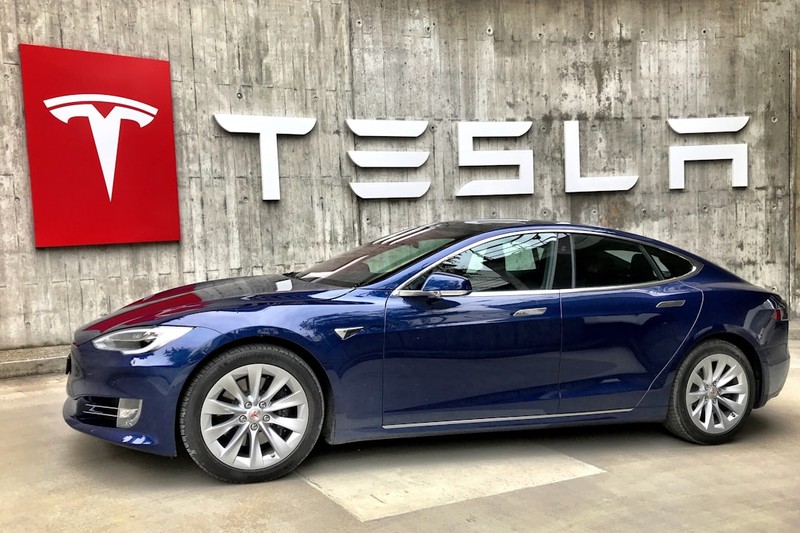
Four million Tesla vehicles were sold on the promise that they would one day drive themselves without a human at the wheel. The hardware inside them physically cannot do it. Elon Musk finally said so.
On Tesla’s Q1 2026 earnings call Wednesday evening, Musk conceded that the company’s Hardware 3 (HW3) computer — the Autopilot brain inside every Tesla sold between roughly 2019 and 2023 — lacks the processing power for unsupervised Full Self-Driving. The HW3 system has roughly one-eighth the memory bandwidth of Tesla’s current Hardware 4 platform. Memory bandwidth, Musk explained, is the critical bottleneck for running the AI models that autonomous driving requires.
“I wish it were otherwise, but Hardware 3 simply does not have the capability to achieve unsupervised FSD,” Musk told investors. “We did think at one point it would have that.”
A Promise Sold for Years
That second sentence is doing a lot of work. Tesla didn’t hint that HW3 cars might achieve full autonomy — the company stated it outright. A 2016 blog post, since deleted, declared that every Tesla rolling off the production line came with “the hardware needed for full self-driving capability.” The company’s website echoed that claim for years. Customers paid between $8,000 and $15,000 for the Full Self-Driving software package on the explicit understanding that their car’s existing hardware was sufficient.
Musk reinforced the promise repeatedly, predicting that unsupervised self-driving was months away. The “by the end of the year” forecast became an annual tradition spanning nearly a decade. Some HW3 owners have been waiting since 2019 for software that their car was never physically capable of running at the level Tesla advertised.
Several have already taken legal action — and won, according to Electrek. Others have attempted class-action efforts to demonstrate the scale of the undelivered promise.
Factories Built to Fix a False Claim
Musk’s proposed solution is, by his own description, an industrial undertaking. Tesla plans to construct “microfactories” — small dedicated retrofit facilities in major metropolitan areas — to physically remove and replace the computer and camera systems in HW3 vehicles. Doing the work at existing service centers would be too slow and inefficient, Musk said. The company needs mini production lines to handle the volume.
“I do think over time it’s going to make sense for us to convert all Hardware 3 cars to Hardware 4, because that’s what enables them to enter the Robotaxi fleet and have unsupervised FSD,” Musk said.
The commitment has meaningful gaps. Tesla’s upgrade path applies only to customers who purchased the Full Self-Driving software outright — reportedly $8,000 or more — not to those who subscribed to FSD on a monthly basis. Tesla moved FSD to a subscription model before fully acknowledging the HW3 shortfall, as InsideEVs reported. Owners who bought HW3-equipped cars intending to subscribe once unsupervised capability materialized may have no upgrade path at all.
The Math Problem
The financial picture complicates the plan further. Tesla said this week that it does not expect to be cash flow positive for the rest of 2026, as capital expenditures climb. Building urban retrofit factories to fix a hardware problem of its own creation would strain any company’s budget. Doing so while profitability is under sustained pressure invites the question of whether the microfactory concept is a genuine commitment or a stalling tactic — a way to keep HW3 owners waiting until they trade in their vehicles independently, eliminating Tesla’s obligation one transaction at a time.
Skepticism has precedent. When Tesla’s Hardware 2 platform proved insufficient, the company offered free HW3 upgrades to FSD purchasers but charged subscribers $1,500 for the same hardware, according to Electrek. HW3 was supposed to be the platform that ended the upgrade cycle. It wasn’t.
And HW4 owners may not want to get comfortable. Musk mentioned on the call that Tesla is already preparing an “AI4” or “AI4-plus” hardware revision that upgrades available memory from 32 GB to 64 GB, with production expected next year via Samsung. He expressed confidence that standard HW4 can achieve unsupervised driving. He expressed the same confidence about HW3.
What Happens Now
For HW3 owners, the near-term news is modestly positive. Tesla’s Autopilot chief, Ashok Elluswamy, confirmed that a “V14-lite” software update will reach HW3 vehicles in late June, bringing feature parity with the V14 software running on newer hardware for the first time in over a year. Unsupervised FSD on HW4 vehicles is now targeted for Q4 2026 at the earliest, with Musk describing a gradual, geography-limited rollout.
The discounted trade-in terms and hardware upgrade pricing remain undisclosed. How Tesla prices those retrofits — and whether it meaningfully acknowledges what years of early adopters paid for — will determine whether this admission earns goodwill or accelerates frustration.
The hardware promise was false. The cost of making it right has not yet been tallied.
Sources
- Elon Musk admits that millions of Tesla vehicles won’t get unsupervised FSD — The Verge
- Tesla will build factories just to retrofit millions of HW3 cars it said could do FSD, but can’t — Electrek
- Tesla Says It Will Need To Build Micro Factories To Retrofit Old Cars For FSD — InsideEVs
- Tesla confirmed HW3 can’t do Unsupervised FSD but there’s more to the story — Teslarati
Discussion (10)