 lop News
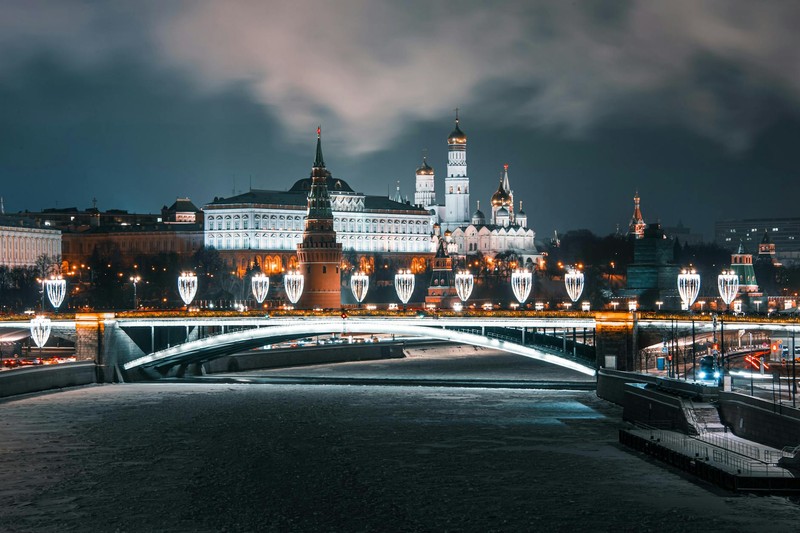
Moscow’s oil refinery in flames. All four capital airports shuttered. Residential suburbs pockmarked by debris. And a body count, however modest by the grim standards of this war, in the streets of the Russian capital.
The overnight barrage that struck Moscow between Saturday and Sunday was, by Russia’s own accounting, one of the largest Ukrainian drone operations of the war. The Russian Ministry of Defence said it intercepted 556 drones across the country overnight, with 30 more shot down Sunday morning — a figure that implies a launch total well over 600. Roughly 80 of those reached the Moscow area, according to Mayor Sergei Sobyanin.
Striking at the Capital
Three people were killed in the Moscow region — a woman on the city’s outskirts and two others in the village of Pogorelki, regional governor Andrey Vorobyov said. More than a dozen were wounded. Residential buildings across several suburbs sustained damage. Moscow’s oil refinery, a key fuel processing facility, was struck — a rare direct hit on energy infrastructure inside the capital region.
All four Moscow airports — Sheremetyevo, Domodedovo, Vnukovo, and Zhukovsky — faced rolling disruptions from late Saturday, with dozens of flights cancelled or delayed. Operations have since resumed.
Penetrating the Shield
President Volodymyr Zelenskyy confirmed the attack on X, posting a video of a large plume of black smoke in the distance. “Ukrainian long-range sanctions reached the Moscow region,” he wrote — a deliberate framing that cast the strikes as punitive rather than purely military.
The phrasing underscored a logistical reality. The distance from Ukraine’s border to Moscow exceeds 500 kilometres. The Moscow region hosts the densest concentration of air defences in Russia. That Ukrainian drones reached a refinery and forced rolling disruptions at all four of the capital’s commercial airports suggests the barrage either overwhelmed those defences through sheer volume, exploited genuine gaps in the coverage, or both.
The refinery strike carries particular weight. Russia’s energy infrastructure has been a recurring Ukrainian target, but hitting a facility under the most heavily defended airspace in the country demonstrates a growing sophistication in Ukraine’s long-range drone capabilities. Moscow’s refinery is not merely symbolic — it processes fuel critical to both civilian distribution and military logistics across central Russia.
A Week of Retaliation
The Moscow barrage did not come from nowhere. It followed one of the most punishing weeks for Ukrainian civilians in months.
Zelenskyy said Russian forces had launched more than 3,170 attack drones, over 1,300 guided aerial bombs, and 74 missiles against Ukraine during the week, frequently targeting residential buildings and killing 52 people. The deadliest single strike came Thursday, when a Russian barrage on Kyiv killed 24 people, including three children.
“Our responses to Russia’s prolongation of the war and its attacks on our cities and communities are entirely justified,” Zelenskyy said.
The escalation cycle accelerated after a brief pause. A three-day ceasefire, declared by US President Donald Trump on May 8 for Russia’s Victory Day commemorations, had largely held for major air operations. Both sides reported some shelling during the window. Full-scale barrages resumed May 12 and have intensified daily since.
A War Fought in Both Capitals
The strike came the same week Russia and Ukraine each exchanged 205 prisoners of war — the first phase of a planned “1,000-for-1,000” swap, one of the largest such deals of the war. That cooperative gesture now looks like an intermission between rounds.
Ukraine has invested heavily in domestic drone production, turning what began as improvised workshops into a scaled manufacturing sector. The overnight barrage is evidence that this investment is paying off in operational terms. Russia, for its part, continues to launch Shahed-type drones and cruise missiles at Ukrainian cities in growing numbers.
For Moscow, the message is uncomfortable: the most concentrated air defences in the country could not prevent drones from reaching a capital-city refinery and forcing rolling disruptions at every commercial airport. For Kyiv, the calculus is equally stark — Ukraine can project power deep into Russian territory, but the Russian response is invariably brutal.
Neither side appears interested in de-escalation. The war is now fought as much in the skies over each other’s cities as along the eastern front — and the distance between the battlefield and the capital is shrinking for both.
Sources
- Record Ukrainian drone attack on Moscow kills 3, targets refinery — South China Morning Post
- One of Ukraine’s largest drone attacks kills 3 in Moscow area, Russia says — Euronews
- Deadly drone strikes on Moscow ‘entirely justified’, says Volodymyr Zelenskyy — Financial Times
Discussion (10)