 lop News
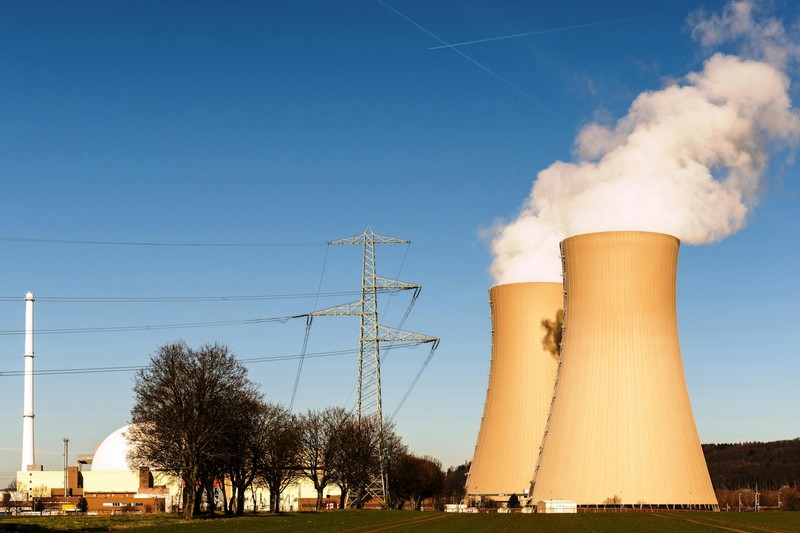
One dead. One building damaged by shock waves. No rise in radiation levels — this time.
The International Atomic Energy Agency confirmed Saturday that a projectile struck near Iran’s Bushehr nuclear power plant, killing a member of the facility’s physical protection staff and damaging an on-site building with blast waves and fragments. The incident marks the first time an operating nuclear facility has been caught in the crossfire of the expanding Iran war — and it nearly crossed a line that no military conflict has crossed before.
IAEA Director General Rafael Grossi expressed “deep concern” at the strike, noting it was the fourth such incident near Bushehr in recent weeks. Russia, which partly constructed the plant and continues to help operate it, announced it was evacuating 198 workers from the site.
Iran’s Tasnim news agency reported that the main parts of the plant were undamaged and that power production continued without interruption.
A Facility in the Wrong Place
Bushehr sits on Iran’s southwestern coast, near the Persian Gulf — geographically closer to Kuwait, Bahrain, and Qatar than to Tehran. That proximity to states hosting US military installations puts it directly in the flight path of any sustained air campaign against Iran.
The plant is Iran’s only operational nuclear power station, generating roughly 1,000 megawatts of electricity. Construction began under a 1970s deal with Germany’s Kraftwerk Union before the 1979 revolution halted work. Russia completed the project under a 1995 agreement, and the plant came online in 2011. Russian technicians have remained on site ever since, a fact that introduces Moscow as an involuntary stakeholder in any strike near the facility.
That Russia chose to evacuate nearly 200 workers signals genuine alarm. Moscow does not lightly abandon a strategic investment — and the optics of Russian personnel fleeing a nuclear site under fire will not be lost on decision-makers in the Kremlin.
Intentional Target or Collateral
The critical question — and the one no party has answered — is whether the strike was aimed at Bushehr itself or whether the plant was hit by a stray missile or fragment from the broader air campaign.
Neither the US, Israel, nor Iran has claimed responsibility for the projectile. In the context of the current conflict, with multiple air campaigns running simultaneously across Iranian airspace, the most plausible explanation is that a missile interceptor or an off-target munition strayed into the plant’s perimeter.
But intentionality matters less than precedent. Once a projectile lands near an active reactor, the escalation logic shifts regardless of whose it was. Every party now knows that nuclear infrastructure is within the blast radius of current operations. The question is whether that knowledge restrains further strikes — or simply accelerates the race to damage critical infrastructure before the other side can protect it.
The Fourth Time
Grossi’s mention that this was the fourth incident near Bushehr in recent weeks suggests a pattern that the IAEA views as unsustainable. Each near-miss tests physical containment systems designed to withstand earthquakes and equipment failures — not military ordnance.
The IAEA’s public statement, issued via the platform X, was characteristically measured. But the decision to name the fatality and describe the structural damage in detail represents an unusually granular level of disclosure for an agency that typically speaks in generalities about safety and security.
The fact that radiation levels remained normal is the thin margin between a serious incident and a regional catastrophe. Nuclear containment structures are engineered to extraordinary tolerances, but they are not designed to absorb shock waves from missile strikes. A direct hit on the reactor building, or on the spent fuel storage pools adjacent to most nuclear plants, could produce a radiological event affecting the entire Persian Gulf region — the same waterway through which roughly one-fifth of the world’s oil supply transits.
A Widening Web of Combatants
The Bushehr strike did not occur in isolation. On Thursday, Iran shot down a Chinese-made Wing Loong II drone over the city of Shiraz, according to Iranian foreign ministry spokesman Esmail Baqaei, who posted photographs of the wreckage on social media.
Baqaei said the drone could be “evidence of direct participation and active complicity” by neighboring countries “in the crime of aggression and war crimes committed by the United States and Israel against Iran.” He demanded clarification from “either of the TWO STATES of the region that are the users of this drone” — a clear reference to Saudi Arabia and the United Arab Emirates, both known operators of the Wing Loong II.
The debris was initially identified by Iran’s Tasnim news agency as an American MQ-9 Reaper before being corrected to the Chinese-designed platform. Both Saudi Arabia and the UAE have extensive Wing Loong II inventories purchased from China in recent years.
Separately, Iran claimed to have used a new air defense system to target a US fighter jet, according to Reuters. If confirmed, that would mark an escalation in Iran’s ability to threaten coalition aircraft — and raises the stakes for any air operations near Bushehr and other coastal facilities.
The Escalation Trap
The convergence of these incidents points to a conflict that is expanding in both geography and the range of participants. When drones from Gulf states appear in Iranian airspace, when Russian technicians flee a nuclear plant, when air defenses engage fighter jets — each development narrows the corridor for de-escalation.
Bushehr is the sharpest illustration. The plant’s survival so far is a matter of meters and engineering margins, not policy. No ceasefire agreement protects it. No red line has been drawn around it publicly by any combatant. It sits in the war zone, operating, and it has now been struck.
The IAEA has no enforcement power. It can confirm facts and express concern. The agency’s credibility depends on that restraint — and on the hope that public disclosure creates political pressure that its own mandate cannot generate. Whether that pressure will be enough to alter the trajectory of a war that has already proven willing to test every boundary remains the question that Bushehr now embodies.
Sources
- Strike near Iran’s Bushehr nuclear plant kills 1, says IAEA — South China Morning Post
- Iran demands explanations from Saudis and UAE after Chinese-made drone was shot down — South China Morning Post
- Iran says new air defence system used to target US fighter jet — Reuters
Discussion (13)