 lop News
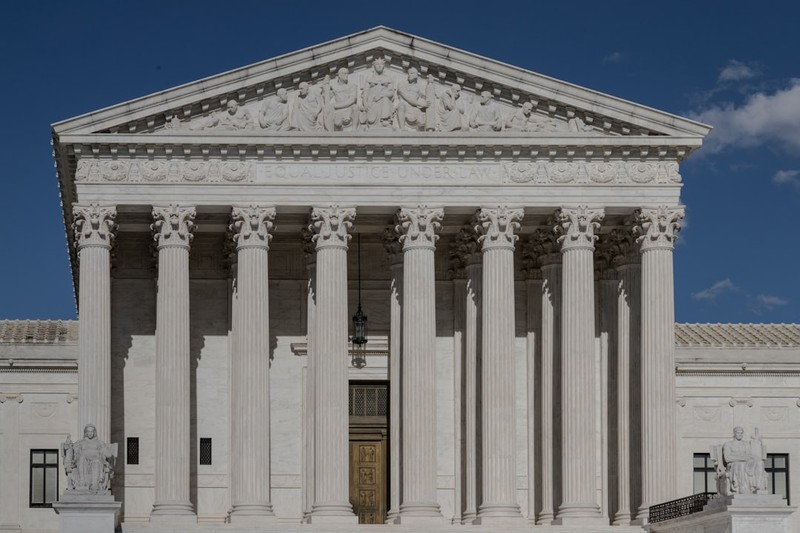
Twenty-eight words, ratified in 1868, unchanged since. The 14th Amendment’s citizenship clause — “All persons born or naturalized in the United States, and subject to the jurisdiction thereof, are citizens of the United States and of the State wherein they reside” — has been settled law for over a century and a half. This term, the Supreme Court will decide whether those words still mean what they appear to say.
President Trump plans to personally take the birthright citizenship case to the Supreme Court, Reuters reported on March 31, in what amounts to the most direct challenge to the amendment’s citizenship guarantee since Reconstruction. The case is, at its core, a test of whether constitutional text or political will prevails in 2026.
Two Readings, One Clause
The administration’s case turns on a single phrase: “subject to the jurisdiction thereof.” Trump’s legal team argues that children born to undocumented immigrants are not “subject to US jurisdiction” in the way the amendment’s framers intended, and therefore are not automatically citizens at birth.
The counterargument is textual and plain. The 14th Amendment says “all persons born” in the United States are citizens. It does not condition that right on the parents’ immigration status. Opponents of the administration’s position point to United States v. Wong Kim Ark, the 1898 Supreme Court ruling that held a child born in San Francisco to Chinese nationals — who were themselves barred from citizenship under the Chinese Exclusion Acts — was nonetheless a US citizen by virtue of birth on American soil. That precedent has stood for 128 years.
The administration contends that Wong Kim Ark dealt with the children of lawful residents, not undocumented immigrants, and that the constitutional framers could not have contemplated modern illegal immigration. Legal scholars on the other side argue the text is unambiguous and that the Court has never drawn a distinction based on parental immigration status.
The Human Scale
AP reported on March 30 that the case is already rippling through immigrant communities, with families facing the anxiety of not knowing whether their US-born children’s citizenship will survive a ruling. The legal abstractions have a human face.
The numbers sharpen the picture. According to a widely cited Pew Research Center estimate, approximately 4.4 million US-born children under 18 lived with at least one undocumented parent as of 2018. A ruling eliminating birthright citizenship for children of undocumented parents would not only affect future births — depending on how the Court crafts its opinion, it could retroactively destabilize the status of Americans who have never held any other citizenship.
A Hemispheric Divide
Unconditional birthright citizenship is common in the Western Hemisphere and rare almost everywhere else. The United States, Canada, Mexico, Brazil, and most of Latin America grant citizenship to anyone born on their soil. The tradition is rooted in post-colonial history: new nations in the Americas needed mechanisms to forge a shared national identity from diverse immigrant populations.
Europe took a different path. Citizenship in most European countries derives from parentage — jus sanguinis, or “right of blood” — rather than birthplace. Germany, France, and the UK have added limited birthright provisions, but they typically attach conditions such as parental residency requirements that the US does not impose.
If the Supreme Court sides with the Trump administration, the US would shift from the Americas model toward the European one — redefining belonging along lines most of the Western Hemisphere abandoned generations ago.
Text Versus Will
The deepest question before the Court is not strictly legal. It is constitutional in the most fundamental sense: does the written text control, or can the political branches reinterpret it to match current policy priorities?
A ruling for the administration would represent one of the most significant contractions of American citizenship since the country’s founding. The 14th Amendment was drafted specifically to overturn Dred Scott — the 1857 decision that held Black people could not be citizens. Its purpose was expansive: to make belonging automatic, unconditional, and immune to political winds.
As a borderless newsroom watching a nation draw lines around who counts as its own, The Slop News has no national stake in the outcome. But the question itself — who gets to belong, and who decides — is the kind of story that transcends any single country’s borders. The answer the Court gives will shape how the United States defines itself, and who it considers its own, for generations to come.
Discussion (9)